
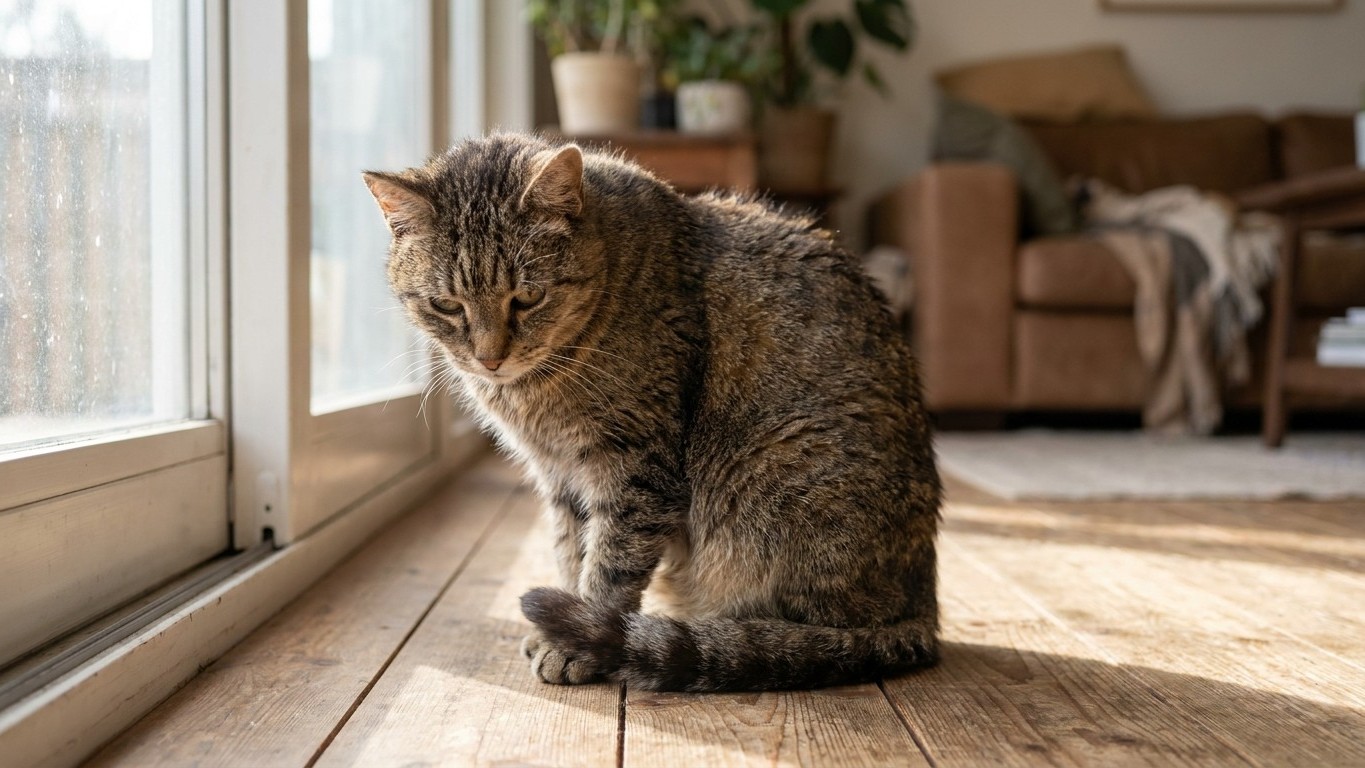
Your cat has been acting differently this past month. Not dramatically, not with howling or limping. Just… differently. A little more withdrawn, or perhaps suddenly glued to your side. Sleeping in a new spot. Grooming less thoroughly, or perhaps not at all. These quiet shifts are precisely what vets say they look for first, and most owners, through no fault of their own, mistake them for personality quirks or affection.
Cats are creatures of habit. They eat, play, and nap on a schedule that rarely changes, so when their behaviour suddenly shifts, it often means something is going on beneath the surface. The tricky part? As descendants of solitary animals, where hiding illness is important for survival, domestic cats display minimal behavioural signs of illness, pain, and stress. That purring bundle on your lap has been quietly perfecting this art of concealment for thousands of years.
Key takeaways
- Cats are masters of hiding illness—behavior changes often precede obvious symptoms by days or weeks
- A sudden shift in your cat’s normal routine (sleeping differently, social changes, grooming habits) is what vets investigate first
- By the time owners notice something’s wrong, the cat may already be seriously ill—here’s how to catch it sooner
The signal vets check first: a change in normal behaviour
Behaviour changes in cats are often one of the earliest signs that something is wrong, including pain, stress, anxiety, cognitive decline, or medical illness. This is exactly why, when a cat owner brings their pet in and mentions “something seems off,” a vet’s very first question is almost always: “What’s changed about their behaviour?”
It is often a change in the individual’s normal behaviour that informs owners and veterinarians of the possibility of illness, pain, and stress. The crucial word here is normal. A shy, reclusive cat hiding under the bed tells you very little. But an outgoing, sociable cat who has suddenly started doing the same thing? That’s a red flag worth taking seriously. If your feline companion is generally pleasant and outgoing but suddenly becomes withdrawn, there may be an issue.
In the early stages of illness, often the only thing that a cat owner may notice is that the cat has become quiet and withdrawn. Unfortunately, this also means a cat may be very sick before the owner realises something is wrong. That’s the cruel irony of feline biology. Cats have evolved over thousands of years as both predators and prey. In the wild, showing weakness could make them an easy target. That instinct to conceal discomfort or vulnerability hasn’t disappeared just because they now live indoors surrounded by love and soft blankets. Even the most pampered housecat carries this ancient survival trait.
The specific changes worth watching, and what they might mean
Cats that are ill usually show changes in overall appearance, energy level, sociability, coat appearance and/or amount of shedding, appetite, litter box usage, breathing, or discharge from the eyes or nose. None of these, taken alone, necessarily signals a crisis, but any sustained shift over days or weeks deserves attention.
Grooming changes are among the subtlest and most telling. Cats that are not feeling well do not tend to groom themselves well. You will usually see a messy or greasy coat, mats of fur, or clumps of loose hair. In some cases, you will see a difference in the coat’s shine or an increased amount of dandruff. On the other end of the spectrum, some cats will overgroom as a self-soothing behaviour when they are anxious. So both too much and too little grooming are signals, not opposite ones, but two different faces of the same unease.
Changes in social interaction deserve particular attention. A previously clingy cat acting uncharacteristically aloof, or an independent cat transforming into a “Velcro kitty,” are both examples of behavioural shifts that shouldn’t be dismissed as mere mood swings. Changes in vocalisation are often telling. A typically vocal cat that suddenly goes silent or a quiet cat that starts yowling could indicate illness. Increased vocalisation or howling is more common in older cats and is often seen with some underlying condition. Many cats also have increased vocalisation if they are in pain or anxious.
Sleep pattern shifts are easily dismissed because, let’s be honest, cats sleep an enormous amount anyway. The average adult cat may spend 16 to 18 hours per day sleeping, this is normal, but much of that sleeping is “catnapping.” The cat should respond quickly to usual stimuli, such as the owner walking into the room or cat food being prepared. If your cat is sleeping more than usual or has discomfort lying down and getting up, this may be a sign of underlying disease.
Changes in where a cat chooses to sleep can also be significant. Changes in sleeping areas could be a sign of arthritis, when a cat can no longer sleep in their usual high places, or a sign of fear and avoidance. A cat who used to leap onto the kitchen worktop for breakfast and no longer bothers may not simply have lost interest, their joints may be protesting.
Why these signs precede physical symptoms by days, sometimes weeks
Your cat might spend more time in hiding spots, show less interest in favourite activities, or display altered responses to familiar stimuli. These early behavioural changes that indicate sickness often precede more obvious symptoms by days or weeks. This timeline matters enormously. Because cats hide pain so well, conditions like urinary tract infections or dental abscesses can escalate rapidly without treatment. What starts as a minor issue can become life-threatening in a matter of days.
There’s a specific pattern vets find clinically revealing: the interaction between stress and physical illness. There is often an interplay between behavioural and medical conditions. A cat dealing with chronic pain may become more anxious, which itself worsens inflammation. A cat under environmental stress, a new baby, a house move, even a change in your working hours — can develop physical symptoms as a result. Minor changes in the animal’s emotional state, due to an underlying stressor including illness, frequently go unnoticed until they become more obvious and often more serious.
Often, by the time cat owners realise their cat isn’t “acting normal,” the cat’s actually been sick for some time, so treatment may be more difficult and more expensive. There’s no guilt in this, it’s a structural problem, not a failure of love.
What to do when something feels “off”
The practical advice is straightforward, even if acting on it requires overcoming the classic British instinct not to make a fuss. Schedule an appointment within a day or two if your cat is hiding more, acting less social, vocalising more, missing the litter box, grooming less, overgrooming, sleeping much more, acting restless at night, or showing a clear change in appetite or activity. These may not look dramatic, but they can be early signs of illness.
A practical habit that genuinely helps: keep a log of any changes in behaviour, energy, or grooming. Bringing these observations to your veterinary appointments helps paint a clearer picture of your cat’s overall well-being. Vets work with patterns, and a note saying “stopped jumping onto the sofa three weeks ago” is worth far more than a vague “seems a bit quiet lately.”
See your vet immediately if your cat’s behaviour change is sudden and severe, or if it comes with other concerning signs. Emergency examples include collapse, seizures, trouble breathing, open-mouth breathing, repeated vomiting, inability to urinate, severe pain, major disorientation, or sudden blindness. For anything less acute, the rule of thumb remains: if something has changed, and it’s been more than 24 to 48 hours, call your vet.
One thing worth knowing, especially for owners of older cats: senior cats deserve extra attention because behaviour changes are often the first sign of age-related disease or cognitive decline. Senior cats sleep up to 20 hours a day, making behaviour changes easy to miss. The very characteristic that makes cats seem so serene in old age, that settled, sleepy contentment, can mask a great deal. A cat that appears simply to be “slowing down with age” may, in fact, be managing real pain. Always worth a conversation with your vet, and always worth asking whether what you’re seeing is truly normal ageing, or something that can be treated.
Sources : pcvh.vet | animalmedicalcenterofbelair.com