
Loop pile carpet. It looks stylish, it wears well, and it costs a fair bit to have fitted. Millions of UK homes have it. But if you share your space with a cat, this one flooring choice could be quietly causing your pet real harm, and the infection that follows a snagged claw can take hold long before you notice anything is wrong.
Key takeaways
- Loop pile carpet’s texture triggers cats’ natural scratching instinct, making claw snags inevitable rather than occasional
- Infections from torn nails spread rapidly in the nail bed and can hide for days while your cat shows no obvious pain
- By the time you spot swelling or odor, bacterial infection may have already established itself deep in the tissue
The carpet type that puts cats at genuine risk
Carpet fibres are finished in one of two ways: loop pile and cut pile construction. Loop pile fibres form a loop at the carpet surface, while cut pile carpets are trimmed so the ends are loose. That Structural difference is everything. Cats are the primary offenders when it comes to loop pile damage, because the texture of a Berber or loop pile carpet mimics the coarse surface of a sisal scratching post. Your cat isn’t being destructive, their brain is essentially telling them the floor is a giant scratching pad.
The physical construction of these loops is a playground for claws, and flooring professionals are direct about it: loop pile and pets are a volatile combination. It is often a case of when, not if, a snag will occur. The problem goes far beyond a ruined carpet. In addition to damaging the carpet, clawing at looped fibres can hurt your pet’s paws. It’s not uncommon for a cat’s claws to get stuck in the carpet loops, which can cause anything from minor discomfort to serious injury.
Pets, especially cats with long nails, can easily catch their claws in the loops, causing the fibres to pull and unravel. This damages the carpet and can pose a risk to your pet’s claws. The physics of it are straightforward but brutal: when a cat’s claw hooks into a loop and the cat instinctively pulls away, the nail can tear partially or fully from the nail bed. A tiny tear in a nail on a single toe can be excruciatingly painful. The pain can be so intense that it results in lameness, inactivity and possibly urination or defecation outside the litter box.
Why infection sets in before you see anything
Here’s the part that catches owners off guard. Cats often hide their pain, so limping may be the only visible sign of injury or illness, making close observation crucial. This isn’t stubbornness, the tendency to conceal discomfort comes from wild ancestors, where showing signs of pain or weakness could make an animal a target for predators. This evolutionary instinct remains strong in household companions, making it difficult for owners to recognise when something is wrong.
If a torn claw is left as an open wound, an infection can develop, causing more serious problems. The nail bed is particularly vulnerable. Paronychia is an infection of the nail bed and the tissue around the nail, where the nail and skin meet. Infection can occur in one or multiple claws, and may be bacterial or fungal, although bacterial infections usually occur secondary to trauma to the area. Untreated claw trauma will often result in secondary bacterial infections.
The scenario unfolds in a way that makes it easy to miss. Your cat catches a claw on the carpet, yanks free, shakes the paw once, and carries on. No blood you can see, no obvious limping, no dramatic reaction. But underneath, the nail bed has been compromised. One owner reported their cat got its nail caught in carpet and pulled out the nail. The cat wasn’t limping or whining and allowed the paw to be touched, but days later the area became swollen, a bit darker in colour, and had a faint odour. That faint smell and subtle swelling? Classic early infection, and in that case, the owner only spotted it by chance.
Ignoring these signs can cause complications such as cellulitis or abscess formation. In extreme cases where abscesses or deep infections occur, minor surgery may be needed to drain pus or remove damaged tissue. What started with a looped carpet fibre can end with a sedated cat on a vet’s table.
What to watch for, and what to do
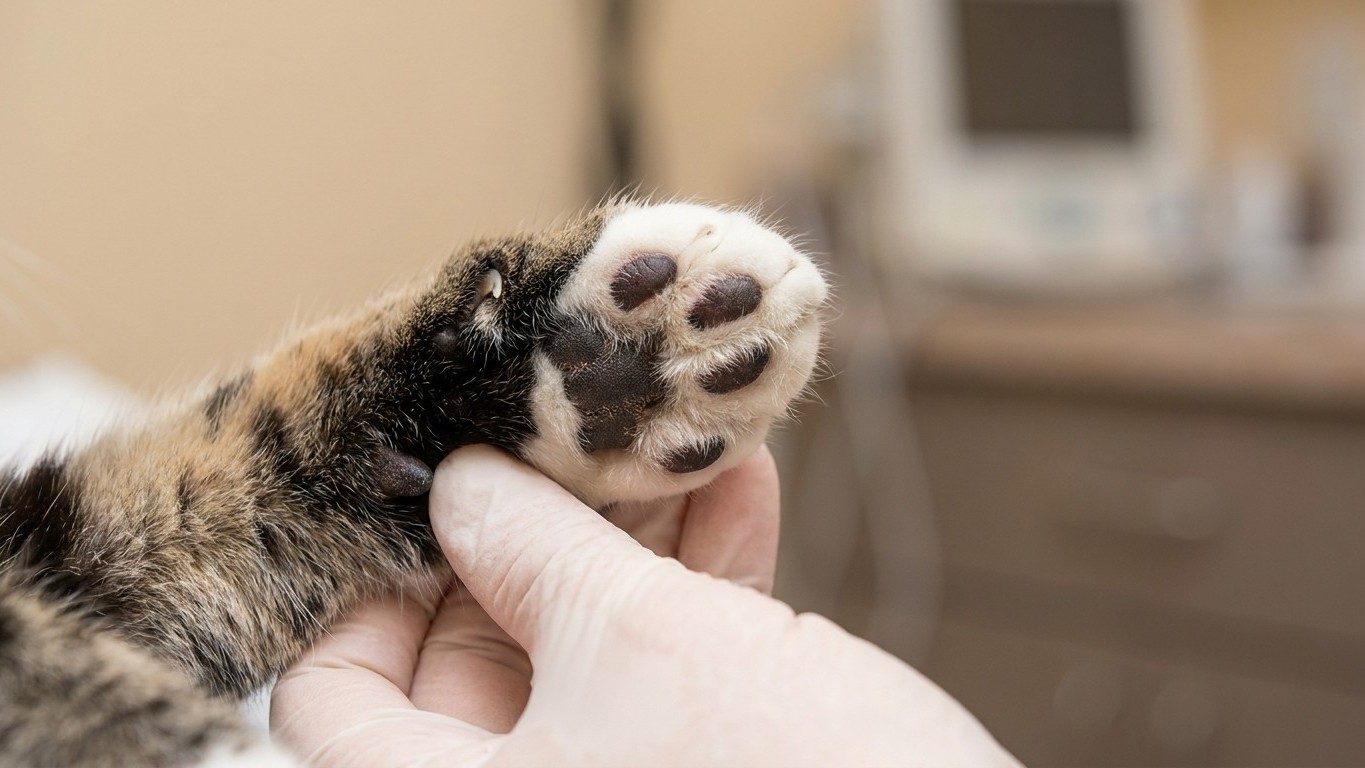
Signs of infection include redness, swelling, and foul odours. If your cat’s paw pad shows any of these signs, or oozes discharge or causes noticeable discomfort, call your veterinarian. Beyond those obvious red flags, watch for subtler behavioural signals too. It can be as subtle as your cat favouring one leg over another or moving a little slower than usual. They may avoid certain activities they normally do, like jumping or climbing, or they may attempt them but visibly struggle.
Excessive paw licking is another key signal. If your cat is licking or biting at their paw obsessively, something is up. Felines instinctively lick their wounds, so excessive grooming could mean an injury is causing pain or irritation. While a little grooming is normal, if your cat is constantly focused on one paw, there could be an open wound or infection.
At home, the most useful thing you can do is check your cat’s paws regularly during a quiet moment, perhaps while they’re relaxed on your lap. Inspect and clean your cat’s paws regularly to remove debris, dirt, and any substance that may cause irritation or injury. Claws that are too long may get stuck in soft materials such as carpet, which can lead to an injured toe. If they become ingrown, this is painful and may cause infection. Keeping claws trimmed, every 14 days is a sensible target, removes much of the snagging risk.
If you do find a torn or damaged nail, if infection sets in, your cat may end up with more than just foot problems. Even minor foot pad injuries can be stubborn, so it is a good idea to provide first aid at home and then see your veterinarian promptly. Do not attempt to use human antiseptic products or ointments. Topical antibiotic ointments like Polysporin and Neosporin should not be used in cats because they can have serious anaphylactic reactions, which are sometimes fatal.
The safer flooring alternatives
Cut pile carpets, like Saxony or Frieze, have fibres that are cut rather than looped. This means there is no risk of claws getting caught, making them a safer option for pets. They are soft, comfortable, and come in plenty of stain-resistant styles. A cut pile carpet type, like a twist pile, may prove a better option for homes with cats. Frieze, in particular, has a tightly twisted, irregular surface that also disguises wear and scratch marks far better than a flat loop pile, two practical wins for cat households.
If you already have loop pile carpet and replacing it isn’t on the agenda, the combination of regular nail trimming, dedicated scratching posts near the areas your cat frequents most, and weekly paw checks will reduce your risk considerably. With the exception of minor abrasions, most paw infections will require medication to resolve, and delaying treatment can lead to problems. The loop pile carpet is already doing its job, the question is whether you give infection the chance to do the same.
One thing worth knowing: kittens are particularly prone to torn nails because of their high energy and extremely delicate claws. If you have a young cat or have recently adopted a kitten, they are likely to be bouncing across every surface at speed, making loop pile carpet an especially risky choice during those first high-energy months.
Sources : wagwalking.com | petful.com