
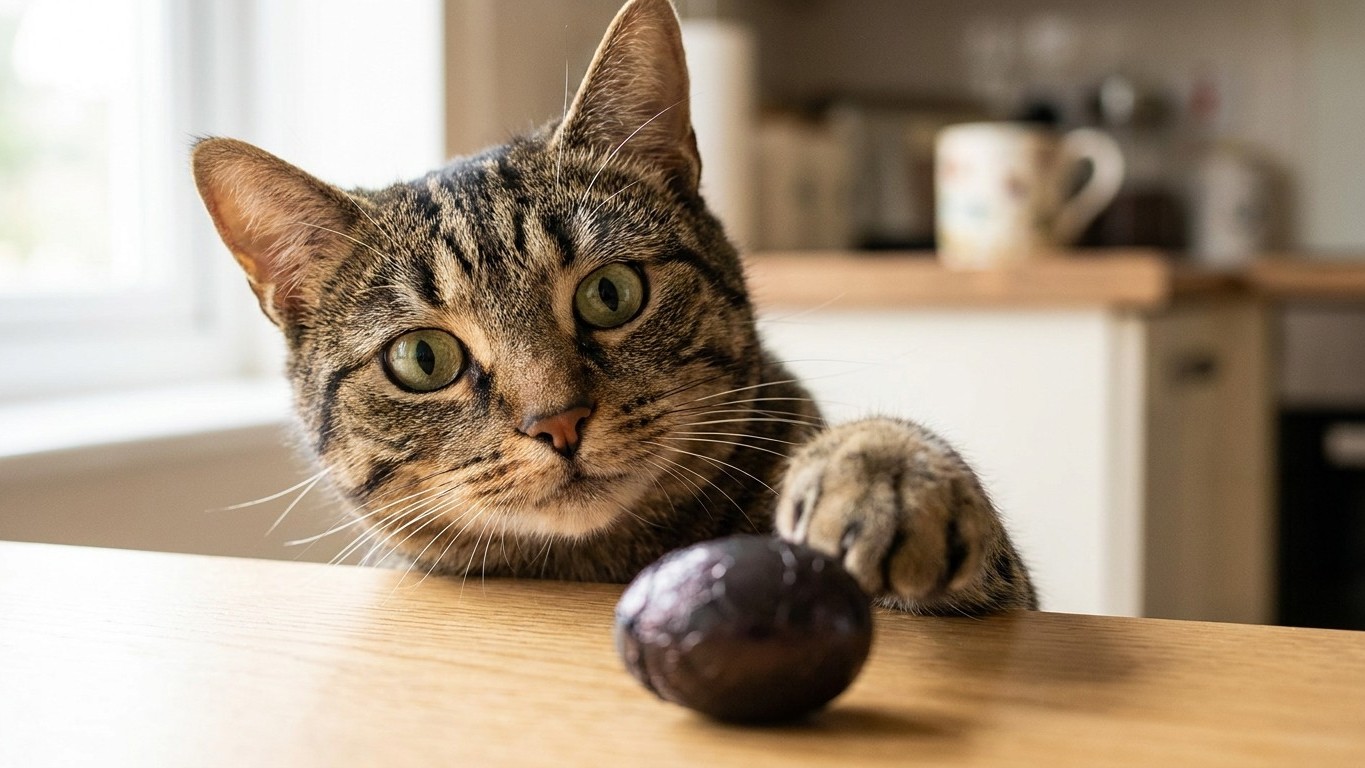
Easter is the most chocolate-heavy weekend of the British calendar. Foil-wrapped eggs on kitchen worktops, half-nibbled bars left on coffee tables, hunts scattered across gardens with eggs tucked behind flowerpots. For the humans in the house, it is pure joy. For a curious cat wandering through the chaos, it can be genuinely life-threatening, and the terrifying part is just how little chocolate it takes.
Easter eggs could be deadly to a cat, and chocolate should be kept out of reach of pets. Just two grams of chocolate, about the size of a small chunk or a few chocolate buttons, could be toxic to our feline friends. Two grams. That is a fragment. That is the corner of a square snapped off an Easter egg for a child who wasn’t paying attention. This is not a theoretical risk that only applies to cats who raid the biscuit tin; it is a hazard hiding in plain sight every April.
Key takeaways
- A piece of chocolate smaller than a chocolate button can trigger life-threatening poisoning in cats within 6-12 hours
- Dark chocolate is far more dangerous than milk chocolate, yet cats don’t even taste sweetness — they’re attracted to the fat and novelty
- The hidden Easter eggs tucked behind sofas and bushes are exactly where cats naturally explore, making traditional hunts a hidden hazard
Why chocolate is so dangerous for cats
The danger of chocolate lies in two natural compounds, theobromine and caffeine, both classified as methylxanthines. Cats’ bodies metabolise these substances very slowly, causing them to build up to toxic levels. Unlike humans, who can quickly process and eliminate these compounds, cats lack the necessary enzymes. The result is that what gives humans a pleasant mild buzz effectively poisons a cat’s cardiovascular and nervous systems from the inside.
Theobromine is actually toxic for humans too, but because our bodies can process it more effectively, we would need to eat around 70 grams to reach a lethal dose, roughly equivalent to 35 kilograms of milk chocolate in one sitting. For a cat, the maths are brutally different. An average cat weighing 5kg would suffer poisoning if just 20g (0.7 ounces) of dark chocolate was eaten, or as little as 7g (0.25 ounces) of baking chocolate.
The darker and more bitter the chocolate, the more dangerous it becomes to cats. This matters enormously at Easter, when high-cocoa dark chocolate eggs are sold everywhere as the “sophisticated” option for adults. Any form of chocolate, including cocoa powder, milk chocolate, and even white chocolate, can be harmful to your feline friend. There is no safe variety to leave lying around.
Here is the twist that catches many owners off guard: the toxic dose for cats is actually lower than for dogs, yet cats are less prone to eating chocolate since they are unable to taste sweetness. Unlike dogs, a cat’s tongue cannot detect sweetness from sugar, it is more likely the cat is just curious or attracted to the fat content of food made for humans. So if your cat sniffs at your Easter egg, they are not craving chocolate. They are investigating the creamy fat, the dairy smell, the novelty of a foil wrapper crinkling on the floor. That curiosity alone is enough to get them into serious trouble.
What happens when a cat eats chocolate
Chocolate contains a chemical compound called theobromine which is toxic for cats and dogs. It acts as a stimulant to increase their heart rate and a diuretic to increase the loss of their bodily fluids. Cats can’t metabolise the stimulant and diuretic as well as humans, so it remains in their bloodstream for longer and quickly builds to dangerous levels.
Chocolate poisoning in cats can occur within the first 6–12 hours and can last up to three or more days in severe cases. The signs to watch for include vomiting, diarrhoea, excessive urination, rapid breathing, muscle tremors, and an irregular heartbeat. In more extreme cases, chocolate can trigger irregular heart rhythms or seizures. What starts as your cat seeming a little restless or sick can escalate rapidly without warning.
The treatment window is narrow. If ingestion has occurred within the past two hours, the first step is to recover as much chocolate from the cat as possible by inducing vomiting. For many patients, removing the undigested chocolate converts the toxicity from a life-threatening poisoning to just an upset stomach that is easily managed. After that point, activated charcoal, IV fluids, and hospitalisation may all be required. If symptoms progress to seizures and cardiac arrhythmias, the prognosis is poor, and the toxicity may be fatal.
Do not wait for signs of illness before taking them to the vet, by then your cat may be too sick to survive. This is the single most important thing to remember. Speed is everything.
Rethinking the Easter egg hunt with cats in the house
The tradition of hiding Easter eggs can inadvertently lead to risks for cats, who might be intrigued by the hidden items around the house. An egg tucked behind a sofa cushion, left under a bush in the garden, or forgotten behind the television unit is exactly the kind of low, dark, sheltered spot a cat investigates as a matter of routine. The very places we choose to hide eggs are the places cats like to explore.
The PDSA advises a practical approach: count the number of eggs you are hiding and note where you are hiding them so you can account for them when the egg hunt is over, and keep your pets out of the egg hunt area until all eggs are found. That last point is worth taking seriously. A closed door or stair gate between your cat and the hunt zone costs nothing and could genuinely save a life.
Cats can easily rip and shred wrapping paper and ribbons to get to the chocolate, and ingestion of wrapping paper, ribbons, or Easter basket grass can present additional risks for a foreign body obstruction. Decorations such as plastic grass used in Easter baskets can be tempting for cats to chew on but can lead to intestinal blockages if ingested. even if your cat ignores the chocolate itself, the packaging is its own hazard.
For owners who want to involve their cat in the festivities rather than shut them away, an indoor hunt is often the best choice, providing a secure, controlled space where cats can explore without the risk of wandering too far, try hiding treats on top of cat trees, inside tunnels, or tucked under blankets. Catnip toys or small commercial cat treats work perfectly. Small amounts of cooked meat or fish, such as chicken, turkey, or salmon, are also suitable.
If you suspect your cat has eaten chocolate
Do not google symptoms and wait. Do not give your cat milk. Do not try to induce vomiting yourself without veterinary guidance. If your cat has eaten any chocolate, call your vet straight away. The good news is that with early treatment and effective management of symptoms, the prognosis for chocolate poisoning in cats is usually favourable, with no negative long-term effects. Early means immediately, not after lunch, not once the children are in bed.
Gather what information you can before you call: how much chocolate may have been eaten, what type it was (milk, dark, or something with high cocoa content), and your cat’s approximate weight. All of this helps the vet or out-of-hours emergency team assess risk quickly. Look for wrappers or foil to estimate how much has been consumed.
One final thing worth knowing, particularly given how easy it is to be reassured by a cat that seems unbothered: humans metabolise theobromine within 6–10 hours, but cats can take over 24 hours or longer, this prolonged presence causes a toxic buildup that overwhelms the system. A cat who ate chocolate this morning and appears fine this afternoon is not necessarily out of the woods. If in any doubt at all, call your vet.