
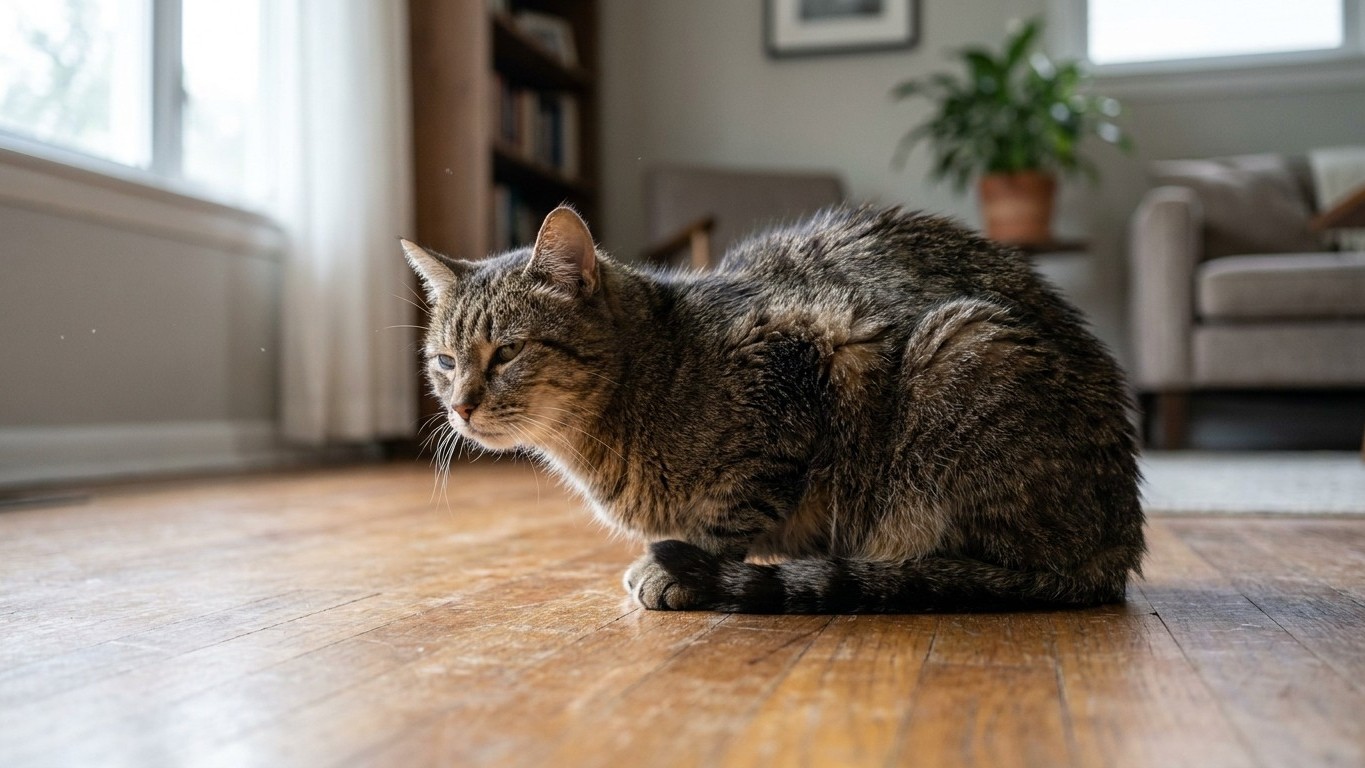
Cats sleep up to 16 hours a day. Most owners know this, accept it, and move on. So when your cat started spending even more time curled up and avoiding their usual spots, it felt easy to shrug off. They’re just tired, right? Probably had a busy night hunting moths in the hallway. Except that’s precisely where so many of us get it wrong, and where weeks can quietly slip by before a vet finally points to the one thing we’d been misreading all along.
Lethargy is defined as an abnormal decrease in a cat’s activity level and alertness, a cat slowing down when they don’t feel well. That word, abnormal, is doing a lot of heavy lifting. A lethargic cat can look a lot like a tired cat, but there is an important difference: tiredness is a temporary state that resolves with rest or sleep. Lethargic cats often do sleep more than normal, but their lethargy remains unless the underlying problem is addressed. That’s the crux of it. Your tired cat bounces back after a nap. Your lethargic cat doesn’t, not really.
Key takeaways
- A vet revealed one critical behavior change that separates normal tiredness from dangerous lethargy
- Cats are biologically wired to hide illness—and owners keep falling for it
- The subtle changes in grooming, movement, and alertness you’ve been overlooking could indicate kidney disease, heart problems, or arthritis
The sign owners keep misreading: what lethargy actually looks like
A healthy cat wakes up alert, grooms regularly, shows interest in food and surroundings, and engages when you interact with them. A lethargic cat, by contrast, remains dull and unresponsive even when awake. If your cat seems less bright, interested, or engaged than usual over a period of more than a day or two, it is time to contact your veterinarian. The telltale sign Most Owners Miss isn’t simply how much a cat sleeps, it’s how they behave when they’re awake.
Healthy cats still show interest in meals, social interaction, grooming, and movement, even if they nap often. When lethargy sets in, you may notice your cat sleeping far more than usual while avoiding activities they once enjoyed. Think about it in practical terms: does your cat still trot over at the sound of a food pouch being opened? Do they still greet you at the door, or jump onto their favourite windowsill perch? A dull, greasy, or unkempt coat can be an early clue that something’s off, because a cat who has stopped grooming is a cat who has, in a very real sense, stopped caring about themselves.
Cats evolved to mask weakness as a survival instinct. In the wild, visible illness attracts predators. Because of this instinct, cat lethargy often appears before more obvious symptoms. A cat may quietly retreat, sleep more, and disengage from interaction long before showing pain or distress. This is the biological trap we all fall into. Our cats are, at their evolutionary core, designed to hide suffering from us.
What your vet is actually looking for, and why it matters
Lethargy is a very nonspecific clinical sign, it’s seen with almost every health problem a cat could develop. Veterinarians will often focus on any other symptoms a cat might have when they are trying to figure out what is wrong. A vet’s assessment goes well beyond “is this cat tired?” They’re building a picture from a combination of clues you may never have thought to connect.
Sick cats will often sleep in strange positions that relieve pain and pressure from the area of discomfort. That hunched posture on the bathroom floor that you assumed was just a quirky choice? It may not be. Injuries and joint pain often prevent cats from jumping up onto surfaces and going up and down stairs. If your feline friend is suddenly spending more of their time hanging out on the floor when they used to hop up on your bed, sofa, or kitchen counter, don’t mistake this as a simple sign that your cat is getting older.
The grooming shift deserves its own mention. Cats may stop grooming when pain makes self-care difficult. Referred pain is a common cause of excessive grooming in a particular location, for example, a cat might overgroom the base of their tail or lower back area Excessively if they have kidney problems. Two completely opposite behaviours, over-grooming and under-grooming, can both signal the same underlying issue. That’s genuinely confusing, and it’s why so many owners don’t connect the dots.
There’s also a litter box dimension that often goes unnoticed. Litter box habits provide insight into internal health. A cat that stops using the litter box or produces significantly less waste while showing lethargy may have an underlying condition that needs evaluation. These changes rarely resolve without veterinary care.
The conditions hiding behind “just a bit sleepy”
The list of what can cause feline lethargy is genuinely sobering. Infections, chronic illnesses, and dehydration can all drain your cat’s energy quickly. Parasites, dental pain, or organ dysfunction are common culprits. Some of the more concerning causes include feline leukaemia, kidney disease, or heart conditions. None of these announce themselves with fanfare. They creep in quietly, wearing the disguise of a cat who just seems a little under the weather.
Cardiovascular disease is a common cause of feline lethargy, particularly in older cats. Cats can live for years with heart disease and hide it well. One of the main ways vets diagnose it is during a routine physical exam when they listen to the heart at the cat’s annual check-up. That is remarkable, and rather humbling, a cat can carry serious heart disease for years while appearing merely “a bit quieter than usual.”
Conditions that build slowly are particularly easy to miss. Many common feline health issues, including arthritis, kidney problems, and dental disease, progress gradually. The discomfort associated with these conditions also builds over time, giving your cat a chance to adapt their behaviour rather than reacting suddenly. Consequently, it’s easy to mistake these subtle changes as part of normal ageing.
Age also changes the stakes. Kittens typically have high energy levels, so noticeable fatigue often signals illness. Senior cats may slow down naturally, but true lethargy still stands out from normal ageing. The key is knowing your cat’s baseline, what’s normal for them specifically, and noticing when something shifts.
What to do when something feels off
Keep notes. Seriously. If you notice reduced energy alongside other changes, monitoring your pet closely and tracking appetite, litter box use, activity level, and responsiveness can help your vet in diagnosing the cause. Vets rely heavily on what owners report, because a cat in a consulting room will often perform perfectly well under the stress of the visit.
There are scenarios requiring urgent care rather than a routine appointment. If your cat is weak, unresponsive, or has laboured breathing, that signals a medical emergency that requires immediate care at an emergency clinic. If your cat refuses to eat for more than 24 hours, or if you notice rapid breathing, pale gums, or collapse, seek emergency help immediately.
Never give your cat over-the-counter pain medication in the meantime. Over-the-counter pain medications could be very toxic to the feline digestive system. What helps a human headache can cause organ failure in a cat. Always, always consult your vet before administering anything.
The American Veterinary Medical Association recommends that adult cats visit the vet at least once a year, while senior cats should have two wellness visits per year. In the UK, the same guidance broadly applies, regular check-ups catch things owners can’t see. And there’s one final fact worth sitting with: arthritis affects up to 90% of older cats, but many suffer in silence due to how well they mask discomfort. The cat you think is simply ageing gracefully may be doing something far braver — enduring, quietly, while waiting for someone to notice.
Sources : aectulsa.com | veg.com