
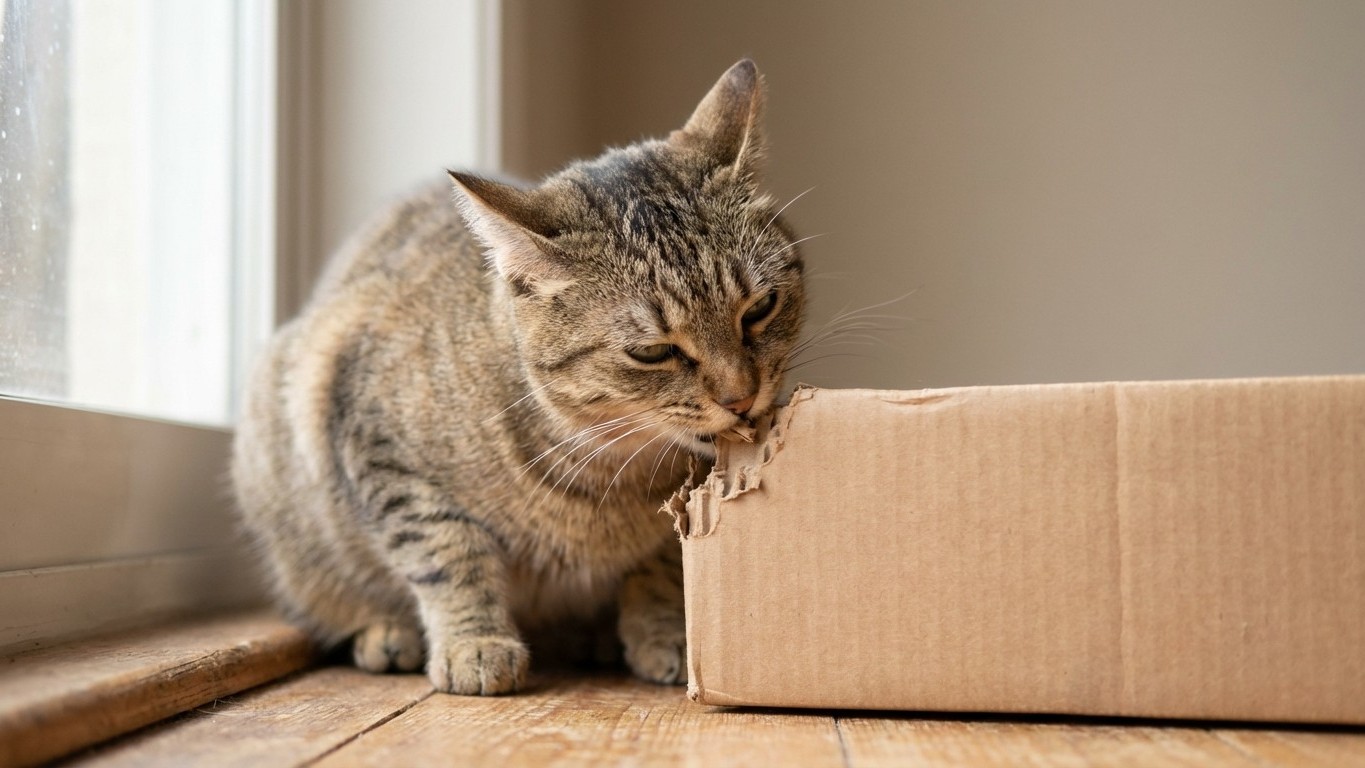
Cats gnawing on the corner of a cereal box or licking a carrier bag is one of those habits that owners tend to film and post online with a laughing emoji. Cute, yes. Harmless, often. But when the behaviour becomes persistent or your cat actually starts swallowing the stuff, that funny quirk shifts territory entirely, and understanding the difference matters more than most owners realise.
Key takeaways
- Persistent plastic chewing in cats isn’t always cute—it’s often a sign of stress, anxiety, or hidden medical issues like hyperthyroidism
- Certain breeds like Siamese and Burmese cats are genetically predisposed to fabric and plastic chewing, but sudden onset in any cat warrants veterinary investigation
- Ingested plastic can cause life-threatening intestinal blockages requiring surgery—knowing the warning signs (vomiting, lethargy, drooling) could mean the difference between recovery and tragedy
What is pica, and why does it matter?
Some animals develop unusual eating habits, consuming objects such as rocks, wood, plastic, and other non-food items. This problem, called pica, is defined as the persistent chewing and consumption of non-nutritional substances that provide no physical benefit to the animal. The word sounds clinical, but the reality is surprisingly common in domestic cats, and the trigger list is long.
Causes of pica range from stress and boredom to medical conditions such as hyperthyroidism, anaemia, or nutritional deficiencies. That is a wide net, which is precisely why the behaviour so often gets dismissed as personality. A cat who religiously shreds the Amazon delivery box every morning may simply love the texture and sound. But a cat who then eats the cardboard? That is a different conversation.
A published peer-reviewed case-control study in Frontiers in Veterinary Science found something telling: pica was directed at shoelaces or threads, plastic, fabric, rubber, paper or cardboard, and wood. Plastic and paper ranked among the most common targets. Among the cats that were chewing on items, 73 were chewing on plastic and 61 on paper. These are not outliers. They are patterns.
The stress connection that gets laughed off
Chewing on cardboard may serve as a coping mechanism, similar to how humans fidget or bite their nails. Common stressors for cats include changes in their environment, lack of routine, or conflicts with other pets. Think about what that looks like in practice: a new baby in the house, a building renovation next door, a neighbour’s cat sitting provocatively on the garden wall. None of these would register as “stressful” to most owners, but cats are territorial animals with a very low tolerance for unpredictability.
Whatever the reason, stress can lead to a whole host of abnormal behaviours including hiding away, excessive grooming, and chewing or eating objects. It’s no wonder if the act of chewing releases feel-good chemicals that your cat is chewing to calm their anxiety. This is the bit that cat behaviourists keep emphasising and that owners keep missing. The chewing works — at least in the short term. One theory suggests that the act of chewing releases certain neurotransmitters causing a feeling of intense pleasure. This then becomes addictive. Once the brain has learned that shredding a Sainsbury’s carrier bag produces relief, the habit is genuinely hard to break.
Stressful life events like house moves, new pet adoption, and owner death can trigger compulsive ingestion of non-food items in individual cats. Owner death is listed there matter-of-factly, but it carries weight. Grief is real in cats, and the ways they express it are rarely obvious.
There is also a breed dimension worth noting. Oriental cats, such as the Siamese and Burmese, have a propensity for eating and sucking on wool or other fabrics. The behaviour begins around one year of age and there may be a genetic link. Research into why cats chew things like fabric has identified a genetic predisposition similar to obsessive-compulsive disorder in Burmese and Siamese cats. If you have one of these breeds and they are going at your plastic bags with particular devotion, it may not be entirely their environment to blame.
When to stop laughing and start paying attention
A cat who never chewed cardboard before, who suddenly starts, is one to be concerned about. That sentence deserves to be read twice. Sudden onset is always more significant than long-standing habit, because it points to a change, in the cat’s body or in their world.
Pica in cats involves chewing or eating non-food items like fabric, plastic, or soil, which can lead to serious health issues like intestinal blockages. Because the material ingested is inedible, it will cause stomach upset and can also become lodged in the gastrointestinal tract. This can cause multiple conditions, some of which are life-threatening if left untreated. Surgery is often required. Plastic, in particular, does not pass through a cat’s digestive system cleanly.
It becomes an emergency when your cat has swallowed objects and shows signs like repeated vomiting, low energy, or stomach pain. If your cat is gagging, drooling excessively, or having trouble breathing after chewing something, seek veterinary care right away. These are the red flags that should have you calling the vet without hesitation, not waiting to see if it resolves overnight.
Medical causes are also worth ruling out early. Diseases like hyperthyroidism in cats, feline diabetes, anaemia, or dental issues might cause a cat to chew on plastic. Cats with dental issues or periodontal disease are prone to excessive chewing in an attempt to soothe sore gums. Dental disease can be very painful. Your cat is not going to tell you their teeth hurt. Chewing increasingly weird things might be the closest thing to a complaint you get.
What you can actually do about it
The first and non-negotiable step is a vet visit if the chewing is persistent, escalating, or involves actual ingestion. There is no specific test to diagnose the underlying cause of pica. Generally, the cause is diagnosed by the process of elimination. A vet may perform various tests to rule out underlying medical issues. Once physical causes are excluded, the focus shifts to the environment.
When not provided with adequate exercise, mental stimulation, interactive toys, and/or social interaction, cats seek out their own activities and toys. Enrichment is not a luxury. For an indoor cat, it is the functional equivalent of a working life. Redirecting undesirable behaviour with interactive prey-type toys and clicker training helps. Building a catio or a bird feeding station can alleviate boredom and frustration. Puzzle feeders encourage foraging with hidden food. Oral stimulation with cat grass, dental chews, and durable munch toys can help redirect their instinctive prey drive.
If your cat is feeling stressed, removing the source of anxiety is a big step. Your vet may also be able to recommend pheromone sprays or anti-anxiety supplements and medications for cats experiencing a significant impact on their mental and physical well-being. In some cases, these measures are only effective alongside referral to a Feline Behaviourist who will be able to help guide you on the best methods to alleviate your cat’s anxiety.
Pica, defined as the ingestion of non-nutritive items, has been mentioned in the feline veterinary literature for more than 40 years, but to date, little is known about the motivation to perform such a behaviour. The honest truth is that science has not fully cracked this one, which means individual assessment by a professional matters more, not less. A quirk filmed for Instagram is sometimes just that. But persistent, compulsive chewing of non-food items is your cat communicating something through the only language they have.
Sources : healthtopics.vetmed.ucdavis.edu | catster.com