
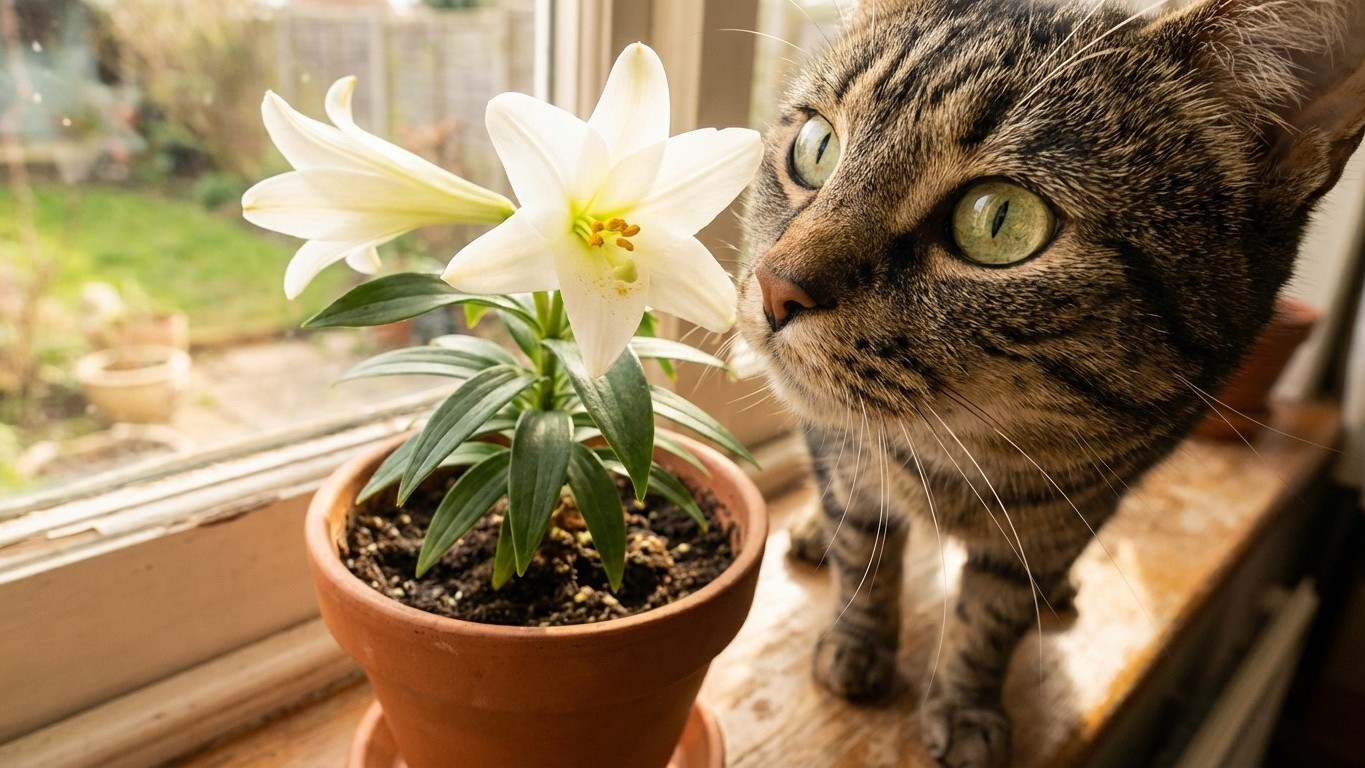
Every spring, millions of cat owners across the UK do the same well-meaning thing: they swap out tired winter décor for fresh bouquets, scrub the house from top to bottom with heavily scented products, and bring pots of cheerful seasonal flowers indoors. It feels like renewal. For many cats, though, that annual ritual is quietly making them very unwell, and vets say the culprit is something most owners never even consider dangerous.
Key takeaways
- One common spring flower is so toxic it can kill a cat in less than 72 hours—and you might not even realize your cat touched it
- Spring cleaning products and scented diffusers are silently poisoning cats in ways most owners never suspect
- The garden during spring is becoming increasingly dangerous, but simple alternatives exist that look just as beautiful
The spring flowers that can kill a cat within 72 hours
Of all the spring hazards facing domestic cats, one stands above the rest in sheer lethality: the lily. Lilies are lethally toxic to cats, so poisonous, in fact, that a cat can suffer fatal kidney failure just from biting into a lily leaf or petal, licking lily pollen from its paws, or drinking water from a vase containing cut lilies. That last detail is the one that catches most owners completely off guard. You don’t need your cat to visibly chew on a flower. The vase water alone is enough.
What makes this so terrifying is the speed of it. With true lilies and day lilies, signs of toxicity can occur within two hours of ingestion, and fatal kidney failure can develop in less than 72 hours. The symptoms, vomiting, lethargy, drooling, loss of appetite, can briefly seem to ease, which is cruelly deceptive. Even if no action is taken, these early signs may improve, giving an owner the illusion that the worst is over. However, under the surface, there is significant kidney injury, and within the following day, the signs of illness will return with increased severity.
The financial and emotional cost is enormous. In 2024, Petplan paid out over £1.5m in claims for lily poisoning, accounting for a staggering 45% of all cat poisoning claims in the UK. Think about that for a moment. Nearly half of all cat poisoning insurance claims, from a single type of plant. And pollen-free lilies have been marketed as ‘cat-safe’, but this is not the case — the rest of the plant is still just as deadly if eaten.
All parts of the lily plant are toxic to cats if ingested, and consuming small amounts can result in severe poisoning. The best way to prevent your cat from being poisoned is simply to not have lilies in your home or garden. That recommendation, from Cats Protection, is blunt and absolute. If you own a cat, lilies do not belong in your house. Full stop.
The spring clean that doubles as a hazard course
Lilies aren’t the only springtime problem. Every year, the ritual of spring cleaning floods British homes with a cocktail of products that cats, with their unique biology, simply cannot handle safely.
Cats tend to be particularly sensitive to many cleaning products used around the home. The most common effects from exposure include stomach upset and skin irritation, but even minor exposures to certain products can result in chemical burns of the skin, mouth, and digestive tract. The worrying part is how easily exposure happens Without any direct contact with the bottle. Carpet, upholstery, and floor cleaners often contain solvents and detergents that leave behind toxic residues. Pets who lie on freshly cleaned carpets or lick their paws after walking on a treated surface can ingest these chemicals.
Then there are the scented sprays and diffusers that so many of us reach for when freshening up the house in spring. Many liquid potpourri products and essential oils are poisonous to cats, including oil of cinnamon, citrus, pennyroyal, peppermint, pine, sweet birch, tea tree, wintergreen, and ylang ylang. Both ingestion and skin exposure can be toxic. The reason cats are so much more vulnerable than dogs or humans comes down to basic biology. Many of these chemicals are metabolised through the liver. Cats are particularly sensitive to essential oils as they have a lower number of certain liver enzymes necessary to metabolise these oils.
Active diffusers, such as nebulising or ultrasonic diffusers, emit microdroplets or particles of oil into the air and pose an extra risk beyond inhalation exposure. Microdroplets can collect on a cat’s hair if the pet is in the same room, and the oil can then be either absorbed directly through the skin or ingested during self-grooming. So a cat sitting peacefully in the same room as your reed diffuser isn’t safe just because it hasn’t touched anything.
Substances such as bleach, oven cleaners, and laundry detergents can make cats unwell, causing stomach upset and significant irritation to the eyes, mouth, and skin. In some cases there may be no lasting damage, but cats can drool or foam at the mouth for several Minutes after licking something with a chemical residue.
The garden is not safe either
For cats that go outdoors, spring brings its own set of problems beyond the flower bed. Garden products like fertilisers, weed or moss killers, and lawn feeds vary in toxicity level. Cats may be at risk from eating sprayed plants or grass or drinking from containers, with symptoms ranging from mild tummy upset to more severe issues such as heart and kidney problems.
Daffodils, those gloriously cheerful symbols of spring, absolutely everywhere in the British countryside from February onwards — are another serious concern. While daffodils are a beautiful sign of spring, they are unfortunately dangerous for our feline friends. Daffodil bulbs contain crystals that are extremely toxic to cats if eaten, and the heads and leaves can also make your cat unwell. Daffodils contain a poisonous substance called lycorine which, if digested, can cause stomach upset, vomiting or wider serious illness.
Slug bait pellets may contain metaldehyde, which is extremely toxic to cats. Slug bait is unfortunately appealing to pets and can cause serious symptoms like twitching and seizures, if ingested, it requires an immediate emergency trip to the vet. With gardens being treated and tended more actively in spring, the risk of a curious cat encountering these products is at its highest.
What to do, and what not to do
The practical steps here are genuinely straightforward, even if they require a shift in thinking. If you love flowers, lean into cat-safe alternatives: orchids, roses, sunflowers, and snapdragons can all sit happily in your home. Other non-toxic plants for the garden include buddleia, hollyhocks, roses, sunflowers, and nasturtiums, all of which make for beautiful spring displays.
For cleaning, the swap is easier than most people assume. Many common pantry ingredients can be used to make effective and fairly safe cleaners. Vinegar diluted with water can be used as an all-purpose surface cleaner, and baking soda mixed into a paste with mild soap is an effective scrubbing agent. If you do need to use stronger products, keep your cat out of the space until Everything is completely dry, and make sure rooms are well ventilated while you work.
When a cat does become unwell from a plant, it is usually because something has brushed on their fur or paws, which they have then ingested while grooming. There is greater risk within the home, as it is a confined area, and a bored or curious cat might investigate an indoor plant or a cut flower display by playing and nibbling. That framing matters: you don’t need a reckless or unusually curious cat for this to go wrong. Ordinary feline behaviour in an enclosed home is enough.
If you ever suspect your cat has been in contact with any toxic plant, cleaning product, or garden chemical, do not wait to see if symptoms develop. Contact your vet immediately, don’t wait for signs of illness to appear. Time is genuinely the difference between recovery and irreversible organ damage. The hard truth about spring is that its beauty comes with real risks — and our cats are paying the price of our good intentions.