
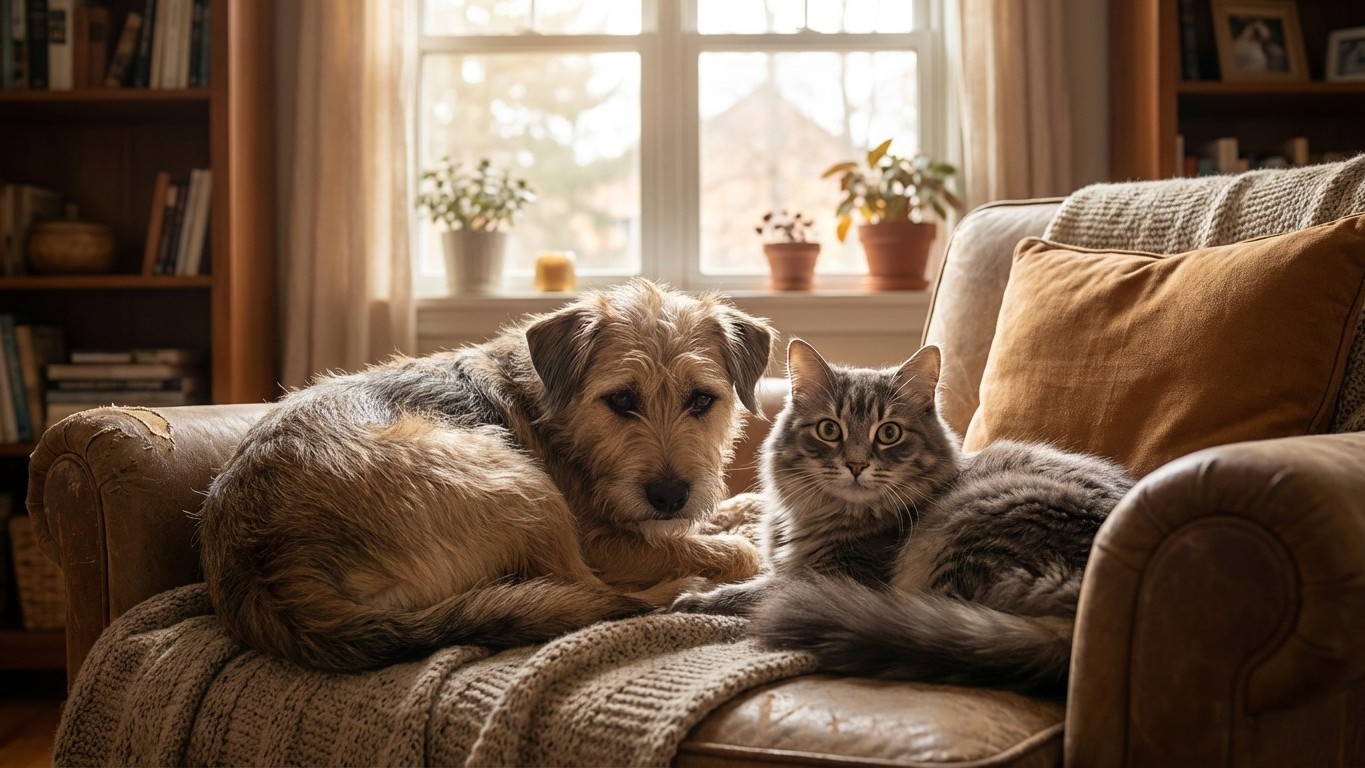
Losing a beloved pet is a heart-wrenching experience, for humans. Also, for the animals left behind. Cats and dogs, much like us, can grieve the loss of a companion, exhibiting behaviours that signal their distress. Recognising these signs and providing appropriate support can help your pet navigate this challenging period.
Key takeaways
- Discover how dogs and cats show grief differently after losing a companion.
- Learn subtle behaviors that may signal your pet is mourning.
- Get practical tips on how to support your grieving pet’s emotional health.
Recognising Grief in Dogs and Cats
Pets may not comprehend death as humans do, but they can sense the absence of a companion and react to changes in their environment. Observing your pet’s behaviour closely can reveal signs of grief.
Signs of Grief in Dogs
Dogs are social creatures and often form strong bonds with their companions. When a fellow pet passes away, a dog might display:
– **Withdrawal or quietness**: A previously lively dog may become subdued.
– **Loss of interest in play**: Favourite toys might be ignored.
– **Changes in eating habits**: Eating less or more slowly.
– **Increased clinginess**: Following their owner more than usual.
– **Restlessness**: Pacing or appearing unsettled.
These behaviours can last from a few weeks to several months. It’s essential to monitor your dog’s health during this time, as prolonged changes may require veterinary attention.
Signs of Grief in Cats
Cats, often perceived as independent, can also mourn the loss of a companion. Indicators of feline grief include:
– **Increased hiding**: Seeking solitude more frequently.
– **Altered grooming habits**: Neglecting grooming or over-grooming.
– **Changes in appetite**: Eating less or showing disinterest in food.
– **Heightened vocalisation**: Meowing more often or more loudly.
– **Seeking more attention**: Becoming more affectionate or clingy.
A study published in *Applied Animal Behaviour Science* found that cats exhibited such behaviours after the loss of a companion animal, challenging the stereotype of feline aloofness.
Supporting Your Grieving Pet
Helping your pet cope with loss involves patience, understanding, and maintaining a stable environment.
Maintain Routine
Consistency provides comfort. Keep feeding times, walks, and play sessions as regular as possible to offer a sense of normalcy.
Offer Extra Comfort
Spend additional time with your pet, offering affection and reassurance. Engage in activities they enjoy, but also respect their need for solitude if they prefer.
Provide Mental Stimulation
Introduce new toys or activities to distract and engage your pet. For dogs, this might include puzzle feeders or scent games; for cats, interactive toys or climbing structures can be beneficial.
Monitor Health
Keep an eye on your pet’s physical health. Significant changes in appetite, sleep patterns, or behaviour warrant a visit to the vet to rule out underlying health issues.
Consider Calming Aids
Pheromone diffusers or calming supplements may help ease anxiety. Consult your veterinarian before introducing any new products to ensure they’re appropriate for your pet.
Introducing a New Companion
Deciding to bring a new pet into the home should be approached with care. Some pets may benefit from a new companion, while others might find it stressful. Assess your pet’s personality and readiness before making this decision. It’s also crucial to ensure you’re emotionally prepared for a new addition.
Grieving is a natural process for both humans and animals. By recognising the signs of grief in your pet and providing compassionate support, you can help them adjust to the loss of their companion and find comfort in your shared bond.