
As winter’s chill sets in, many dog owners maintain their usual routines, unaware that certain cold-weather practices could jeopardise their pet’s health. Understanding the risks and adapting care strategies are essential to ensure your canine companion remains safe and comfortable during the colder months.
Key takeaways
- Could common winter habits harm your dog’s health without you knowing?
- What hidden dangers lurk in cold weather for your canine companion?
- Essential changes every dog owner must consider for a safer winter.
Recognising the Risks of Cold Weather
Dogs, much like humans, are susceptible to the harsh effects of cold weather. Prolonged exposure to low temperatures can lead to hypothermia, a condition where the body loses heat faster than it can produce, resulting in a dangerously low body temperature. Signs include shivering, lethargy, and in severe cases, loss of consciousness. Additionally, frostbite can occur, particularly affecting extremities like ears, paws, and tails. Symptoms encompass pale or greyish skin, cold and hard areas, and, in advanced stages, blackened skin. It’s crucial to monitor your dog for these signs and seek veterinary assistance if they arise.
Common Cold-Weather Hazards
Several winter elements pose specific threats to dogs:
– **Rock Salt and Grit:** Used to de-ice roads and pavements, these substances can irritate and burn a dog’s paw pads. Ingestion, often from licking paws, may lead to gastrointestinal issues or more severe health problems. After walks, it’s advisable to rinse your dog’s paws with warm water to remove any residual salt or chemicals.
– **Antifreeze:** This common winter chemical contains ethylene glycol, which is highly toxic to dogs. Even small amounts can cause kidney failure and be fatal. Ensure antifreeze is stored securely and any spills are cleaned immediately to prevent accidental ingestion.
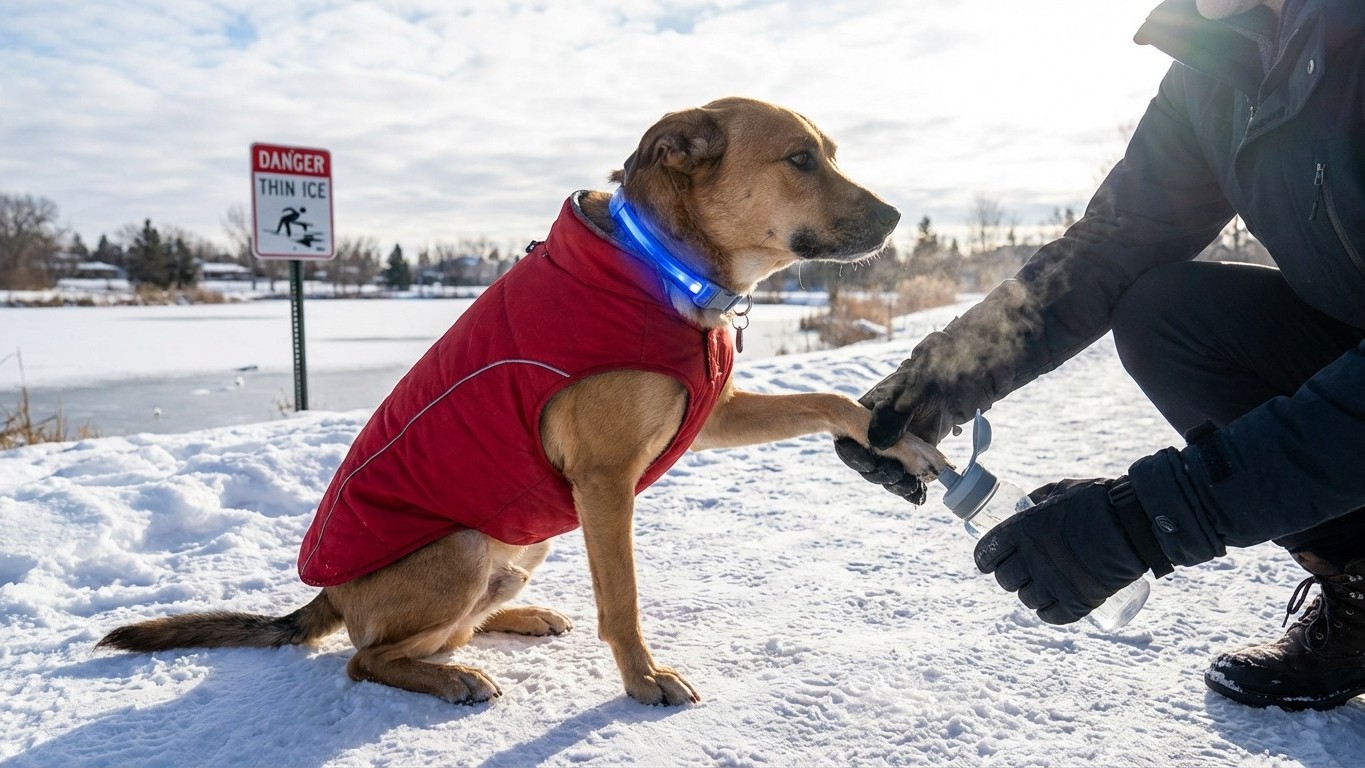
– **Frozen Water Bodies:** Lakes and ponds may appear solid but can be deceptive. Thin ice may break under a dog’s weight, leading to potential drowning or hypothermia. Always keep your dog on a lead near frozen bodies of water to prevent accidents.
Protective Measures for Your Dog
To safeguard your dog during winter, consider the following practices:
– **Appropriate Clothing:** Short-haired breeds, puppies, and older dogs benefit from wearing a well-fitted, insulated coat during walks to retain body heat.
– **Paw Care:** Before outings, applying a paw balm can create a protective barrier against cold surfaces and chemicals. Post-walk, thoroughly drying and cleaning your dog’s paws helps prevent irritation and ingestion of harmful substances.
– **Indoor Enrichment:** On particularly cold days, reduce outdoor exposure by engaging your dog with indoor activities. Interactive toys, puzzle feeders, and training sessions can keep them mentally and physically stimulated.
– **Hydration and Nutrition:** Ensure your dog has access to fresh, unfrozen water at all times. Cold weather can increase caloric needs, so consult your vet about adjusting your dog’s diet accordingly.
Adjusting Walks and Outdoor Activities
While regular exercise is vital, it’s important to modify routines during winter:
– **Shorter, More Frequent Walks:** Opt for multiple brief walks instead of prolonged outings to minimise exposure to the cold.
– **Time of Day:** Schedule walks during daylight hours when temperatures are slightly warmer and visibility is better.
– **Visibility Gear:** With shorter days, equip your dog with reflective collars or LED lights to ensure they’re visible to motorists and other pedestrians.
By being aware of these risks and implementing protective measures, you can help ensure your dog enjoys a safe and healthy winter season. Always consult your veterinarian for personalised advice tailored to your dog’s specific needs and health status.