
Some dogs learn a new command in five repetitions. Others need fifty, and still seem quietly unconvinced. That gap tells you everything about what life with a highly intelligent breed actually looks like, and why choosing one deserves far more thought than simply admiring a Border Collie on Instagram.
Intelligence in dogs is genuinely captivating, but it comes with a set of demands that can overwhelm even well-meaning owners. This guide walks through what canine intelligence really means, which breeds score highest and why, and, most usefully, what happens when those needs aren’t met. Before browsing our broader dog breeds guide for your perfect match, understanding the cognitive dimension of breed selection could save you (and your sofa) a great deal of grief.
What Does It Actually Mean for a Dog to Be Intelligent?
Defining and measuring canine intelligence
The most widely referenced framework for canine intelligence comes from Stanley Coren’s research, which divided dog intelligence into three types: instinctive intelligence (what the breed was developed to do), adaptive intelligence (problem-solving and learning from the environment), and working and obedience intelligence (how quickly a dog learns from humans). Most breed rankings focus on the third category, which is the most measurable, but also the most incomplete picture.
A dog that refuses to perform a sit command isn’t necessarily less intelligent than one who does it instantly. Some breeds, like the Afghan Hound or the Basenji, score low on obedience tests not because they lack brains, but because they lack motivation to comply. Independent thinkers. There’s a meaningful difference between a dog that can’t learn and one that simply decides you haven’t made it worth their while.
Why are some breeds sharper than others?
Selective breeding is the short answer. Herding breeds like the Border Collie were developed over generations to make split-second decisions in the field, reading livestock, anticipating movement, working at a distance from their handler without constant instruction. That cognitive wiring doesn’t switch off when the sheep are gone. Working dogs, retrievers, and companion breeds developed in close proximity to humans also tend to score highly, because reading human cues became a survival advantage.
Genetics shape the baseline, but environment plays a significant role too. A puppy from a highly intelligent breed that receives no stimulation, no training, and no social interaction will not develop its cognitive potential in any meaningful way, which is, in itself, a welfare concern worth taking seriously.
The Breeds That Consistently Top the Rankings
A comparative look at the most intelligent breeds
Any ranking should be read as a guide, not a definitive verdict, every individual dog varies. That said, certain breeds appear consistently across research and expert consensus. The Border Collie sits at the top of almost every list, followed closely by the Poodle (yes, the Poodle — those elaborate show clips have distracted people from the fact this is an exceptionally sharp working dog). The German Shepherd, Golden Retriever, Dobermann, Shetland Sheepdog, Labrador Retriever, and Belgian Malinois all feature regularly.
Herding and pastoral breeds dominate the upper tiers, which makes sense given their historical role. For a deeper look at how breed background shapes personality and trainability, the dog breeds temperament guide offers a thorough breakdown of energy levels, sociability, and how different working histories translate into modern home behaviour.
Portraits of the top breeds: strengths and the less-discussed drawbacks
The Border Collie is extraordinary, and genuinely not suitable for most households. This breed needs a job. Without consistent mental and physical engagement, they will find their own projects, and those projects rarely involve anything you’d approve of. Incredibly rewarding for active, experienced owners; a source of real stress for anyone expecting a laid-back companion.
The Poodle is, the most underrated family dog in Britain. Highly trainable, low-shedding, adaptable to different living situations, and emotionally perceptive in a way that surprises first-time owners. The German Shepherd combines intelligence with loyalty and protective instincts, a powerful combination that requires consistent, confident handling from day one. The Golden Retriever brings that same trainability with a more forgiving temperament, making them one of the most accessible intelligent breeds for families and first-time owners alike.
The Belgian Malinois deserves a specific mention, and a specific caution. Social media has made this breed aspirational in a way that’s created real problems. They are working dogs operating at an intensity few pet households can match. Rehoming rates for the breed have climbed as owners discover the gap between what they imagined and what they’re actually living with.
Mental Stimulation: What Intelligent Breeds Actually Need
Why the cognitive demand never stops
A tired dog is a good dog, but physical exercise alone won’t cut it for a highly intelligent breed. A Border Collie or a Malinois that’s been on a two-hour run can still have a brain buzzing with unspent energy. Mental fatigue from training sessions, puzzle work, or scent activities often settles a dog more effectively than physical exercise alone. That’s not opinion; it reflects how these breeds were designed to function.
Think of it this way: a gifted child given nothing but free time in an empty room won’t thrive. The same applies here. These dogs need their minds engaged.
Practical ways to keep an intelligent dog occupied
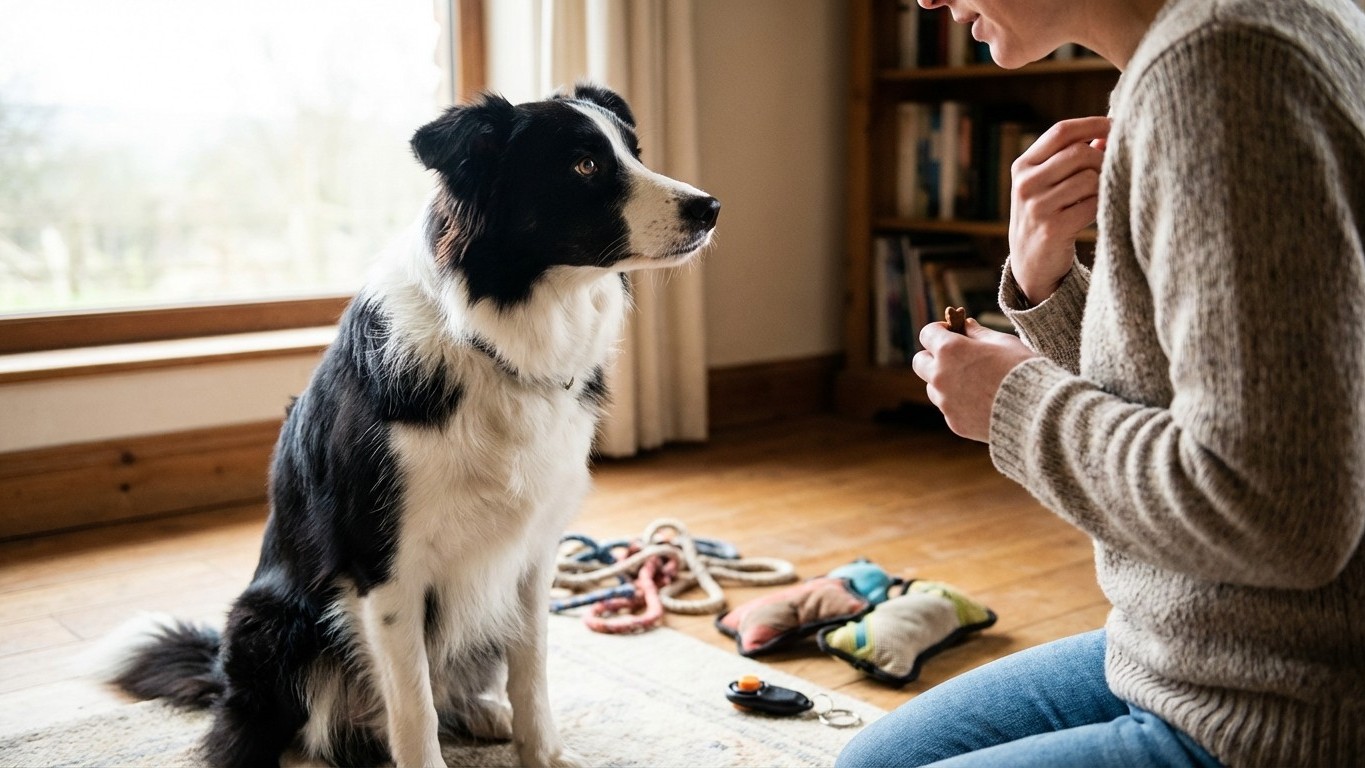
Training is the most accessible tool, and it doesn’t require a professional setup. Short, frequent sessions, ten to fifteen minutes, several times a day, work better than one long session. Teaching new commands, practising trick sequences, or working through an obedience programme all count. The key is novelty and consistency.
Scent work has become increasingly popular, and for good reason. Dogs have an extraordinary olfactory capacity, and channelling it through structured nose work or hide-and-seek games with treats taps into something genuinely satisfying for them. Food puzzle toys, snuffle mats, and Kongs stuffed with frozen food extend mealtimes into cognitive exercises. Canine sports, agility, flyball, heelwork to music, canicross, provide structured mental and physical outlets that many intelligent breeds genuinely seem to relish.
Socialisation also counts as stimulation. New environments, new smells, calm exposure to different situations, all of this gives an intelligent dog’s brain something to process and learn from.
When Intelligence Becomes a Problem
The real consequences of boredom
An under-stimulated intelligent dog doesn’t quietly accept the situation. The behaviours that emerge are well-documented: excessive barking, destructive chewing (furniture, skirting boards, anything available), digging, escape attempts, and in some cases redirected aggression or compulsive behaviours like tail-chasing or flank-sucking. These aren’t signs of a “bad” dog. They’re signs of a cognitively capable animal with nowhere to put its energy.
Separation anxiety is also disproportionately common in breeds with strong working intelligence, partly because these dogs are acutely attuned to routine and social dynamics. When that structure disappears, distress follows. Always consult a vet or qualified clinical animal behaviourist if behavioural problems develop, some issues have underlying medical components that need ruling out before any training programme begins.
What kind of owner does an intelligent breed actually need?
Consistency. Patience. A genuine interest in training. Time, real time, not just a walk around the block. Intelligent breeds are not low-maintenance companions who happen to learn tricks quickly. They’re high-investment animals that reward that investment enormously, but struggle in homes where the commitment isn’t there.
Experience helps, but it isn’t always the deciding factor. A first-time owner who does their research, attends good puppy classes, and structures their dog’s day thoughtfully can thrive with an intelligent breed. An experienced owner who’s become complacent can find themselves in genuine difficulty with a Border Collie or a Malinois. Self-awareness is the more important quality.
If high-energy, high-demand breeds feel like too much, it’s worth exploring the calm dog breeds guide, which covers breeds with more moderate stimulation needs, dogs that suit a quieter pace of life without sacrificing companionship or trainability entirely.
Intelligence, Training, and Family Life
Highly intelligent breeds are often described as “easy to train”, and in terms of raw learning speed, that’s largely true. But fast learning cuts both ways. These dogs pick up bad habits just as efficiently as good ones. Inconsistent rules, unintentional reinforcement of unwanted behaviour, or gaps in training get absorbed and repeated. What you practise, deliberately or accidentally, is what you get.
Family compatibility varies considerably. Golden Retrievers and Poodles are widely regarded as excellent with children, combining intelligence with patience and a tolerant temperament. German Shepherds can be wonderful family dogs when properly socialised from puppyhood, but their protective instincts need to be understood and managed. The dog breeds temperament guide goes into significant detail on how different breeds interact with children, other animals, and varying household structures, worth reading before making any decision.
For seniors or individuals with limited mobility, some intelligent breeds can be genuinely suitable, Poodles are often recommended for older owners, but the exercise and stimulation requirements still need to be met. A dog-walker, a local training club, or an enrichment routine can offset what an owner can’t physically provide, provided the commitment to organise it is there.
Should You Actually Adopt a Highly Intelligent Breed?
Questions worth sitting with before you decide
How many hours each day will the dog be alone? What does your typical week look like in terms of free time and energy? Do you genuinely enjoy training, or does the idea feel like homework? Are you prepared to attend classes, adapt your routine, and engage with your dog’s needs even on tired days? Is everyone in the household on board with the level of commitment involved?
These aren’t discouraging questions, they’re the right questions. A highly intelligent breed in a well-matched home is one of the most rewarding things in pet ownership. The same dog in the wrong environment is a welfare concern and a source of genuine stress for everyone involved.
The case for “moderate” intelligence
There’s a quiet argument to be made for breeds that sit in the middle of the intelligence spectrum. Dogs like the Cavalier King Charles Spaniel, the Greyhound, or the Whippet are trainable, sociable, and affectionate without the relentless cognitive demands of a working breed. They learn. They’re engaged. They don’t, however, need a two-hour scent training session before breakfast to stay sane.
Choosing a dog whose needs genuinely match your life isn’t settling. It’s the foundation of a happy relationship for both of you. The full dog breeds guide explores how to match breed characteristics to lifestyle in practical, honest terms, a useful next step if you’re still weighing your options.
The real question isn’t whether you can handle an intelligent breed. It’s whether the life you’re currently living, not the life you’re planning to live, but the actual Tuesday-morning-running-late version — can genuinely meet that dog’s needs. Answer that honestly, and you’re already ahead of most people who walk into a breeder’s house with a name already picked out.