
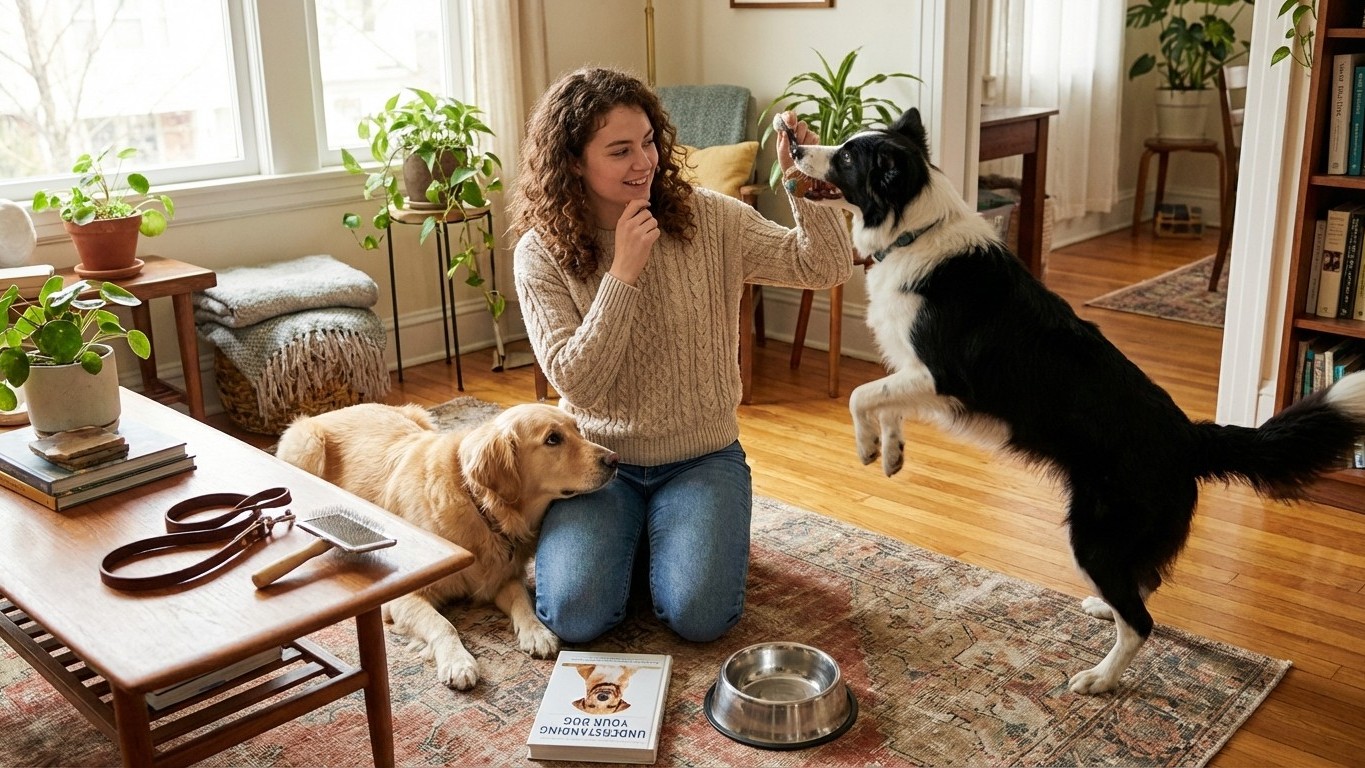
Getting a dog for the first time is one of the most exciting decisions a person can make. It’s also one of the easiest to get badly wrong. Every year, rescue centres across the UK take in thousands of dogs surrendered by owners who simply didn’t anticipate what living with that particular breed would actually be like. The gap between “I love the look of that dog” and “I understand what this dog needs” is where most beginner mistakes live, and this guide exists to help you bridge it before you bring anyone home.
Why first-time owners need a different kind of guidance
The real stakes of choosing a breed when you’re new to this
Experienced dog owners bring something to breed selection that beginners simply don’t have yet: an honest, lived understanding of what daily dog ownership actually demands. They know how it feels at 6am on a rainy Tuesday when the dog still needs a 45-minute walk. They know what it costs in vet bills when a breed predisposed to certain conditions reaches middle age. A first-time owner is working largely from imagination, and imagination tends to be kind.
This matters because dogs live for a long time. A Labrador might be with you for 12 to 14 years. A Border Collie could share your home for 15. The breed you choose shapes your daily life for over a decade, which makes this decision considerably more significant than choosing a sofa or even a car. And unlike a sofa, you can’t simply swap it out when you realise it doesn’t quite fit your lifestyle.
What a beginner-specific guide actually helps you do
A general dog breeds guide will walk you through hundreds of breeds with their traits, histories and characteristics. What this page does differently is focus on the decision-making process itself, specifically the mental traps that snare new owners and the practical framework for avoiding them. Think of it as the stuff experienced dog owners wish someone had told them before their first adoption.
The most common mistakes first-time adopters make
Choosing based on appearance alone
This is far and away the most common error. Someone sees a Siberian Husky with those extraordinary ice-blue eyes, or a Chow Chow with that magnificent lion-like mane, and the decision is essentially made. The aesthetic appeal of a breed is real and valid as a starting point, but when it becomes the ending point too, trouble follows. Huskies are a working breed designed to run extraordinary distances in extreme cold. They are vocal, independent, and capable of destructive boredom if under-stimulated. Their beauty tells you nothing about that.
The same applies to smaller dogs whose delicate appearance suggests an easy, low-maintenance companion. A Dachshund is charming and portable, but its stubborn streak and tendency toward back problems due to its elongated spine make it a genuinely demanding first dog for many people. Appearances mislead consistently in the dog world.
Ignoring your own lifestyle and constraints
Honest self-assessment is uncomfortable but absolutely necessary here. How much time can you genuinely commit to exercise on a normal weekday, not a holiday weekend, but an ordinary Tuesday in November? Do you live in a flat with thin walls and noise-sensitive neighbours? Do you travel regularly for work? A how to choose a dog breed guide built on seven clear criteria is worth reading alongside this page, because the methodology of matching breed to lifestyle is what separates a successful adoption from a difficult one.
Underestimating temperament differences between breeds
Temperament is not just about whether a dog is friendly or aggressive. It encompasses trainability, independence, sensitivity, prey drive, energy levels, attachment to owners, and much more. A Golden Retriever and a Basenji are both dogs, but they are profoundly different creatures to live with. The Retriever was bred to cooperate closely with humans and tends to be eager to please. The Basenji, an ancient hound from Central Africa, operates with considerably more independence and is notoriously difficult to recall off-lead. Neither is better, but one is clearly more manageable for someone new to dog ownership.
Overlooking grooming, health costs and ongoing maintenance
Grooming costs can quietly wreck a budget. A Cockapoo or a Bichon Frise needs professional grooming every six to eight weeks, adding potentially £600 or more per year to ownership costs, before you’ve accounted for food, insurance, or vet bills. Certain breeds carry genetic health conditions that prospective owners should research before committing: flat-faced breeds (brachycephalics) such as French Bulldogs and Pugs can face respiratory difficulties, skin fold infections, and eye problems that generate significant veterinary costs across their lifetimes. Always consult a vet when assessing a breed’s specific health profile.
Following trends without doing the research
French Bulldogs became the UK’s most registered breed, and rescue centres subsequently began filling up with them as owners discovered that the reality of a brachycephalic dog, with its potential health complexities and costs, didn’t match the Instagram version. The same pattern has played out with Dalmations after 101 Dalmatians, Huskies after Game of Thrones, and a string of other breeds elevated by popular culture. A breed that’s fashionable right now is not necessarily a breed that suits you.
The right criteria for choosing your first dog
Your environment: space, noise, and allergies
A garden is not a substitute for proper exercise, but it does matter. Large, energetic breeds in small flats without outdoor access tend to struggle. Equally, some breeds, particularly terriers and hounds, have voices that carry, which creates problems in densely populated urban housing. If anyone in your household has allergies, breeds that shed less (though no dog is truly hypoallergenic) may reduce reactions, but this warrants a conversation with an allergy specialist before you make any decisions.
Your time: exercise, training, and company
Some breeds require two hours of vigorous exercise daily. Others are genuinely content with a couple of 20-minute strolls. Training commitment also varies widely; highly intelligent working breeds like Border Collies need ongoing mental stimulation and structured training from day one. If your schedule is already stretched, a more laid-back breed with moderate exercise requirements is likely a better match than a working dog who needs a job to stay happy.
Budget: the full picture, not just the purchase price
The upfront cost of acquiring a dog, whether through a reputable breeder or a rescue organisation, is often the smallest financial commitment over a dog’s lifetime. Annual costs for food, insurance, routine veterinary care, grooming, training classes, boarding or pet-sitting when you travel, and incidental expenses can run from roughly £1,000 to well over £3,000 per year depending on breed and circumstances. Budget for the full cost, not just the puppy price.
Compatibility with children, other pets, and older household members
A multigenerational household needs a breed that genuinely integrates well across ages. Some breeds have a natural affinity with children; others are better suited to adults-only environments. The presence of cats, small pets, or an elderly relative who might be knocked over by an exuberant dog all factor into the equation. The best dog breed for first time owners guide covers this compatibility dimension in useful detail.
A five-step method for making a considered choice
Rather than approaching breed selection as a single moment of inspiration, think of it as a process. Start by writing down your actual constraints: working hours, living space, exercise habits, budget limits, household composition. Be honest rather than aspirational. Then research breeds that fit within those parameters, not breeds you find aesthetically appealing but breeds whose needs genuinely align with what you can offer.
The third step is checking health and maintenance realities for any breed on your shortlist. What are the common inherited conditions? What does ongoing grooming actually cost and involve? These questions have concrete answers, and a good breeder or your future vet will discuss them openly. Step four is seeking out firsthand experience: online breed communities, local breed clubs, and conversations with experienced owners give you texture and nuance that no breed profile alone can provide.
The fifth step is, wherever possible, spending time with dogs of that breed before committing. Many breed clubs and rescue organisations facilitate this. Meeting a Border Collie in person, watching it work through a problem, observing its energy and intensity, tells you something no written description quite captures.
Myths and misconceptions that catch beginners out
Small doesn’t mean simple
There’s a widespread assumption that small dogs are automatically easier for beginners. Jack Russell Terriers are small. They are also high-energy, tenacious, frequently stubborn, and capable of considerable destructiveness if bored. Chihuahuas can be intensely loyal to one person and deeply suspicious of everyone else, making socialisation an ongoing project. Small breed status says nothing about ease of ownership.
Are sporting and working breeds really unsuitable for beginners?
Not categorically, but they come with caveats. A Labrador Retriever is a gundog breed and technically a working dog, yet it consistently appears on lists of good beginner breeds because of its trainability and sociable temperament. A Malinois is also a working breed, used extensively in police and military roles, and would be a genuinely difficult choice for a first-time owner without specialist experience. The category matters less than the specific breed’s traits and what your life can actually accommodate.
The “robust breed” misconception
Some breeds are marketed informally as hardy and low-maintenance. Staffordshire Bull Terriers, for example, are often described as robust family dogs, and they frequently are, but they can also have a strong prey drive and may not integrate easily with other animals. “Robust” tends to describe physical hardiness, not simplicity of ownership. Every breed has its specific needs and complexities, and those need investigating regardless of reputation.
Resources and tools worth using
Specialist guides and structured resources
A solid dog breeds guide for beginners that maps breed characteristics to lifestyle factors is worth returning to multiple times during your research process, not just skimming once. The Kennel Club’s breed information pages are a reliable starting point for UK-specific data on breed characteristics and recognised health schemes. Your local veterinary practice will often be happy to discuss breed considerations during a general enquiry, before you’ve even committed to adoption.
Breeders, trainers and rescue organisations as human resources
Reputable breeders are not just sellers. A good breeder will ask you as many questions as you ask them, because their goal is a well-matched placement. Qualified dog trainers and behaviourists often offer pre-adoption consultations. Breed-specific rescue organisations are staffed by people with deep firsthand knowledge of that breed’s realities, and most are generous with honest advice even to people who haven’t yet adopted.
Making the decision with confidence
The time you spend researching now is time you’re investing in a relationship that will last more than a decade. A well-matched dog doesn’t just make daily life easier; it changes the quality of the bond you’ll build together. The breeds that struggle in rescue centres are rarely there because they’re bad dogs. They’re there because the match wasn’t right, and the mismatch wasn’t identified before it became a crisis.
So perhaps the real question isn’t “which breed is easiest?” but “which breed is right for the life I actually live?” That’s a more honest question, and it leads somewhere much better for both you and the dog waiting to meet you.