
Getting a dog for the first time is one of those decisions that sounds straightforward until you’re standing in a rescue centre or scrolling through breeder listings at midnight, completely overwhelmed. The sheer number of breeds available in the UK, each with wildly different temperaments, energy levels, and grooming demands, makes the choice genuinely daunting. And yet, the right match can make those first months feel like the most natural thing in the world.
The good news? Some breeds are genuinely easier for beginners. Not because they’re less intelligent or less characterful, but because their needs align well with someone who’s still learning the ropes of dog ownership. This guide walks you through exactly what to look for, which breeds deserve serious consideration, and which ones are better left to experienced handlers.
Why Choosing an Easy Breed Matters for Your First Dog
What “Easy” Actually Means in Practice
When dog trainers and welfare organisations talk about beginner-friendly breeds, they’re not describing a dog that requires no effort. Every dog needs consistent training, socialisation, veterinary care, and daily mental stimulation. What varies dramatically between breeds is the margin for error. Some dogs are incredibly forgiving of inconsistent routines, first-time training mistakes, or an owner who hasn’t yet mastered recall commands. Others simply aren’t.
A truly “easy” breed for a first-time owner typically ticks several practical boxes: a calm baseline temperament, a natural inclination to please, low to moderate grooming requirements, predictable health, and the ability to adapt to different living situations without becoming anxious or destructive. The ideal first dog is one that gives you the time and space to learn without penalising every mistake.
Common Pitfalls First-Time Owners Face
The most frequent mistake new dog owners make isn’t choosing the wrong food or buying the wrong lead. It’s underestimating exercise and mental stimulation needs. A Border Collie purchased by a well-meaning family who “loves long walks” can quickly become a serious welfare concern if those walks happen twice a week rather than twice a day. Working breeds, in particular, were developed over centuries for specific, demanding jobs, and that drive doesn’t switch off because the dog now lives in a semi-detached in Surrey.
Separation anxiety is another common challenge that catches beginners off guard. Certain breeds, particularly those bred for close human companionship, can become severely distressed when left alone, leading to destructive behaviour and genuine psychological suffering. Understanding a breed’s typical attachment style before committing is not optional; it’s part of responsible ownership.
How to Identify the Best Breed for a First-Time Owner
Temperament: The Non-Negotiable Starting Point
Temperament is the single most important factor, and it’s worth spending real time on. You want a dog that is naturally sociable with people and other animals, tolerates the inevitable inconsistencies of early training, and doesn’t carry a hair-trigger for anxiety or aggression. Breeds with a strong history of human companionship, rather than independent working roles, tend to fare better in this regard.
Trainability also sits within temperament. Dogs that respond well to positive reinforcement training, enjoy pleasing their owners, and recover quickly from confusion or mild correction are far more manageable for someone still developing their skills. Golden Retrievers and Labrador Retrievers are perhaps the most famous examples of this profile, and there’s a reason they remain consistently popular despite being far from exotic choices.
Grooming, Health, and the Hidden Time Costs
Nobody warns you quite enough about grooming before you get your first dog. A double-coated breed can shed enough fur in spring and autumn to stuff a small mattress, and certain long-haired breeds require professional grooming every six to eight weeks at a cost that adds up quickly over a dog’s lifetime. For a first-time owner, breeds with short, low-maintenance coats or predictable, modest grooming needs remove one significant variable from an already steep learning curve.
Health considerations are equally important. Some breeds carry a significant genetic burden of conditions that require monitoring, medication, or surgery. Brachycephalic breeds (those with flat faces, such as Bulldogs and Pugs) often face breathing difficulties, eye problems, and skin fold infections that can become expensive and emotionally demanding to manage. For a first dog, choosing a breed with relatively robust health history gives you the best chance of a straightforward early experience. Always consult a vet before committing to any breed, particularly if you have questions about specific health conditions.
Adaptability: Space, Energy, and Family Life
How you live matters as much as who you are. A high-energy dog in a small flat without a garden isn’t a welfare crisis waiting to happen if the owner commits to two substantial daily walks and plenty of enrichment, but it does require more dedication than most beginners anticipate. Honest self-assessment here is worth more than any breed chart. If your lifestyle currently involves moderate activity, occasional weekends away, and a reasonably unpredictable schedule, you need a dog whose needs can accommodate that reality.
Families with young children should prioritise breeds known for patience and gentleness under pressure. Dogs that nip when overwhelmed, or that have a strong prey drive triggered by running children, are simply not suited to chaotic family households, regardless of how much love is on offer.
The Best Breeds for First-Time Dog Owners
Ten Breeds Worth Serious Consideration
The Labrador Retriever sits at the top of almost every beginner list, and justifiably so. Friendly, adaptable, food-motivated (which makes training genuinely fun), and generally robust in health, Labs are tolerant of the learning curve that comes with a first dog. The main caveat is energy: they need real daily exercise and a job to do mentally, or that enthusiasm can become destructive.
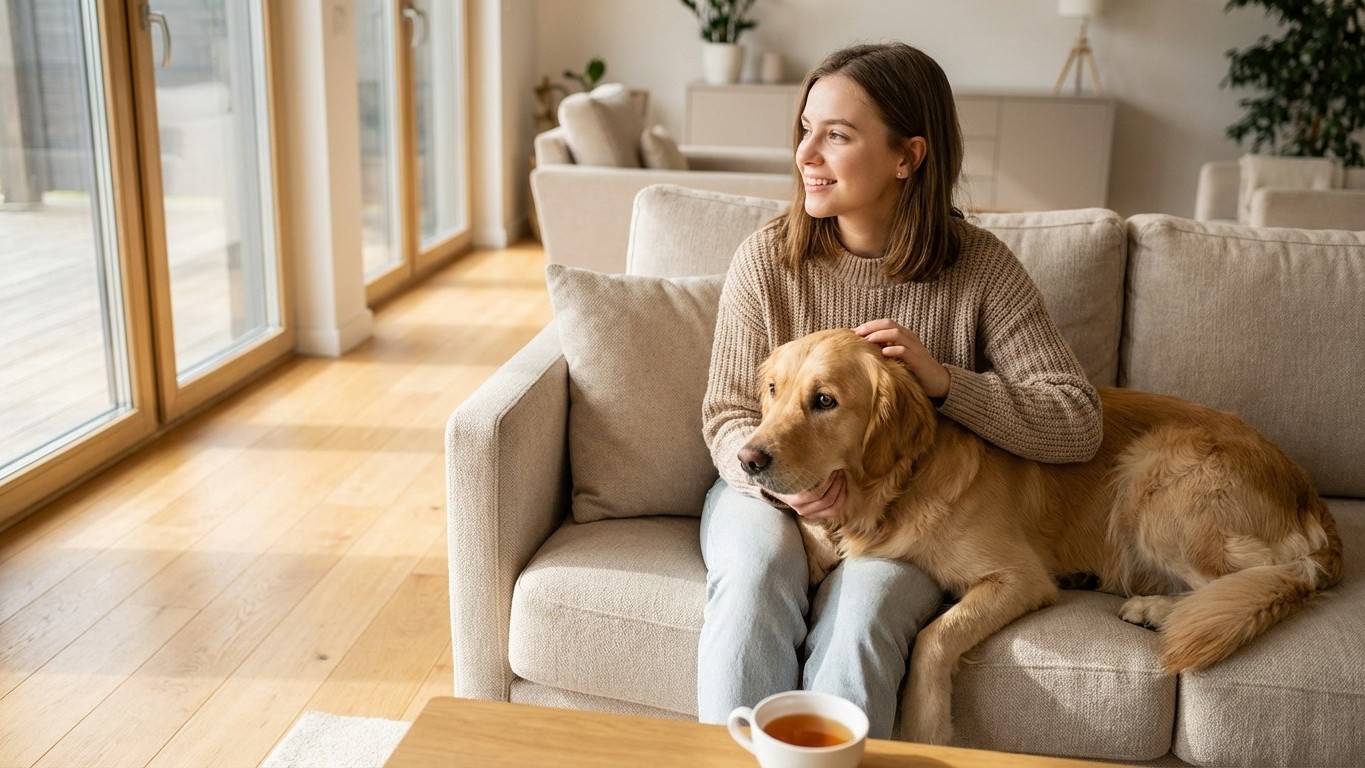
The Golden Retriever shares many of these qualities but tends to be slightly softer in temperament, making it an excellent choice for families with children. They’re famously patient and respond beautifully to positive training methods. Hip dysplasia is a health concern worth discussing with a vet and any reputable breeder.
The Cavalier King Charles Spaniel is something of an underrated gem for beginners in the UK. Small, gentle, and deeply affectionate, they adapt well to flats and quieter lifestyles. Their grooming needs are manageable, and their temperament is wonderfully forgiving. Health screening for heart conditions is absolutely necessary when choosing a puppy, however.
The Bichon Frise offers a cheerful, low-shedding option for those with allergies or a preference for a smaller dog. They’re sociable, trainable, and relatively adaptable. Regular professional grooming is required to keep their coat in good condition.
The Poodle (in miniature or standard size) is one of the most intelligent and trainable breeds in existence. Low-shedding, adaptable, and genuinely fun to train, Poodles reward engaged owners. They do require mental stimulation and regular grooming, but for an owner willing to invest time, they’re exceptional companions.
The Whippet surprises many people. Despite their racing heritage, they’re famously calm and affectionate indoors, content with two decent daily walks and a soft sofa. They’re gentle with children, easy to groom, and remarkably low-maintenance in temperament. Cold weather requires a coat, and they do have a prey drive worth managing, but overall they suit a wide range of first-time owners beautifully.
The Shih Tzu, Maltese, and Pug round out the smaller options often recommended for beginners, though Pugs deserve a careful conversation about brachycephalic health before purchase. The Shih Tzu and Maltese are both charming, adaptable, and gentle, if a little more assertive in personality than their size might suggest.
For those wanting something slightly larger and more active, the Boxer is worth considering. Playful, loyal, and remarkably patient with children, Boxers are boisterous but trainable and tend to form strong bonds quickly. They’re not a low-energy choice, but their sociable, open temperament makes them genuinely rewarding for engaged first-time owners.
A Quick Comparison of Profiles
- Labrador Retriever: high energy, very trainable, family-friendly, moderate shedding
- Golden Retriever: medium-high energy, gentle, great with children, moderate shedding
- Cavalier King Charles Spaniel: low-medium energy, very affectionate, flat-friendly, regular grooming needed
- Whippet: medium energy, calm indoors, minimal grooming, prey drive to manage
- Poodle (miniature/standard): medium-high energy, highly intelligent, low-shedding, needs mental enrichment
For a broader look at how breed choices align with different lifestyles, the dog breeds guide covers the full spectrum of considerations for matching a dog to your daily reality.
Breeds to Avoid as a First Dog
This isn’t about dismissing certain breeds as “bad”. Every breed has devoted, capable owners who thrive with them. The concern is the mismatch between breed demands and the beginner’s experience level, and that mismatch can cause genuine suffering for both dog and owner.
Breeds like the Border Collie, Belgian Malinois, and Siberian Husky are extraordinary dogs in the right hands, but they were developed for demanding working roles and their drive, intelligence, and energy are calibrated accordingly. A Malinois without consistent, expert-level training and daily work becomes a four-legged anxiety machine capable of serious destruction. A Husky with insufficient exercise will redesign your garden. A Border Collie without mental stimulation will herd your children and develop compulsive behaviours.
Guarding breeds with strong territorial instincts, such as the Cane Corso, Dogo Argentino, or certain strains of Rottweiler, require confident, experienced handling and thorough early socialisation. The consequences of getting this wrong extend beyond household inconvenience into genuine public safety concerns. The dog breeds guide for beginners explores these higher-demand breeds in detail, including the specific experience levels they tend to require.
Preparing for Your First Dog: What Actually Matters
Once you’ve identified a suitable breed, the practical preparation becomes the priority. The physical checklist (crate, bed, food, lead, collar, ID tag, microchipping) is straightforward enough. The more important preparation is mental and logistical. Have you identified a local vet and registered before the dog arrives? Do you have a plan for the first few nights? Have you discussed with everyone in the household how training will be handled consistently?
The single most common error I see reported by new owners is inconsistency across family members. If one person allows the puppy on the sofa and another doesn’t, or if recall is rewarded by some and ignored by others, the dog receives genuinely confusing signals that make training significantly harder. Agreeing on rules before the dog arrives saves enormous headaches later.
Puppy classes are worth every penny, not just for the training itself but for the socialisation opportunities and the chance to ask experienced trainers questions in real time. For a deeper framework on making the right initial choice, the how to choose a dog breed guide offers a structured seven-criterion method that strips the decision back to fundamentals. And if you’re still exploring which breed profile genuinely suits your life, the dog breeds guide for beginners offers a practical lifestyle-based approach worth bookmarking.
The first year with a dog is a learning experience unlike any other. You’ll get things wrong, the dog will forgive you (most of the time), and somewhere between the chewed skirting boards and the perfect recall you finally nail in the park, you’ll wonder how you ever lived without them. The breed you choose shapes that entire experience, which is exactly why the decision deserves this much thought.