
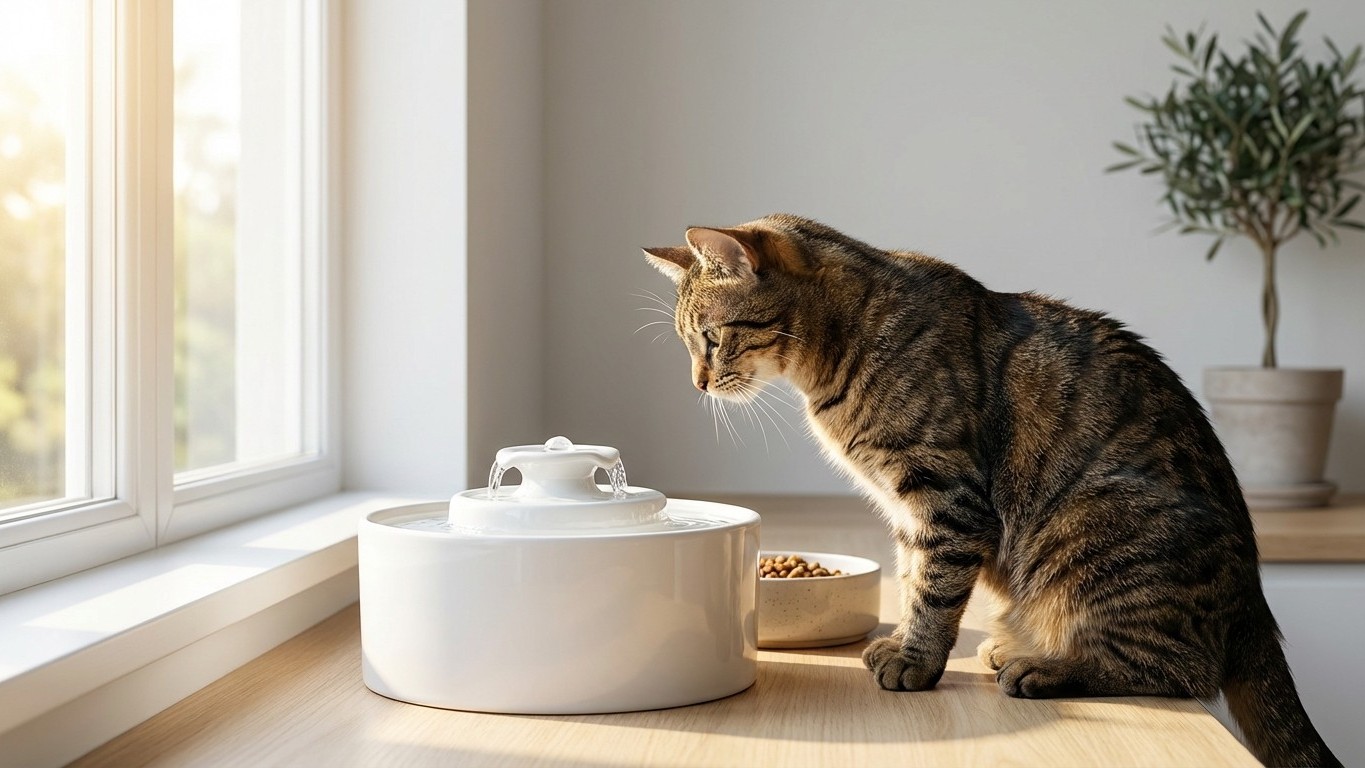
Cats are, by nature, spectacularly indifferent to still water. If yours walks past her bowl every single day without so much as a glance, you’re not dealing with a fussy pet, you’re dealing with a very ancient instinct that hasn’t been updated since your tabby’s ancestors were roaming the Sahara. The moment I truly grasped this, my whole approach to keeping my cat hydrated shifted completely.
Key takeaways
- Cats evolved to fear still water because stagnant pools meant disease and death in the wild
- Poor thirst sensitivity in cats masks dehydration that quietly leads to kidney disease and UTIs
- One simple change solved the problem in under 48 hours for this cat owner
Why cats distrust still water (and it’s not stubbornness)
Wild felids evolved in environments where stagnant water was a genuine health risk. Standing pools harbour bacteria, parasites, and decay in ways that flowing streams simply don’t. Over millennia, cats developed a strong preference for moving water, the kind that bubbles, trickles, or at least ripples. Your cat isn’t being Difficult when she sniffs her bowl and walks away. She’s running a survival assessment that dates back thousands of years, and the bowl is failing the test.
There’s also a peculiar anatomical factor that rarely comes up in conversation: cats have relatively poor thirst sensitivity compared to dogs. They evolved to get the bulk of their moisture from prey, since a freshly caught mouse is roughly 70% water. This means a cat fed exclusively on dry kibble is in a near-permanent state of mild dehydration without ever registering intense thirst. The bowl sits untouched, and the cat genuinely doesn’t feel the urgency to drink, even when she should.
Add to this the position of the bowl itself. Many cats dislike drinking from a vessel placed directly next to their food. In the wild, a water source close to prey or a carcass would be considered contaminated. The logic holds up, even in a modern kitchen. Moving the water bowl to a different room, or at least a metre or two away from the food bowl, can make a surprising difference almost immediately.
The signs your cat isn’t drinking enough
Chronic low-level dehydration in cats is linked to some of the most common and serious conditions vets see: urinary tract infections, bladder crystals, kidney disease. These conditions tend to develop quietly, which is part of what makes them so dangerous. A cat who drinks too little isn’t necessarily going to show obvious signs until things have progressed.
What to watch for includes reduced urination, urine that appears very dark or strongly concentrated, lethargy, dry or tacky gums, and a loss of skin elasticity (the gentle “scruff test,” where the skin at the back of the neck takes longer than usual to return to its normal position after being lightly pinched). If you notice any of these, please don’t wait and see, take your cat to a vet as soon as possible. Kidney disease in particular is far easier to manage when caught early.
It’s worth saying plainly: there is no substitute for a professional assessment. These signs overlap with many conditions, and guessing at home wastes time your cat may not have.
What actually works to get a cat drinking more
A pet water fountain changed things for my cat within 48 hours. The constant circulation keeps water oxygenated and fresh-tasting, and the gentle sound of moving water appears to trigger that ancestral instinct in a way that a static bowl simply can’t. Most cats, when introduced to a fountain, will investigate with genuine curiosity rather than practiced indifference. Some take a day or two; others are converts on the first sniff.
Ceramic and stainless steel fountains tend to be preferred over plastic. Plastic can develop a faint taste over time that’s imperceptible to us but apparently offensive to a creature whose nose is estimated to be 14 times more sensitive than ours. Ceramic is easy to clean and doesn’t leach any flavour into the water. Whatever material you choose, cleaning the fountain thoroughly once a week is non-negotiable, the filter and all components need proper attention, not just a quick rinse.
Wet food is the other major lever. A tin or pouch of good-quality wet food contains a significant volume of moisture that a cat absorbs directly from her meal. Owners who switch from dry-only diets to mixed or wet-only feeding often find their cats’ urinary health improves noticeably over time. Speak to your vet before making significant dietary Changes, especially if your cat has an existing health condition, but for most healthy adult cats, incorporating wet food is a straightforward way to boost daily hydration without relying entirely on the water bowl.
Some cats respond well to having multiple water sources dotted around the home. A glass on the bathroom windowsill, a shallow bowl near the back door, a fountain in the sitting room. The variety seems to appeal to their exploratory nature, and having options means there’s always something convenient when the mood strikes.
A small trick that often gets overlooked: rinsing your cat’s bowl with boiling water and letting it cool completely before refilling it, rather than simply topping it up. Stale water accumulates at the bottom of the bowl, and cats can detect it even when it’s invisible to us. Fresh water, properly presented, is a small effort with an outsized effect.
Rethinking the whole setup
What strikes me now, looking back at years of nudging a full water bowl closer to a cat who wanted nothing to do with it, is how often we assume our pets are being awkward when they’re actually communicating something completely coherent. The untouched bowl was a message, not a mood. Once I started listening to the behaviour rather than trying to override it, everything got easier.
If your cat is drinking well and seems healthy, brilliant, keep going. But if the bowl is still full every Evening and you’re quietly wondering, this might be the moment to try something different. The answer has been sitting in evolutionary biology all along, waiting for someone to notice.