
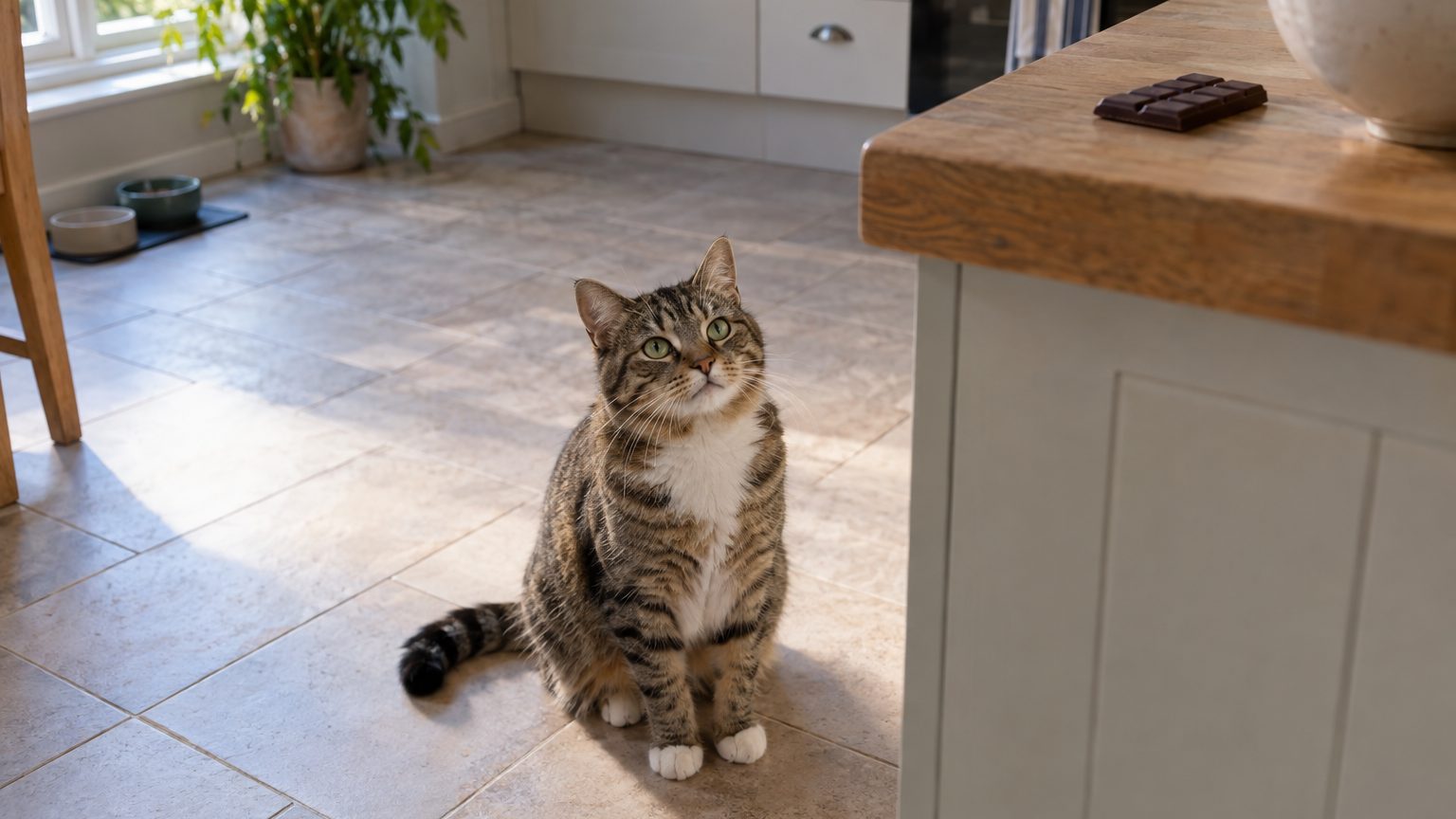
Phone your vet straight away if your cat has eaten chocolate, even if she seems perfectly fine. Chocolate contains theobromine and caffeine, two compounds that cats cannot clear from their bodies efficiently, and the amount that causes trouble depends on the type of chocolate and the size of the cat. Waiting to see what happens wastes the hours in which treatment works best.
Don’t wait for symptoms.
- Chocolate contains theobromine and caffeine, which cats cannot clear from their bodies efficiently.
- Dark chocolate, cocoa powder and baking chocolate are the most dangerous types.
- Vomiting, restlessness and a racing heart are early signs, while tremors and seizures are emergencies.
What to do in the first minutes
Start by working out what she ate, roughly how much, and when. Keep the wrapper, or take a photo of the packaging, because the cocoa percentage and any other ingredients matter to the vet. Weigh your cat if you can, or give your best estimate, as most domestic cats fall somewhere between 3 and 6 kg.
Ring your own practice first. If it is closed, it will usually have an out-of-hours number on the answerphone message, and many areas have an emergency clinic that takes over at night and at weekends. Be ready to give the product, the quantity, the time and your cat’s weight.
Do not try to make her vomit at home. Salt water, which some old advice sheets still recommend, can cause dangerous salt poisoning, and other home remedies risk choking or inhalation of vomit into the lungs. If inducing vomiting is appropriate, the vet will use an injectable medicine that is safe for cats, and it works best soon after eating.
Treatment varies with the dose and timing. A vet may give activated charcoal to limit absorption of the toxins, set up intravenous fluids, and monitor heart rate and rhythm. Cats showing tremors or seizures may need medication to control them and a stay in the clinic for observation.
Speed matters far more than tidiness.
Which chocolate is most dangerous
The darker and more bitter the chocolate, the more theobromine it holds. Cocoa powder, baking chocolate and plain dark chocolate sit at the dangerous end, and a small lick of a cooking bar can matter more than a whole milk chocolate button. Milk chocolate contains much less theobromine, although a small cat that eats a large amount can still be in trouble.
White chocolate has only trace amounts of theobromine, so poisoning from the cocoa compounds is unlikely. That does not make it harmless. The fat and sugar can upset the stomach and, in some cats, contribute to pancreatitis, an inflammation of the pancreas that needs veterinary care.
Cocoa bean shells, sold as garden mulch, deserve a mention because they are easy to overlook. They can contain significant theobromine, and the smell attracts some dogs, so check what is going onto your flowerbeds if you have pets of any species.
Then there is Everything else in the packet. Raisins, macadamia nuts and coffee beans in chocolate-covered treats bring their own problems, and some sugar-free products contain xylitol. Xylitol is a well-documented danger for dogs, and your vet will want to know whether it is on the ingredients list so they can decide how worried to be about a cat too.
Many bars of chocolate now carry the cocoa percentage on the front. That number is the most useful single clue you can hand to the person on the phone.
Symptoms to watch for
Early signs usually appear within a few hours, though they can take longer, and the effects can last a day or more because theobromine leaves the body slowly. Vomiting and diarrhoea are common first signals. You may also see restlessness, excessive thirst, panting, a racing heart or a cat who cannot seem to settle.
More serious poisoning affects the nervous system and heart. Muscle tremors, stiffness, an irregular heartbeat, high body temperature and seizures all count as emergencies, and a cat who collapses needs a vet immediately. Cats are also good at hiding illness, so hiding under the bed, refusing food or simply seeming “off” should be taken seriously after a known chocolate incident.
Cats are less often poisoned than dogs, partly because they have no taste receptors for sweetness and so rarely seek chocolate out. That is a quirk of feline biology: they lack a working version of a gene needed to detect sugars. Poisoning tends to happen when a curious cat laps at melted chocolate, steals a bit of dessert or investigates a dropped bar rather than from a real craving.
Never assume a lack of interest means safety.
Preventing it from happening again
Easter, Christmas and Halloween are the high-risk periods, when chocolate arrives in decorative bags, advent calendars and open bowls at cat height. Store it in a closed cupboard rather than on a worktop, and ask visitors to keep their handbags off the floor, where wrapped sweets are easy for a nosy cat to reach.
Cats can open more than people expect. A determined one will rip into a paper bag or pry at a loose lid, so a tin with a firmly fitting top is more reliable than a bag clipped shut.
Keep your vet’s number and the nearest emergency clinic saved in your phone, and have a note of your cat’s weight somewhere handy. The Veterinary Poisons Information Service supports vets in the UK, and your practice can contact it if they want specialist advice on an unusual case, so you do not need to hunt for expert guidance yourself.
One last practical point: if your cat has eaten chocolate and seems fine after a few hours, still tell the vet. The effects can build slowly, and a phone call costs far less than a night in intensive care.