
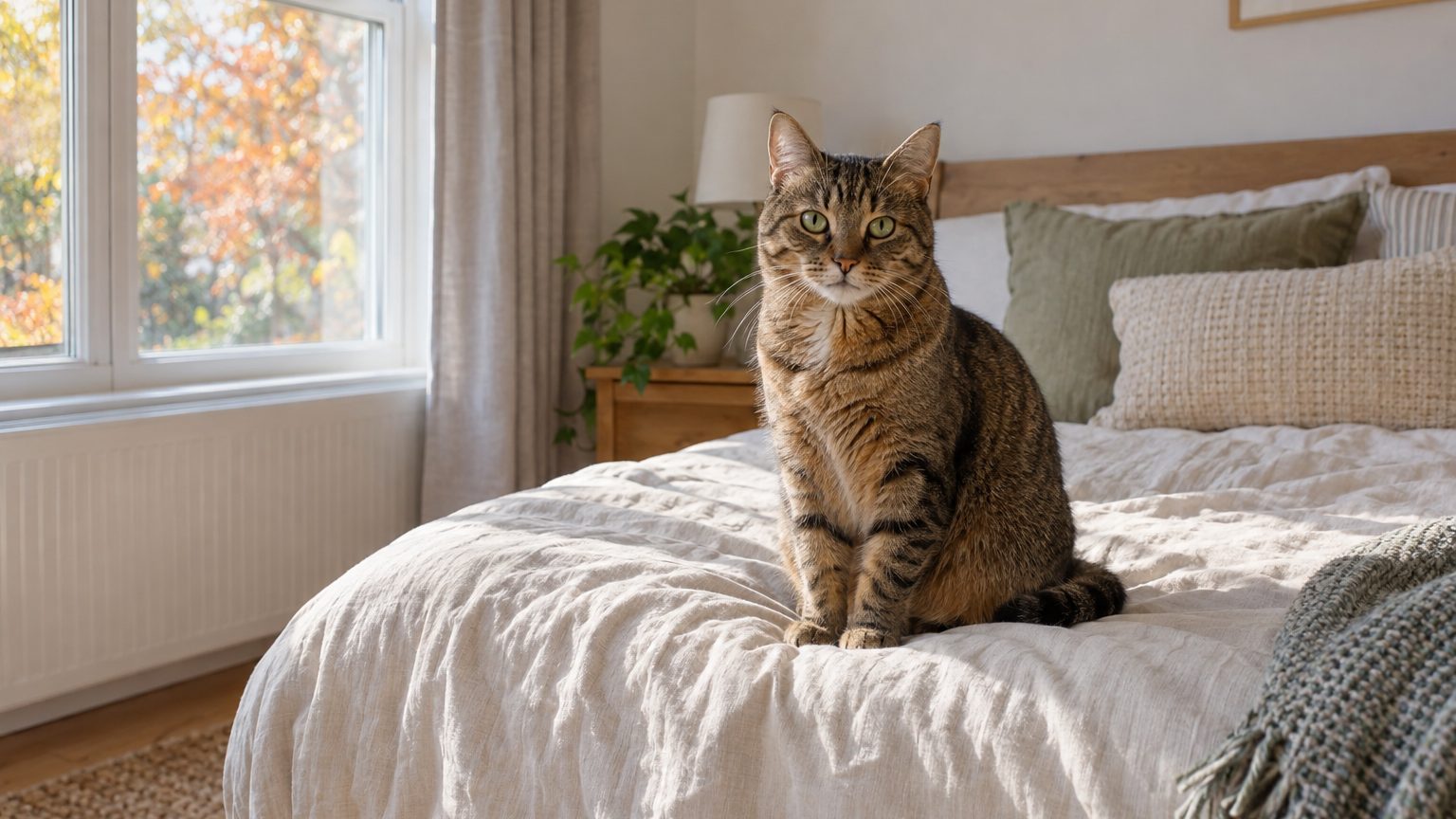
A cat that pees on your bed is almost never being spiteful. The behaviour is a message, and it usually means one of two things: something hurts, or something feels unsafe.
Cats don’t plan revenge. They lack the kind of reasoning that links “owner went away for the weekend” to “ruin the duvet”. What they do have is a strong sense of scent, and a bed soaked in your smell is the most concentrated, comforting place in the house.
- Urinary infections, bladder stones and kidney disease can all push a cat toward a softer spot than her litter tray.
- Stress, including a new pet, a new person or a neighbourhood cat outside, is a common trigger for bed peeing.
- Thorough cleaning with an enzymatic product and a properly set-up litter tray stop most repeat visits.
Rule out the medical causes first
See a vet before you try anything else.
Cystitis, urinary tract infections, bladder stones and kidney disease can all make a cat associate the litter tray with pain, so she looks for somewhere softer to go. Feline idiopathic cystitis, an inflammation of the bladder with no identifiable infection, is common and is strongly linked to stress. Diabetes and an overactive thyroid make cats drink and urinate far more than usual, and a cat that simply cannot hold it may not reach the tray in time. Older cats with arthritis may find climbing into a high-sided tray miserable, and a flat, yielding mattress is much kinder on sore joints.
Watch for straining, frequent trips with little result, crying while urinating, blood in the urine, or excessive licking of the genital area. A male cat who is straining and producing nothing is an emergency. A urethral blockage can be fatal within a day or two, so don’t wait for the next appointment slot, ring your vet or an out-of-hours clinic straight away.
A vet will usually want a urine sample, and may suggest blood tests or imaging. Ask what the clinic prefers, as some supply special non-absorbent litter for collecting samples at home.
When the cause is stress
If the vet gives a clean bill of health, look at the cat’s world. Cats are territorial animals that thrive on predictability, and what looks trivial to us can feel seismic to them. A new baby, a new partner, a visiting dog, building work, a move, even rearranged furniture can tip a sensitive cat over the edge.
Your bed is a clever choice from her point of view. It smells overwhelmingly of the person she trusts most, and depositing urine there can be a way of blending her scent with yours to feel safer. Some cats do it after a period of absence, when the smell of you has faded and the house feels less secure.
Cats outside the window matter more than most owners realise. A neighbourhood tom strolling across the garden can prompt a cat indoors to start marking, and it may happen on beds, windowsills or near doors. Closing the curtains or applying frosted film to the lower part of the window can make a real difference.
Multi-cat homes bring their own tensions. Cats may share a sofa yet quietly compete over food, trays and resting spots, and the subtle bullying that results is easy for people to miss.
Another point is the litter tray itself. Cats can be fussy about the type of litter, the depth, the location, a hood or liner, or a tray that has not been cleaned often enough. A tray tucked beside a noisy washing machine may be fine one day and unbearable the next, when the spin cycle startles her mid-squat.
How to stop it
Clean thoroughly, and use the right product. Ordinary household cleaners can leave traces that cats still detect, and ammonia-based products smell uncomfortably like urine, which can invite repeat visits. An enzymatic cleaner designed for pet accidents breaks down the compounds responsible. Wash bedding on a hot cycle if the fabric allows, and treat the mattress itself properly, because urine soaks deep.
Shut the bedroom door. It sounds blunt, but it breaks the habit while you work on the underlying cause. If that isn’t practical, cover the bed with a waterproof protector or a sheet of plastic topped with a throw, since many cats dislike the crinkly feel.
Then audit the tray set-up. The general guidance from feline welfare organisations is one tray per cat plus one extra, placed in different quiet spots rather than lined up together. Trays should be large enough for her to turn around comfortably, and many cats prefer them uncovered. Scoop daily at the very least, and change the litter fully on a regular schedule. If you switch litter brands, put a second tray with the old one beside it so she can choose.
Reduce her stress by giving her options. Provide high perches, hiding places, scratching posts and a few of her own comfortable beds, ideally with an old T-shirt of yours tucked in so she gets your scent without needing to claim yours. Feeding in several spots, keeping routines steady, and short play sessions with a wand toy each day can ease tension. Synthetic feline facial pheromone diffusers are popular, and some owners find they help, although the evidence is mixed and they work better as part of a wider plan than on their own.
Never punish her.
Shouting, rubbing her nose in it or squirting her with water teaches her only that you are frightening, which raises the stress that probably caused the problem. If you catch her mid-act, interrupt calmly and place her in her tray, but don’t chase her afterwards.
For persistent cases, ask your vet about a referral to a qualified clinical animal behaviourist. In the UK, the Animal Behaviour and Training Council keeps a register of practitioners, and vets generally need to refer behaviour cases anyway. In some situations, a vet may discuss medication to help with anxiety, but that decision belongs with them.
One last detail that surprises many owners: urine marking, where a cat sprays a small amount onto a vertical surface, is different from simply emptying her bladder on a flat one. Pee pooled in the middle of your duvet usually points towards a toileting problem, pain or a tray aversion, while spray on the headboard or bedroom wall leans towards marking and anxiety. Telling your vet which one you are seeing, and taking a photo or two, can speed up the diagnosis.