
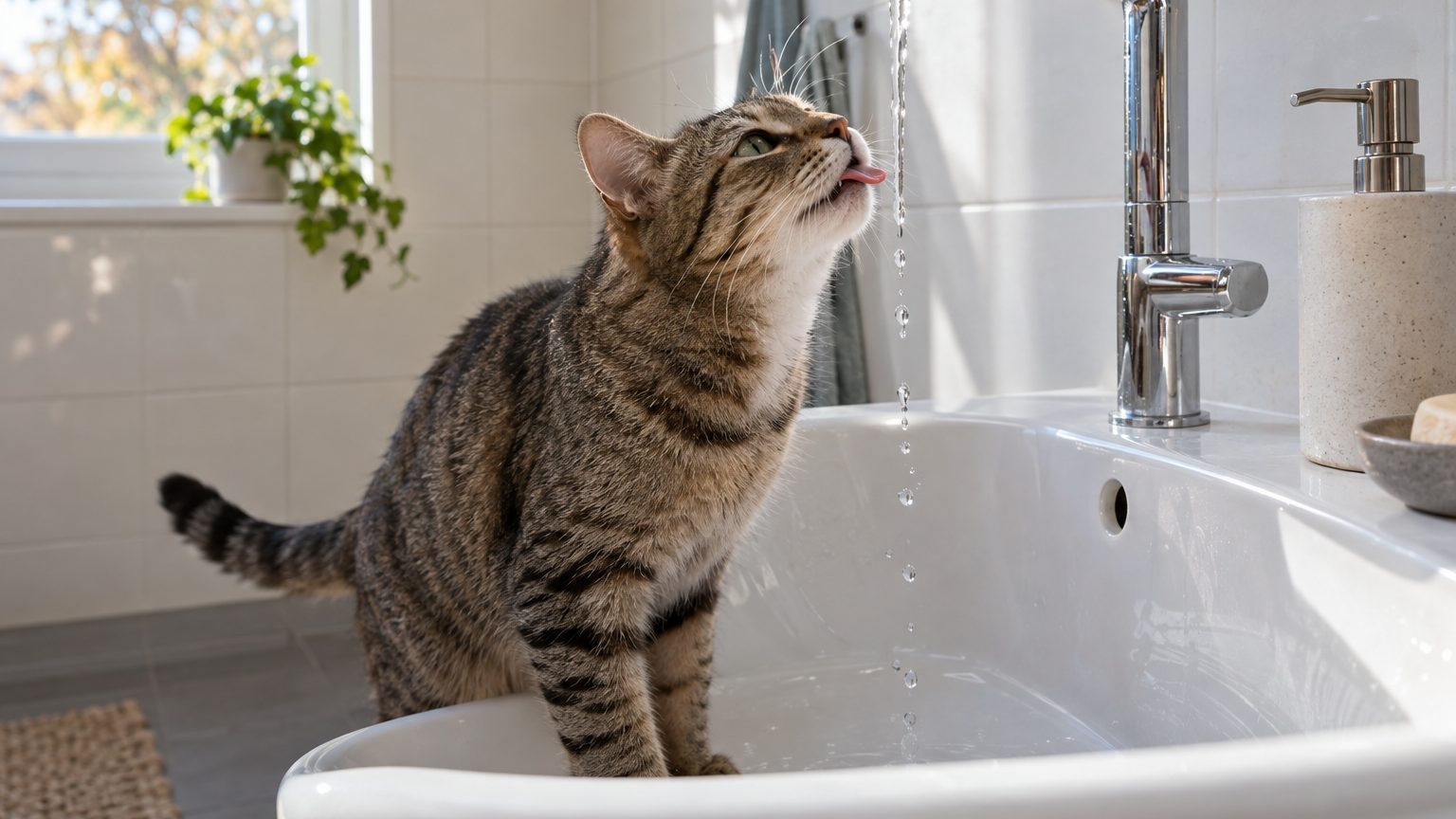
Most cats that prefer the tap are following instinct, not being awkward. Running water signals “fresh and safe” to an animal whose ancestors couldn’t afford to gamble on a murky puddle. A bowl that sits still, even one filled this morning, can look far less trustworthy.
The habit is common and usually harmless.
- Cats instinctively trust moving water over still water because their wild ancestors avoided bacteria in stagnant sources.
- Bowl location matters: placing water away from food and litter, and using wide shallow ceramic dishes, encourages drinking.
- A sudden increase in drinking or desperation at water bowls signals potential kidney disease, diabetes, or thyroid problems and warrants a vet visit.
What the tap offers that a bowl doesn’t
Domestic cats descend from the African wildcat, a species of dry country that gets much of its moisture from prey. Their thirst drive is naturally low, so they need a strong cue to drink. Moving water is one such cue, and a preference for it makes evolutionary sense because standing water can harbour bacteria. Researchers treat this as a likely explanation, not a proven one. Add the cool temperature, the glint and the sound of a tap, and the sink becomes hard to resist.
Some owners blame whisker fatigue, the idea that deep, narrow bowls brush against sensitive whiskers and irritate them. The theory is popular among cat owners but has little hard evidence behind it, so treat it as one possible factor and not a diagnosis.
Location matters more than most people realise. Wild cats tend to avoid drinking next to a kill, probably because carcasses foul water, and plenty of pet cats seem to carry the same wariness. Yet the typical household sets the water bowl beside the food dish, or tucks it near the litter tray, because it looks tidy.
Plastic holds odours that human noses never notice.
Then there’s the human factor. Cats learn fast, and if you turn the tap on every time she leaps onto the sink, she has learned that jumping up produces a performance and your undivided attention. Plenty of cats drink from the tap partly because it’s a lovely little ritual they share with you.
Simple fixes that actually work
Start with the bowl itself. Choose something wide and shallow in ceramic, glass or stainless steel, and wash it daily with hot water and washing-up liquid. A slimy film (biofilm) builds up on bowls faster than you’d think, and cats notice it.
Next, offer water in more than one place. Put bowls in a few spots around the house, well away from food and litter, perhaps on a landing, by a favourite window or near where she naps. A pet water fountain can mimic the tap if she loves moving water. Pick one that comes apart easily for cleaning, because a grubby fountain is worse than a plain bowl, and filters and pumps need regular attention.
Small tweaks are worth trying one at a time. Fill the bowl right to the brim so she needn’t dip her head, or use fresh cold water, and watch what she does rather than guessing.
Diet plays a part too. Wet food is roughly 70 to 80 per cent water, while dry biscuits contain around a tenth of that, so a cat on dry food has to drink far more to make up the difference. Adding some wet food, or a splash of water to meals, can raise her intake without any fuss. Check with your vet before making big dietary changes, especially if she has a medical condition.
When the tap habit signals something else
A cat who has always loved the tap is one thing. A cat who suddenly drinks much more, or seems almost desperate at the water, is another. Increased thirst is linked with conditions such as kidney disease, diabetes and an overactive thyroid, all of which become more common as cats age. Other warning signs include bigger or more frequent clumps in the litter tray, weight loss despite a good appetite, and a dull coat. If you spot any of these, book a vet appointment.
Don’t wait to see if it passes.
If you’re unsure whether her drinking has changed, measure the water you put out over 24 hours and note what’s left. A vet will find that figure useful. And if she’s happy with the tap and healthy, a dripping tap left on all day wastes water, so a fountain or a quick turn of the tap each time is kinder to your bills and the planet.
One last quirk: cats don’t scoop water like dogs. High-speed footage published in the journal Science in 2010 showed that a cat’s tongue barely touches the surface, then flicks back and pulls up a tiny column of water that she snaps her jaws shut around before it collapses. It’s an elegant bit of physics, and it’s why a cat can look like she’s barely drinking at all.