
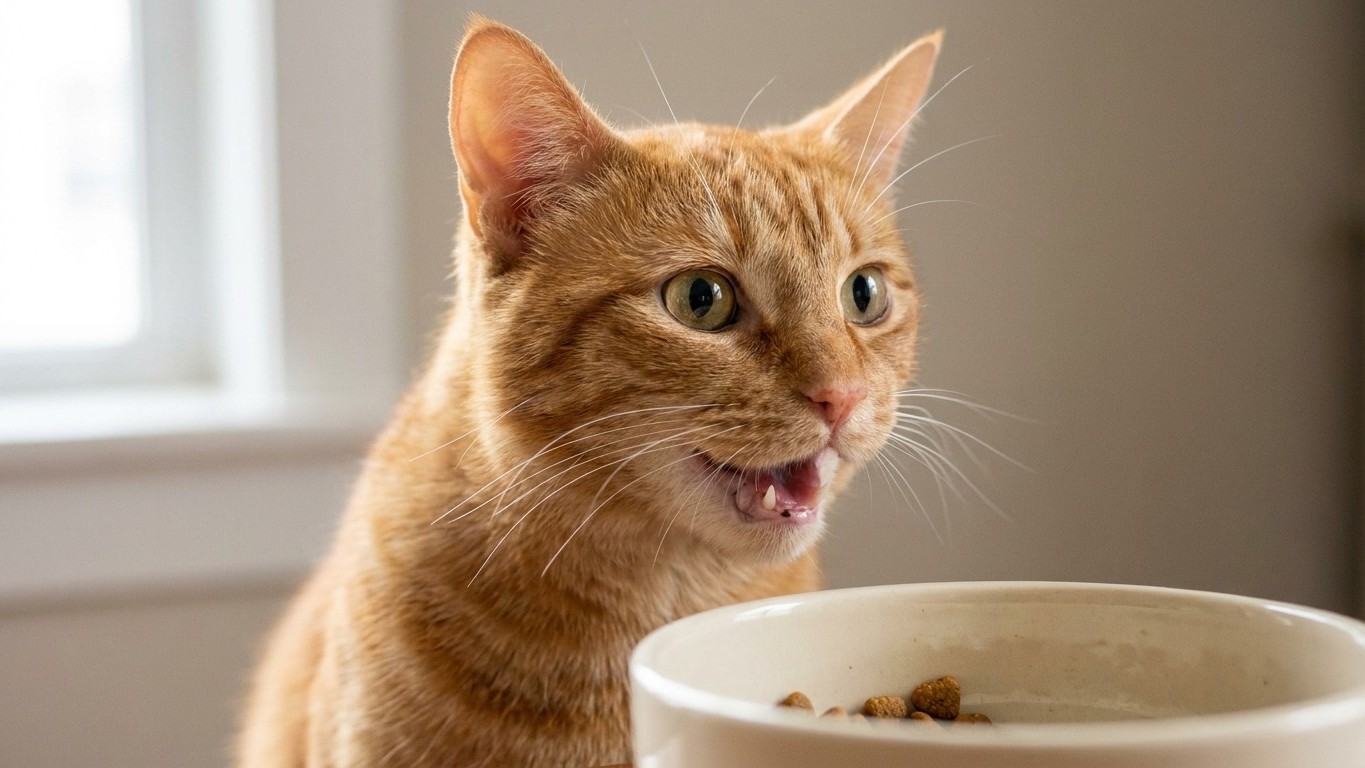
Chattering over a food bowl is not a warning growl. It is one of the most misunderstood sounds a cat makes, and it very rarely signals the kind of aggression that would put a child at risk. When a Yorkshire shelter vet sat down with a distressed owner who had just handed back her family cat, that single clarification changed everything, and it is worth every cat owner hearing it too.
The woman had noticed her cat making a strange, stuttering noise near his bowl at mealtimes, jaw clacking, eyes fixed, something that sounded uncomfortably close to a threat. With two young children in the house, she wasn’t willing to take chances. She surrendered him as aggressive. But the behaviourist who examined the cat recognised the sound instantly for what it actually was: excitement, not hostility.
Key takeaways
- A family returned their cat to a shelter believing his food-bowl chattering was a warning sign of aggression
- The shelter vet identified the sound instantly—but it meant something completely different than the family feared
- One simple lesson about cat body language and vocalizations changed everything
What that chattering sound really means
Cat chattering (sometimes called chittering or twittering) is produced by rapid, rhythmic jaw movements, often layered with high-pitched staccato squeaks. Each cat possesses an individual sound, which differs in pitch and frequency but includes a sequence of clicking-like noises and a string of high-frequency staccato squeaking-like sounds, according to research from the University of Lincoln and ICatCare. It looks and sounds odd if you’ve never encountered it before, which is exactly why it gets mistaken for something sinister.
The behaviour is rooted firmly in hunting instinct rather than temper. A chattering cat is in hunting mode, whether they can get to their prey or not, and if you’ve ever seen your cat doing this, chances are they spotted potential prey and their hunting instincts have kicked in. Some researchers even suggest the sound is a form of mimicry. Cat chattering mimics the sounds of small prey like birds and squirrels, involving rhythmic jaw movements and an open mouth, often accompanied by widened eyes and tilted ears.
Near the food bowl specifically, this usually translates as sheer anticipation. Cats chirp and chatter in anticipation of dinner when you pick up her food bowl, and vocalisations like this are rarely an indication that there is a health or behavior problem. One behaviourist compared it to a very specific kind of feline outburst: chattering is a cat’s way of saying it’s pissed off about something, usually involving prey and/or food, and Amy Shojai compares it to “swearing” in kittyspeak. Frustration, yes, occasionally, but not the calculated threat display that a growl represents.
The sound that actually should worry you
Here’s where the confusion often starts, because cats do make a genuinely defensive noise around food, and it sounds nothing like chattering once you know the difference. A growling cat is annoyed, frightened or angry, and some cats use growling to show possession of a favoured item like a food bowl if another cat or person dares to come near it, with the growl acting as a clear sign the cat wants whoever is triggering them to back off. That’s resource guarding, and it’s a genuine behavioural pattern, not a myth invented by overcautious owners.
Resource guarding isn’t naughtiness. It stems from the normal desire to maintain access to valuable resources, involving threatening behaviour directed toward any individual who approaches while the cat is in possession of something he doesn’t want to relinquish, and this behaviour arises from underlying anxiety. Shelter and rescue cats are particularly prone to it. A history of inconsistent access to resources in shelter environments, plus early life stress or poor socialisation during the critical period between three and fourteen weeks of age, are recognised risk factors.
The scale of the problem is significant enough that vets track it. The consequences of aggressive behaviour in cats can range from injuries to other cats and people to the surrender of aggressive cats to shelters, and one study reported that 27 percent of cats relinquished to shelters for behavioural reasons were surrendered specifically for aggression. That’s a startling one in four, and it makes you wonder how many of those cases, like this one, were actually cases of mistaken identity rather than genuine danger.
Reading body language, not just noise
Sound alone rarely tells the full story. Ears, tail and posture reveal far more about a cat’s actual mood than the noise coming out of its mouth. Watch for these signals together, not in isolation:
- Ears forward and body still usually means focused excitement, often the posture accompanying chattering at a bowl or window
- Ears flattened against the head paired with dilated pupils and a puffed-up back signals real distress or anger
- A tail held low and twitching points to mild frustration, while a relaxed, upright tail suggests a friendly, contented cat
For households with young children, prevention beats diagnosis every time. Feeding stations tucked away from busy foot traffic, with areas that have at least two ways for a cat to enter or leave and that aren’t locations where a cat may feel threatened or stressed, reduce the chances of a defensive reaction in the first place. If a cat genuinely does growl, snap or swat around food, professional help exists and works: consulting a qualified behaviour professional is recommended, since behaviour modification for guarding requires experience, patience and an understanding of body language and triggers. Punishment, unfortunately, tends to backfire. Most importantly, don’t punish the cat, as it won’t help and may make things worse.
A second chance, properly understood
The cat in this story wasn’t dangerous. He was hungry, excited, and doing what cats have done around anticipated meals for thousands of years. Once the shelter vet demonstrated the difference between an excited chirp and a defensive growl, side by side, the family recognised their own pet’s behaviour for what it was and asked to bring him home.
It’s a reminder that a five-minute conversation with someone who knows feline vocalisations can prevent an unnecessary heartbreak. If your own cat makes an unfamiliar sound around the bowl, film it before you panic. A vet or qualified behaviourist can usually tell within seconds whether you’re hearing hunting instinct in overdrive or a genuine warning sign, and that distinction matters far more than most of us realise.
Sources : inverse.com | herveycats.com