
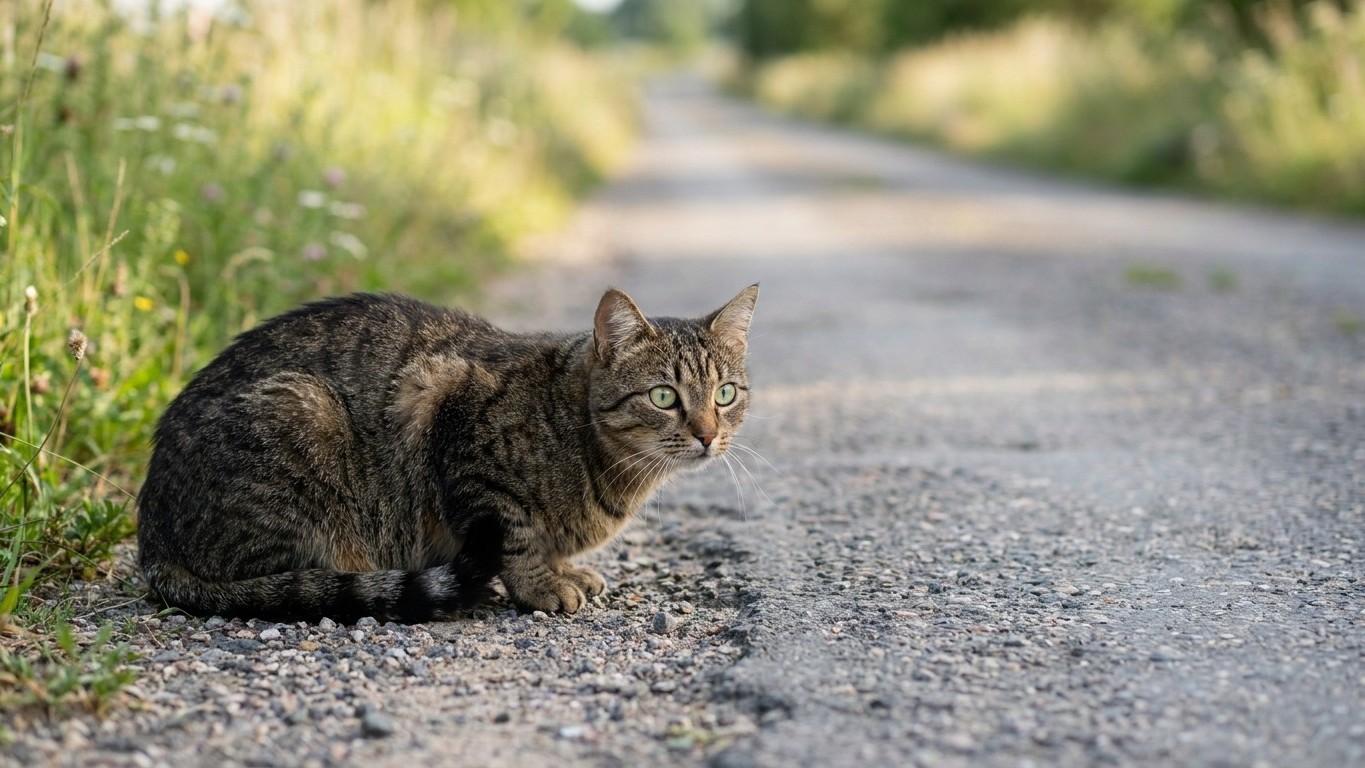
A cat darting across a country lane can turn into a very expensive few weeks. One reader who wrote to me described exactly that scenario: swerving to avoid a stray cat, clipping a kerb, and ending up with a repair bill north of £900. What really stung wasn’t the bodywork cost, though. It was the letter that landed three weeks later, when the insurer finally explained how they’d assessed fault, and the cat got a starring role in that explanation.
This isn’t a one-off oddity. Animal-related collisions are far more common than most drivers assume, and cats sit near the top of the troublemaker list.
Key takeaways
- A single cat darting across a country lane cost one driver over £900—but the real shock came in the insurance letter three weeks later
- Cats rank among the top animals causing road accidents, yet determining who pays depends on whether the animal is wild or owned
- The paperwork delay hides a murky legal question: can pet owners really be held responsible when their cats roam by nature?
When a cat causes a crash, who actually pays?
Insurers treat animal strikes as a genuine category of claim, not an excuse. According to survey data, one in five of us have experienced hitting an animal while driving. Rabbits top the table for road sense failures, but according to survey data, the animals with the worst traffic sense were rabbits, followed by pigeons and cats. So if your near-miss (or actual miss) involved a cat, you’re in well-populated company.
The financial mechanics differ depending on whether the animal is wild or owned. If you’ve got comprehensive insurance then any damage caused to your vehicle or injuries caused to yourself will be covered. Hitting a fox or a deer, though, tends to work against you: hitting a wild animal will normally be marked down as an at-fault claim, and will likely result in the cost of your car insurance increasing next year. A domestic cat is a different animal entirely, quite literally, because it usually belongs to someone.
If a domestic animal such as a dog or cat causes a road traffic accident causing personal injury, their owners would be deemed liable for the crash, and any compensation awarded for damage to your vehicle will usually be covered by their home insurance policy. That’s the detail that often surfaces late in an insurer’s letter: not that you were careless, but that liability may sit with a cat’s owner rather than with you. The catch is proving it. Dogs and cats are usually pets who will have an owner, and in many cases they may be microchipped, enabling identification of the owner. Without a collar, a chip scan, or a witness, that trail goes cold fast, which is exactly why so many claims default back to the driver.
Why the paperwork takes so long
Three weeks isn’t unusual, and it’s rarely down to laziness. Insurers have to establish whether an owner can be traced and held responsible before they finalise your claim. You could claim if your accident was caused by a stray cat or dog, if the animal has a registered owner, and you can establish that your injuries resulted from the negligent failure to control the pet. An animal’s owner or keeper has a responsibility to take reasonable steps to prevent it from straying onto the road, and if they fail to take reasonable care and this contributes to the accident, they could be held liable. Cats, being cats, roam by nature, and that freedom makes “reasonable steps” a genuinely murky legal question. Most owners simply aren’t found liable in practice, which is why the letter mentioning the cat often ends with the driver still footing the bill, minus perhaps a note that no-claims protection applies.
Reporting matters too, even when nothing seems badly damaged. You also need to report the incident to your car insurance provider even if there’s no damage to your vehicle. Skipping that step can complicate things later if a scrape turns out worse than it looked, or if the insurer later disputes the timeline of events.
Keeping pets, and your no-claims bonus, safe on the road
There’s a second, quieter way cats end up in insurance letters: as passengers, not pedestrians. The Highway Code is unambiguous on this point. Rule 57 of the highway code states: “When in a vehicle make sure dogs or other animals are suitably restrained so they cannot distract you while you are driving or injure you, or themselves if you stop quickly.” A carrier isn’t just for comfort; it’s the difference between a cat riding safely and a cat becoming a projectile under braking.
Breaching that rule carries real consequences beyond a telling-off. If your pet is found to have caused or contributed to an accident, your car insurance could be invalid, as well as any pet insurance. That’s a far costlier outcome than a £900 repair bill, and it’s entirely avoidable with a secure carrier strapped in on the back seat or footwell.
For cats you don’t own but encounter on the road, there’s genuinely little you can do beyond safe braking distances and slower speeds through residential streets at dawn and dusk, when cats are most active. If contact does happen, stop if it’s safe to, note the location, and check for a collar or tag before driving on; it’s the small detail that can determine whether an insurer’s letter blames you, the weather, or the cat.
One detail worth remembering: hitting any other animals on the road, like badgers, cats and snakes, does not need to be reported to the police, unlike dogs, horses, or livestock, which do carry a legal reporting duty under the Road Traffic Act. Knowing that distinction alone can save you an awkward phone call on an already expensive day.
Sources : pictures-of-cats.org | obnews.co