
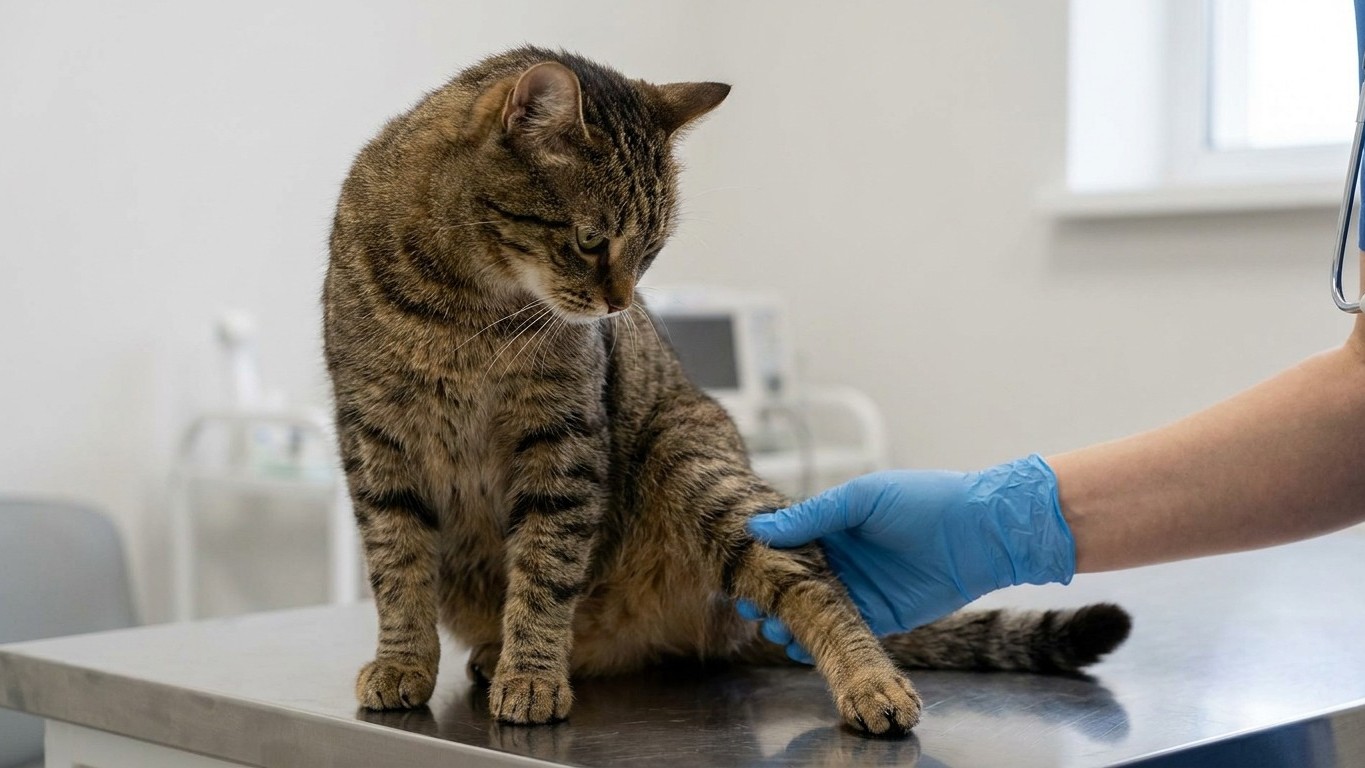
Three weeks of a stiff back leg, put down to an over-enthusiastic leap off the garden wall, turned out to be something far darker: a lodged airgun pellet, quietly inflaming the muscle tissue the entire time. This is not a rare fluke. Vets across the UK regularly x-ray cats for what looks like a routine sprain and instead find a metal pellet sitting in soft tissue, sometimes with no entry wound at all, because the skin had already healed over it weeks or months earlier.
A cat’s body is remarkably good at masking this kind of injury. A pellet enters through fur, the wound closes over within days, and the cat carries on more or less normally until infection, swelling or a subtle lameness finally forces the issue. Pellets may present as incidental findings or be the inciting cause in traumatic injuries, and should be ruled out in all cases of unexplained trauma, with trauma patients radiographed and the location of pellets determined. That is exactly why a persistent, unexplained limp deserves an x-ray rather than a few days of “wait and see”.
Key takeaways
- A three-week limp blamed on a bad jump concealed an airgun pellet that had silently inflamed muscle tissue
- Over 550 UK cats have been shot with airguns in five years, yet most wounds close over before owners notice
- Airgun attacks on cats increased 30% in 2024, but convictions remain rare because attacks go unwitnessed
When a lump behind the nose or a swelling on the neck tells the real story
Cats Protection has documented several cases where the discovery was pure chance. One rescue cat, Leo, was simply “a particularly sneezy cat” until a vet suggested imaging to find out the cause of his nasal issues, and there was shock all round when the root of the problem was revealed to be an air gun pellet, with no visible entry wound meaning poor Leo must have been shot some time ago. Another cat, Angel, was only found to be hiding a pellet because her new foster carer discovered a lump on her neck while grooming her, and an x-ray revealed she had been shot with an air gun with a metal pellet still lodged inside. A similar story played out with a cat named Butler, whose injury was only picked up when he was brought in showing signs of cat flu and an x-ray revealed his injury after he was taken to a cat centre, with the charity believing the 10-year-old cat had been shot “some time ago” as the wound had healed over the pellet.
These aren’t isolated stories. While no official data on shootings was available, monitoring press reports over five years showed more than 550 cats in the UK had been shot with an air rifle. The RSPCA’s own figures paint an equally grim picture: 2024 data revealed a 30 per cent increase in reported airgun attacks on cats across England and Wales, a total of 70 incidents compared to 54 cases in 2023. Some cases are horrifying rather than incidental. In one, a cat was found collapsed, gasping for breath and unable to walk in a garden, and an x-ray revealed a pellet lodged in a lung, resulting in the cat being put down. This is why any unexplained lameness, especially in an outdoor cat, warrants a proper veterinary check rather than a shrug and a hopeful assumption about a bad jump.
The legal picture, and why prosecutions are so rare
Deliberately shooting a cat is a criminal offence in the UK, whatever some people assume about “their own garden, their own rules”. Contrary to some popular opinions, it is illegal for a person to shoot a cat, even if it is on private property. The penalties sound severe on paper: the penalty for deliberately using an airgun to injure an animal can be up to six months in prison and a fine of £20,000 if found guilty under the Animal Welfare Act 2006. Yet convictions are scarce, because most attacks on cats and other animals go unwitnessed, making it hard to prosecute, and although deliberate injury of an animal with an airgun is against the law, most cases are not witnessed and prosecution is unlikely. Licensing rules only add to the confusion. In 2001 the Home Office increased the age limit for buying or possessing airguns from 17 to 18, and owners and users in Northern Ireland and Scotland must be licensed, but airgun licensing is not mandatory in England or Wales, which is exactly the loophole animal charities have campaigned to close for years.
Not every hidden culprit is metal
Pellets aren’t the only thing that can burrow into a cat’s leg unnoticed. Grass seeds and awns are a summer hazard that behave in an eerily similar way, working their barbed tips through skin and muscle over surprisingly long periods. Complications of grass seeds can occur very quickly where eyes, throat or ears are involved, but seeds which track under the skin can take weeks or even months to cause serious problems. Here’s a genuinely useful nuance for any owner reaching for reassurance after an x-ray: unlike a metal pellet, a plant fragment won’t necessarily show up on the film at all. Infections can be difficult to treat especially if the seed has travelled far into the tissue, and of course, grass seeds are not visible using x-ray. Vets have even reported cases of migrating grass awns tracking into the muscles alongside the spine, forming abscesses far from where the seed first entered, which is precisely the kind of mystery lameness that gets blamed on a jump or a fall.
What to actually do if your cat starts limping
The general veterinary advice is refreshingly simple, even if the underlying causes range from the mundane to the sinister. Limping and stiffness in cats can be caused by arthritis, something stuck in the foot or leg such as a piece of glass or a grass seed, or a spinal problem like a slipped disc. The official line from the PDSA is worth repeating because owners so often ignore it: contact your vet if your cat has a mild limp that doesn’t improve within 24 hours, is slowing down with old age or seems a bit stiff when they move around. A brief limp after a clumsy landing is normal cat life. A limp that lingers for days, let alone three weeks, is not, and it deserves proper investigation rather than a hopeful diagnosis of bruised pride.
One detail worth remembering next time a vet reaches for the x-ray machine over a “simple” limp: pellets are metal, so they light up brilliant white on film, while grass seeds are essentially invisible, meaning a clear scan doesn’t always mean a clear muscle. If the limp persists despite a normal x-ray, ask about ultrasound, because that’s often the only way to spot a foreign body that metal detectors, so to speak, simply can’t see.
Sources : feeds.bbci.co.uk | companionlife.co.uk