
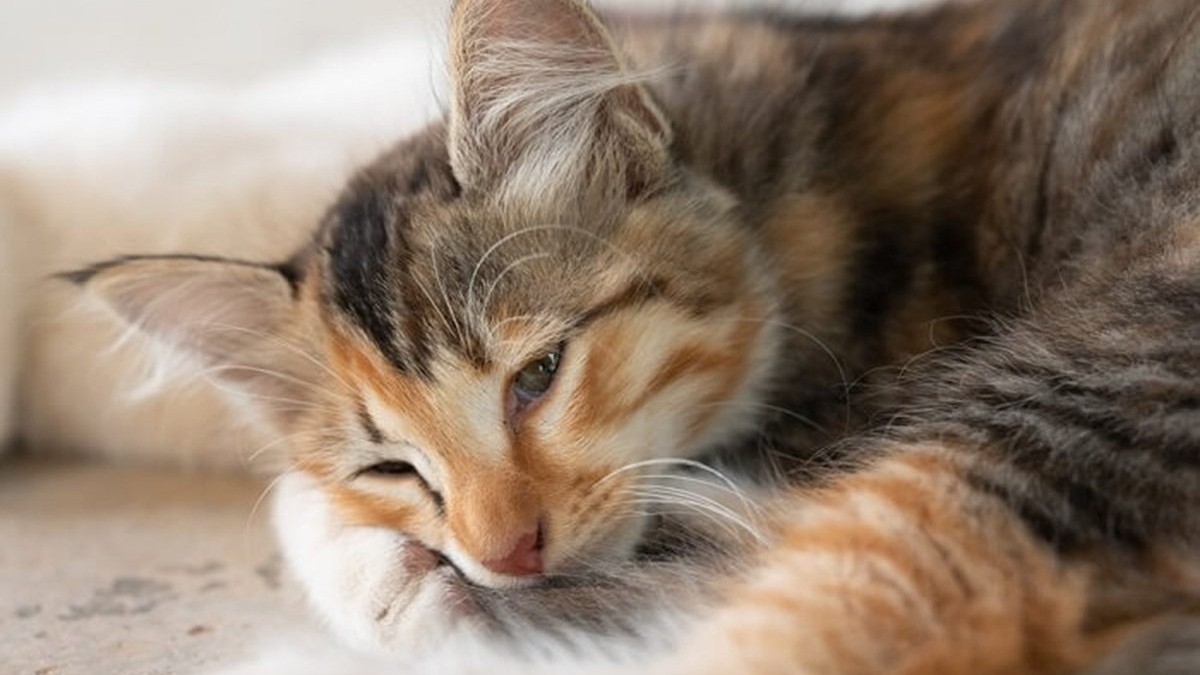
Your cat wanders over to their water bowl, sniffs the rim, dips one paw in, then walks away. You refilled it this morning. The water is fresh. And yet, nothing. Sound familiar? The answer, almost certainly, has less to do with your cat being difficult and Everything/”>Everything to do with the bowl itself.
Key takeaways
- Cats don’t lap like dogs—they use a precise physics-defying technique that requires the bowl to be perfectly shaped
- Most pet store bowls are designed for human convenience, not feline anatomy, causing whisker stress and avoidance
- The bowl sitting on your kitchen floor is likely pushing your cat toward chronic dehydration and serious health problems
The Extraordinary Engineering of a Cat’s Tongue
Researchers analysing the way domestic and big cats lap found that felines of all sizes take advantage of a perfect balance between two physical forces. Cats curve their tongue backwards so that the top surface lightly touches the liquid; when they raise their tongues rapidly, water is drawn up into a liquid column that grows by inertia. The cat then snaps its jaws shut at precisely the right moment to trap that column before gravity pulls it back down. The domestic cat averages about four laps per second.
This is worth sitting with for a moment. Your cat is not scooping water, not even close. Dogs and many other animals lap up water by curling their tongues into a ladlelike shape and scooping up the liquid. Cats do something far more precise: dogs use their tongues like a scoop to lift and pull water into their mouths, while cats rapidly flick the tip of their tongues on the water, drawing up a column of liquid to their mouths. The whole mechanism depends on the tongue barely grazing the surface. The closer a cat is to the water, the greater the chance its whiskers will get wet, and the more its vision is restricted. Which is precisely why the shape of the container matters so much more than most people realise.
Whisker Fatigue: Real Discomfort, Genuinely Debated
The hypothesis of “whisker fatigue” says that cats may become uncomfortable when eating from bowls that touch their sensitive whiskers. Whiskers, also known as “vibrissae”, are a specialised type of thick hairs, tougher and bristly, with dense gatherings of nerve endings at their base, as well as specialised nerve cells called proprioception receptors. These receptors detect the most minor, finest movements of the whiskers, allowing cats to gain information via their nervous system about their surroundings, helping them navigate and interpret the world around them.
The veterinary community isn’t entirely unanimous on the subject. Most veterinarians doubt the existence of a syndrome known as “whisker fatigue”, but it is important that pet owners understand the structure and function of cat whiskers and treat them with respect. It is not a disease, and its existence is still debated in the veterinary community. That said, the practical evidence is hard to ignore. Small, high-sided bowls typically used for feeding a cat’s food and water are usually to blame. As the cat attempts to eat or drink, the whiskers repeatedly brush against the sides of the bowl, and this can cause reactions ranging from irritation to pain, depending on the sensitivity of the cat’s whiskers.
The behavioural signs are telling. Cats that experience whisker fatigue or whisker stress may show it by not settling down in front of their food bowl, eating only out of the centre of the bowl, trying to get the food out of the bowl or tipping it over to eat off the floor. If your cat hesitates at the bowl, seems thirsty but only drinks from the centre, paws water out onto the floor to drink, or prefers wide containers like the dog’s bowl while avoiding narrow dishes, whisker stress may be part of the picture. The dog’s bowl, incidentally, tends to be wider, and cats have figured that out entirely on their own.
One important caveat: cats that have painful dental disease can exhibit the same symptoms as whisker fatigue, and cats that have liver disease, kidney disease, or inflammatory bowel disease can also develop eating problems. If your cat’s behaviour at the water bowl changes suddenly, always consult your vet before assuming it’s a bowl problem.
The Bowl You Own Is Probably the Wrong Shape
Deep, narrow bowls, especially those bundled into double stands, force whiskers against the sides and crowd the face, which can create whisker fatigue and encourage avoidance. The typical cat bowl sold in every UK pet shop is round, fairly deep, and sized generously for the human’s hand, not for the cat’s face. The result is a bowl designed by aesthetics rather than anatomy.
Shallow, wide bowls are generally more Comfortable because they minimise whisker contact. A bowl diameter around 6–8 inches and a depth under about 2 inches is often recommended, with the exact dimensions tailored to your cat’s face and whisker spread. Cats prefer a wider, more shallow bowl that stops their whiskers from hitting the sides, and allows them to keep an eye on their surroundings. Aim for a water bowl that is twice the width of your cat’s head. That’s a useful rule of thumb you can actually test right now against the bowl currently sitting on your kitchen floor.
Material matters too. Typically, cats prefer bowls made of glass, ceramic or metal. Plastic, although often cheaper, is more likely to retain unwanted odours. Some cats also develop chin acne when offered plastic bowls due to bacteria growing in the easily damaged material. Stale bowl water can also quickly pick up dust, fur, and a biofilm of bacteria, especially in scratched plastic dishes, plastics tend to scratch over time, creating microscopic grooves that trap bacteria and odours. Stainless steel and ceramic, by contrast, are non-porous and far simpler to keep genuinely clean.
Where you place the bowl is a separate issue that trips up many well-meaning owners. Many cat owners tend to place their cat’s water and food bowl in a corner, tucked away, but many cats prefer their water bowl in a more open area, so they can see their surroundings to avoid any surprises. Don’t place the water bowl by the litter box, as some cats won’t drink if it’s too close to where they toilet. The rule of thumb is to provide one of each resource per cat in the household, plus one spare — so in a single-cat household, ideally two water stations.
Why Getting This Right Actually Matters
None of this is merely cosmetic fussiness. When you combine cats’ naturally low thirst drive with a poor bowl setup, you get a quiet recipe for chronic mild dehydration, urinary tract problems, and kidney disease. Veterinary organisations consistently warn that this low thirst drive, combined with modern diets and indoor lifestyles, puts many cats in a state of chronic mild dehydration. A healthy adult cat needs about 44–66ml of water per kilogram of body weight daily, for a house cat weighing approximately 4kg, that corresponds to 176–264ml.
Older cats and cats with kidney disease or urinary tract problems are more prone to dehydration and require careful monitoring of their water intake. Cats fed exclusively dry food are also at higher risk. Wet food contains more water than dry food and is more similar to what cats would naturally eat. Extra moisture encourages better bladder and kidney health, whereas prolonged dehydration can lead to irritation in the urinary tract and potentially kidney disease.
A water fountain can help some cats drink more, though the evidence is nuanced. Controlled studies in healthy cats have not shown a consistent increase in average water intake from fountains versus bowls at the population level, however, individual cats often show strong preferences, and many guardians and veterinarians report that particular cats do drink more from a well-designed fountain, likely because of improved palatability, cleanliness, and sensory appeal. To help encourage your cat to drink water, choose a water fountain with a wide bowl. The width principle applies here just as much as it does to a static dish.
Changing the bowl is one of the smallest, cheapest adjustments a cat owner can make, and potentially one of the most consequential. Simple measures, such as selecting an appropriate bowl, positioning it correctly, and ensuring the availability of fresh water, can positively influence your cat’s drinking behaviour. The question worth sitting with is how many cats across British households are quietly, stoically thirsty — not because they’re fussy, but because the bowl they’ve been given was never designed with their extraordinary anatomy in mind.
Sources : carriesdogwalkpetsit.com | ewash.org