
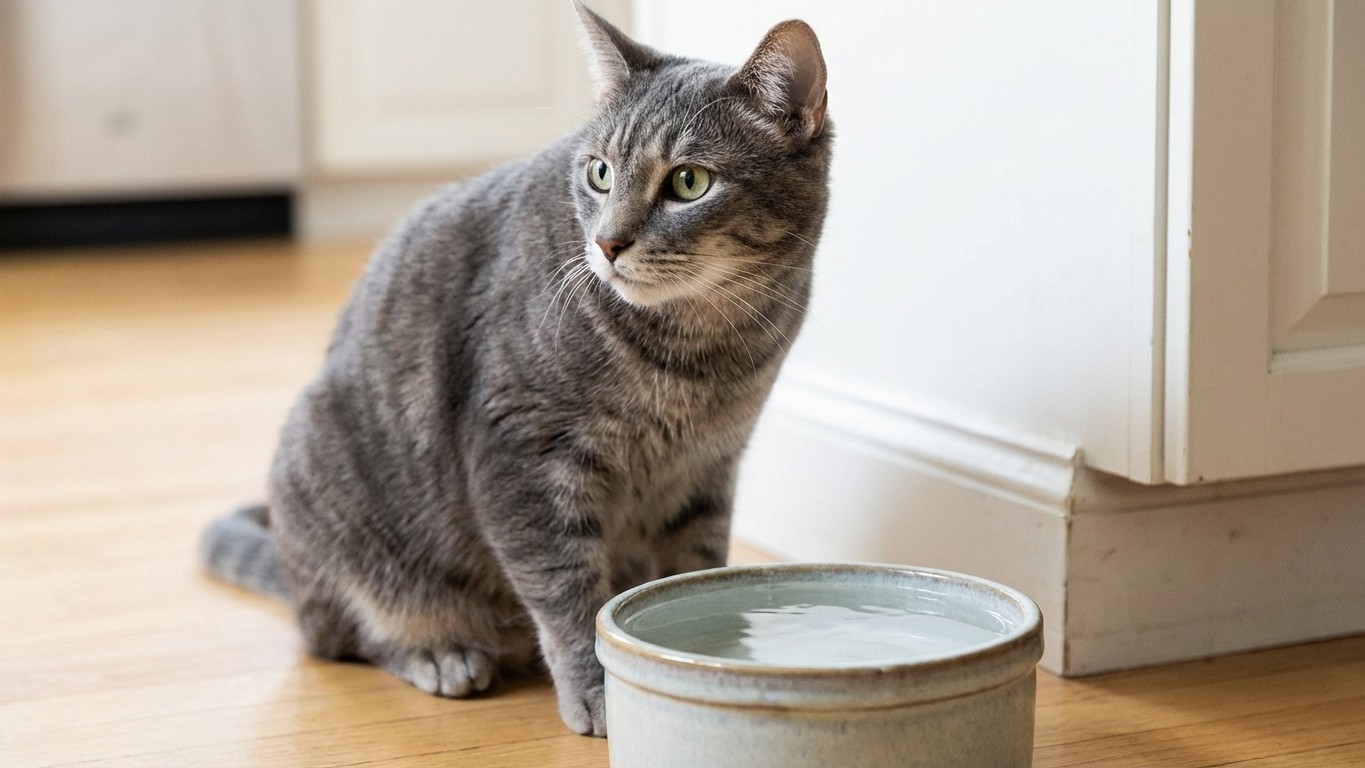
Your cat has a full, fresh bowl of water sitting right next to her food, and she walks past it like it doesn’t exist. You’ve refilled it twice today. Still nothing. If this sounds familiar, you’re not alone, and your cat isn’t being difficult. She’s Actually behaving in a way that makes complete biological sense, even if it looks baffling from the sofa.
Key takeaways
- Cats inherited a deep distrust of still water from their desert-dwelling ancestors—moving water signals safety
- Whisker fatigue and bowl location matter more than most owners realize, but one simple change could transform hydration
- Your cat on wet food might not need much bowl water at all, but dry-food cats ignoring water deserve veterinary attention
Cats Are Wired to Distrust Still Water
Domestic cats descended from desert-dwelling wildcats, and those Ancestors learned something important over thousands of years: still water in the wild is often stagnant, and stagnant water can carry disease. Moving water, by contrast, tends to be fresher and safer. That instinct hasn’t been bred out of modern moggies. When your cat sniffs the bowl, decides it’s not interesting enough, and trots off, she’s not being a diva. She’s running an Ancient-instinct-that-changes-everything/”>Ancient risk assessment.
There’s also a sensory dimension that most owners don’t consider. Cats have highly sensitive whiskers that can detect subtle changes in air pressure and movement. A deep, narrow bowl means her whiskers press against the sides while she drinks, something many cats find genuinely uncomfortable, even stressful. This is sometimes called “whisker fatigue,” and while it sounds trivial, for a cat it can make every trip to the water bowl feel slightly unpleasant. Switching to a wider, shallower dish can make a real difference.
Then there’s the location issue. In the wild, cats would never eat and drink in the same spot. Prey could contaminate a nearby water source. So placing the water bowl directly next to the food bowl, which most of us do out of sheer convenience, may actually be putting her off. Moving the water to a completely different room or part of the house often prompts a cat to drink more without any other changes at all.
The Wet Food Factor Most Owners Overlook
Here’s something that surprises a lot of people: a cat eating a diet of wet food may genuinely need very little water from a bowl, because she’s already getting a significant amount of moisture through her meals. Wet cat food typically contains around 70 to 80 percent water. Dry kibble, on the other hand, contains roughly 10 percent. A cat eating exclusively dry food and barely touching her bowl has a problem worth addressing, because chronic mild dehydration in cats has been linked to urinary tract issues and kidney disease over time.
This is one of the reasons many vets recommend incorporating wet food into a cat’s diet, especially as she gets older. It’s not just about flavour, it’s a built-in hydration strategy. If your cat is on dry food and seems to drink very little, speaking to your vet is a sensible first step rather than simply refilling the bowl and hoping for the best.
What Actually Gets Cats Drinking More
Cat water fountains have become genuinely popular over the past decade, and the reason is straightforward: flowing water appeals to that deep-wired preference for movement. Many owners report that switching from a static bowl to a circulating fountain resulted in their cat drinking noticeably more. If you’ve ever watched a cat obsessively lick a dripping tap, you’ve witnessed that instinct in action. (My personal theory is that dripping taps are essentially a free cat entertainment subscription.)
Water temperature matters too, though perhaps less than some assume. Most cats prefer cool, fresh water, and some will ignore a bowl that’s been sitting out for hours while happily drinking from one that’s just been refilled. Changing the water at least once a day and rinsing the bowl thoroughly helps. Plastic bowls can harbour bacteria in tiny scratches on the surface and may also impart a smell that puts cats off, ceramic or stainless steel tends to work better.
Multiple water sources around the home can also help, especially in multi-cat households where one cat may be subtly guarding the bowl. Cats rarely show obvious aggression over resources; it’s often a quiet glance or a deliberate positioning of the body that keeps a more anxious cat away. If you have more than one cat and one seems to drink very little, a second bowl in a separate location is worth trying before assuming there’s a medical issue.
When Low Water Intake Is Worth a Vet Visit
Most of the time, a cat who doesn’t drink much from her bowl is simply following ancient instincts and getting moisture elsewhere. But there are signs that warrant a prompt call to your vet. Excessive thirst (suddenly drinking a lot more than usual) can indicate diabetes, kidney disease, or hyperthyroidism. A cat who seems lethargic, has sunken eyes, or whose skin doesn’t spring back quickly when gently pinched may be genuinely dehydrated. Any sudden change in drinking habits, more or less, deserves attention.
Kittens and senior cats are more vulnerable to dehydration and worth monitoring more closely. Older cats in particular often have reduced kidney function, and keeping them well-hydrated becomes increasingly important as they age. If you’re ever unsure, your vet can assess hydration levels quickly and advise on whether dietary changes or other support would help.
The untouched water bowl beside the food isn’t necessarily a crisis, but it is a prompt worth taking seriously. Cats are extraordinarily good at masking health issues, and hydration is one of those quiet things that only becomes visible as a problem once it’s been going on for a while. Understanding why your cat drinks the way she does is the first step toward making sure she’s genuinely getting what she needs, even if what she really wants is to drink directly from the bathroom tap at 3am.
Sources : petsradar.com | purina.com