
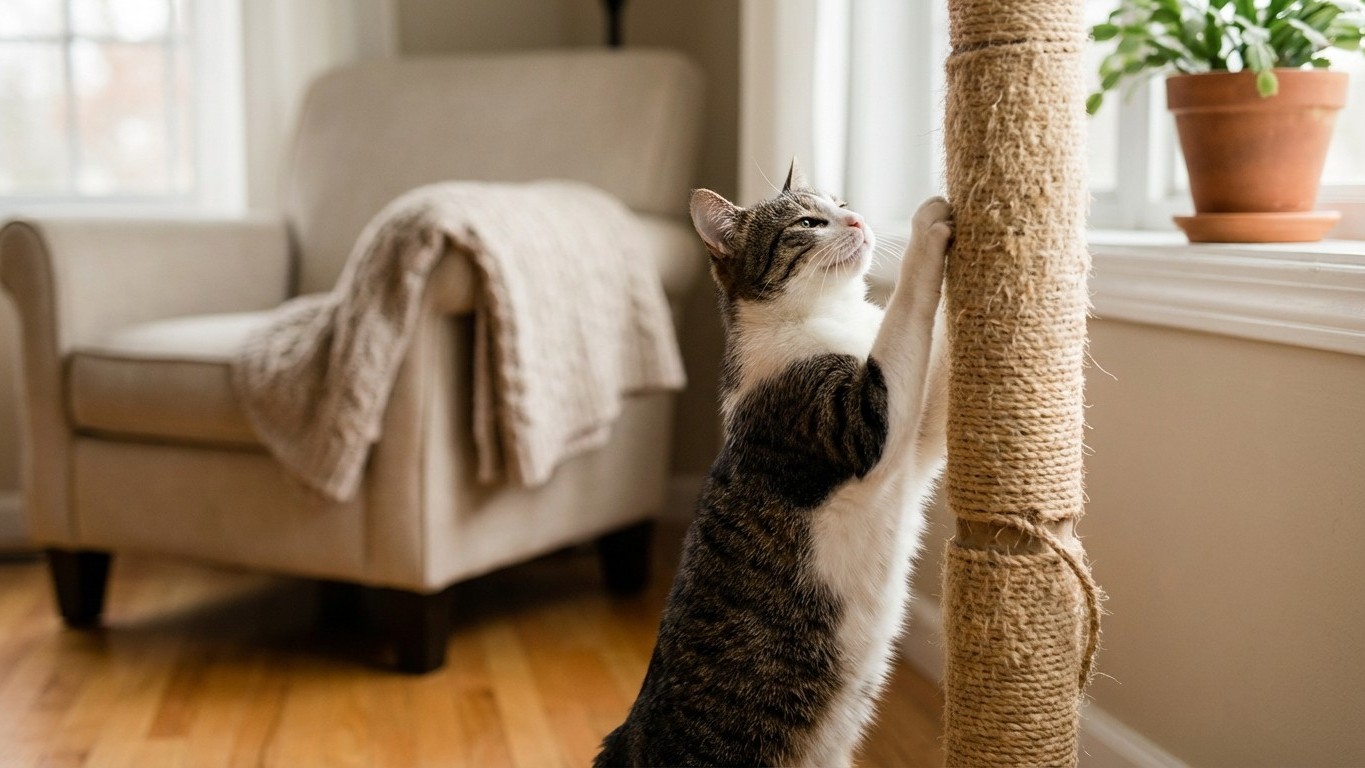
Cats are enigmatic creatures, often leaving their human companions puzzled by certain behaviours, scratching being a prime example. If your feline friend has turned your furniture into a personal scratching post, it’s essential to understand the motivations behind this behaviour and explore humane solutions to address it.
Key takeaways
- What drives cats to scratch surfaces around your home?
- How scratching serves as a natural form of communication for felines.
- Effective, compassionate strategies to redirect your cat’s scratching.
Decoding the Scratch: Why Cats Engage in This Behaviour
Scratching is an innate and multifaceted activity for cats, serving several crucial functions:
Claw Maintenance: Cats’ claws grow in layers, much like an onion. Scratching helps remove the outer sheath, revealing a sharper claw beneath. This natural process keeps their claws in optimal condition for climbing, hunting, and self-defence. catster.com
Territorial Marking: Beyond the visible marks left behind, cats have scent glands in their paw pads. When they scratch, they deposit pheromones, creating a scent marker that communicates ownership and territorial boundaries to other cats. cats.org.uk
Physical Exercise and Stretching: Scratching provides a full-body workout, allowing cats to stretch their muscles, particularly in the back and shoulders. This activity promotes flexibility and overall physical health. catster.com
Emotional Expression: Scratching can also be a response to emotional states. Cats may scratch more when they’re excited, anxious, or seeking attention. It’s a form of stress relief and a way to cope with Changes in their environment. kb.rspca.org.au
Why Your Furniture Becomes the Target
Understanding why cats choose specific items to scratch can help in redirecting this behaviour:
Sturdiness and Texture: Cats prefer surfaces that are stable and provide resistance. Furniture like sofas and chairs often offer the perfect combination of sturdiness and texture, making them appealing scratching surfaces. catology.com.au
Prominent Location: Cats often scratch in areas where they spend a lot of time or where their human companions frequent. This behaviour reinforces their presence and marks their territory in shared spaces. purina.ca
Humane Strategies to Redirect Scratching Behaviour
Addressing unwanted scratching involves providing appropriate alternatives and making undesirable surfaces less appealing:
Provide Suitable Scratching Posts: Invest in sturdy, tall scratching posts that allow your cat to stretch fully. Materials like sisal rope are often preferred. Place these posts near your cat’s favourite scratching spots to encourage use. cats.org.uk
Use Positive Reinforcement: When your cat uses the scratching post, reward them with treats, praise, or playtime. Positive reinforcement helps build a strong association between the desired behaviour and rewards. greatpetcare.com
Protect Furniture: Cover areas your cat targets with materials they find unappealing, such as thick, shiny plastic sheeting. This can deter them from scratching these surfaces. cats.org.uk
Regular Nail Trimming: Keeping your cat’s claws trimmed can reduce the damage caused by scratching. If you’re unsure how to do this safely, consult your veterinarian or a professional groomer. greatpetcare.com
Environmental Enrichment: Ensure your cat has plenty of mental and physical stimulation through interactive toys, climbing structures, and regular playtime. A stimulated cat is less likely to engage in destructive behaviours. kb.rspca.org.au
Address Stressors: If scratching is linked to anxiety or stress, identify and mitigate potential stressors in your cat’s environment. This may include providing safe hiding spots, maintaining a consistent routine, and using pheromone diffusers to promote a sense of calm. cats.com
Understanding and addressing your cat’s scratching behaviour requires patience and consistency. By providing appropriate outlets and creating a supportive environment, you can protect your furniture while respecting your cat’s natural instincts.