
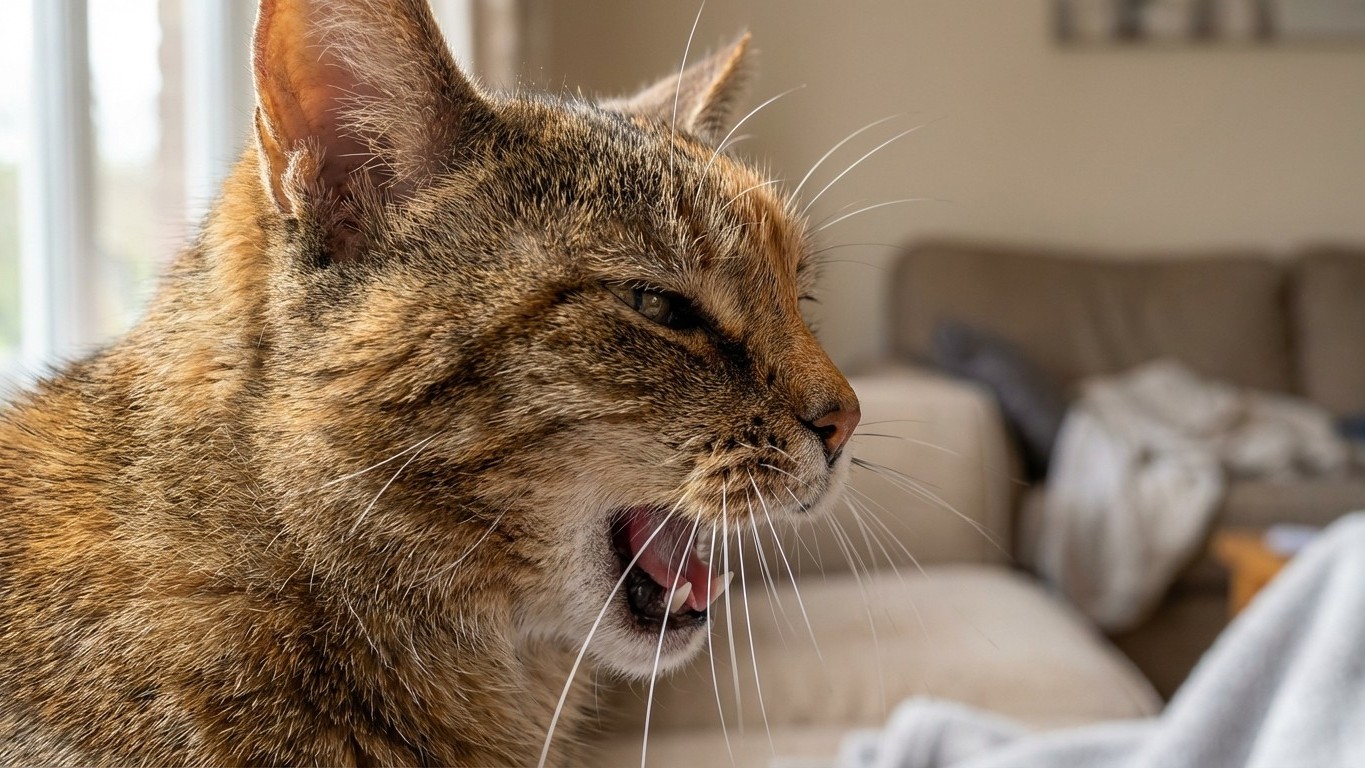
You lean in for a cuddle, your cat yawns, and you recoil. There it is: a sharp, chemical tang that doesn’t smell like fish or the remnants of this morning’s pouch food. It smells, unmistakably, of ammonia. That single scent is the one vets consistently flag as a warning you should not brush off, because what it might be telling you about your cat’s health goes far beyond a dental hygiene problem.
Key takeaways
- A chemical, ammonia-like smell on your cat’s breath is distinctly different from ordinary bad breath and carries a specific medical meaning
- Kidney disease in cats can destroy 75% of organ function before showing any visible symptoms—but your nose might catch it first
- Senior cats face a sobering 30% risk of developing kidney disease, yet early detection through regular vet visits can change everything
The Smell That Changes Everything
A urine- or ammonia-like smell on your cat’s breath could indicate kidney disease. This isn’t the same as ordinary bad breath after a bowl of tuna. Unlike common dental issues that cause a rotten or fishy smell, ammonia breath is a significant indicator of systemic health problems. The distinction matters enormously, and the biology behind it is fairly sobering.
When the kidneys fail to filter waste products effectively, urea and other nitrogenous waste products build up in the bloodstream (a condition called uremia). These waste products are partially excreted through the lungs, creating an ammonia-like or urine-like odour on the breath. Think of it this way: the breath becomes a kind of exhaust pipe for toxins the kidneys can no longer clear. These uremic toxins spread all over the body through the cat’s bloodstream, and the smell is especially noticeable in their breath, as the mucous membrane of the mouth tends to be thinner than in other parts of the body.
Physical signs of chronic kidney disease (CKD) typically only appear once 75% of kidney function has been lost. That is the truly alarming part. By the time your nose picks up on something wrong, a significant amount of damage may already have occurred. Bad breath and excessive dental plaque may be one of the most easily recognisable early warning signs of incipient CKD. In that light, your nose is actually doing you a rather important favour.
How Common Is Kidney Disease in Cats, Really?
According to the American Veterinary Medical Association, between 2 and 20 percent of all cats, and 30 percent of cats over age 10, develop chronic kidney disease. That is a sobering figure for anyone sharing a sofa with a senior cat. Kidney disease, diabetes mellitus, and cancer are all more common in middle-aged to senior cats, which is why any new or worsening odour in a cat aged seven or over warrants particular attention.
The insidious thing about CKD is how quietly it progresses. Many cats do not show any outward signs of kidney disease at first. Most visible signs and symptoms do not appear until the condition is very advanced, and even then, they can be subtle and difficult to pinpoint. Your cat might still be eating, still jumping up on the windowsill, still demanding attention at 6am. The ammonia smell might be the only tangible clue you get.
Other Symptoms to Watch Alongside the Breath
Ammonia breath rarely travels alone. The most common accompanying changes are weight loss, poor hair quality, and variable appetite, which may be associated with mouth ulcers, lethargy, and depression. Less common signs include increased drinking or urinating, vomiting, diarrhoea, and anaemia.
One of the earliest and most common signs of kidney failure in cats is increased thirst and increased urination. As the kidneys lose their ability to concentrate urine, your cat may drink more water and urinate more frequently. If you’ve noticed the water bowl emptying faster than usual, or more frequent litter tray visits, pair that observation with the breath change and treat the combination as urgent.
There is also a compounding dynamic that makes prompt action even more pressing. Kidney disease lowers a cat’s immunity, which worsens oral inflammation. Chronic oral inflammation then sends more stress signals through the bloodstream, speeding up kidney damage. The mouth and the kidneys, can end up pulling each other down in a cycle that’s much harder to interrupt the longer it runs unchecked.
It’s also worth knowing that ammonia breath isn’t the only scent linked to serious illness. A sweet, fruity scent might indicate diabetes, while foul odour associated with vomiting could point to a liver disorder. The smell genuinely matters: fruity or acetone breath suggests possible diabetes, ammonia or urine breath suggests possible kidney disease, and foul or rotten breath likely points to dental infection. Your nose, however unreliable it might feel in the moment, is giving you meaningful diagnostic information.
What Happens at the Vet, and Why Early Testing Matters
Ammonia-scented breath is a serious symptom that requires professional medical attention, though it is typically not an immediate life-or-death emergency. Seek immediate emergency care if your cat is experiencing seizures, extreme lethargy, or a total inability to urinate. Otherwise, contact your vet to schedule an appointment within 24 to 48 hours to prevent further kidney damage.
Your vet will perform urine and blood tests, as well as a possible ultrasound, X-rays, or biopsy before making a diagnosis. These tests can detect elevated creatinine and urea levels in the blood, which are the clearest markers of declining kidney function. During check-ups, your veterinarian can perform blood tests, urine tests, and blood pressure measurements to assess kidney function and overall health.
If kidney disease is confirmed, the picture is not necessarily bleak. While chronic kidney failure is not curable, there are ways to manage the condition. Your veterinarian may recommend dietary changes, specifically a diet low in phosphorus and protein to reduce the workload on the kidneys, as well as subcutaneous fluids to help maintain hydration and support kidney function. Many cats live for years with managed kidney disease, and quality of life can be maintained well with the right care plan in place.
For cats not yet showing symptoms, the lesson is simple: regular veterinary check-ups can catch early signs of kidney disease before they become serious emergencies. Regular senior wellness screening, including blood work, urinalysis, and dental exams, is especially important for cats over seven to eight years old. Annual or twice-yearly bloods in a senior cat are genuinely one of the most useful things you can do, even when everything looks fine on the surface.
So next time your cat settles in for a nap beside your face and exhales, take a quiet moment to notice. Not the fishy aftermath of tea-time, not the mild warmth of a cat who’s been asleep for hours, but that sharp, chemical bite that shouldn’t be there. The nose knows, and in this case, so do the vets. Whether that smell turns out to be nothing more than a dental clean overdue, or something requiring more urgent attention, the only wrong response is to ignore it.
Sources : pmc.ncbi.nlm.nih.gov | uvhvets.com