
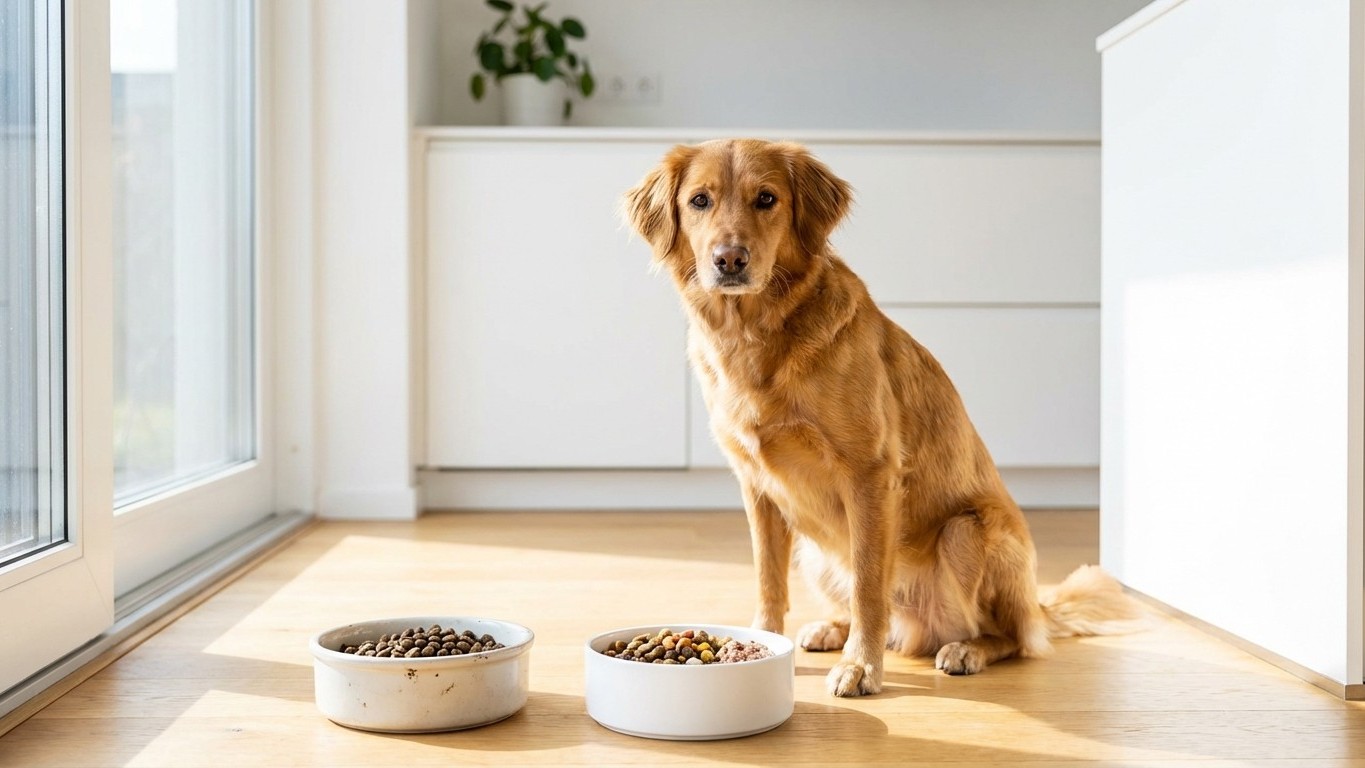
Switching your pet’s diet might seem straightforward, but a common misstep, changing their food too quickly, can lead to digestive issues and discomfort. Understanding the proper method for transitioning your pet’s food is essential to maintain their health and happiness.
Key takeaways
- Why rushing your pet’s food switch could be harmful.
- The expert-recommended step-by-step transition schedule.
- Special tips for handling raw diets and keeping your pet safe.
Why a Gradual Transition is Essential
Pets, much like humans, have sensitive digestive systems that require time to adjust to new foods. An abrupt change can disrupt their gut flora, leading to symptoms such as diarrhoea, vomiting, and loss of appetite. To prevent these issues, it’s recommended to introduce new food gradually over a period of 7 to 14 days, depending on your pet’s individual needs and the type of diet change.
Recommended Transition Schedule
A standard approach involves mixing increasing amounts of the new food with the old food over several days. Here’s a suggested timeline:
- Days 1-2: 75% old food, 25% new food
- Days 3-4: 50% old food, 50% new food
- Days 5-6: 25% old food, 75% new food
- Day 7: 100% new food
For pets with sensitive stomachs or those switching to a significantly different diet (e.g., from dry kibble to raw food), extending this transition period to 10-14 days is advisable. Monitoring your pet’s response during this time is crucial; if you notice any signs of digestive upset, consider slowing down the transition process.
Special Considerations for Raw Diets
Raw diets have gained popularity among pet owners, but they come with specific considerations. The Food Standards Agency (FSA) highlights the importance of safe handling when dealing with raw pet food, as it can contain harmful bacteria that pose risks to both pets and humans. To mitigate these risks:
- Always wash your hands thoroughly after handling raw pet food.
- Clean and disinfect all surfaces and utensils that come into contact with raw food.
- Store raw pet food separately from human food to prevent cross-contamination.
Additionally, it’s advisable to choose commercially prepared raw diets that meet nutritional standards, ensuring your pet receives a balanced diet.
Monitoring Your Pet’s Health During the Transition
Throughout the transition period, closely observe your pet for any signs of discomfort or adverse reactions. Key indicators to watch for include:
- Changes in appetite or refusal to eat
- Vomiting or diarrhoea
- Excessive flatulence
- Lethargy or behavioural changes
If any of these symptoms persist, consult your veterinarian promptly. They can provide guidance tailored to your pet’s specific needs and help adjust the transition plan accordingly.
Consulting Your Veterinarian
Before making any significant Changes to your pet’s diet, it’s always best to consult with your veterinarian. They can offer personalised advice based on your pet’s health history, age, and dietary requirements. This is particularly important when considering alternative diets, such as plant-based or raw diets, to ensure they meet all of your pet’s nutritional needs.
By taking a gradual approach and seeking professional guidance, you can make dietary Changes that support your pet’s health and well-being, avoiding the common mistake of an abrupt food switch.