
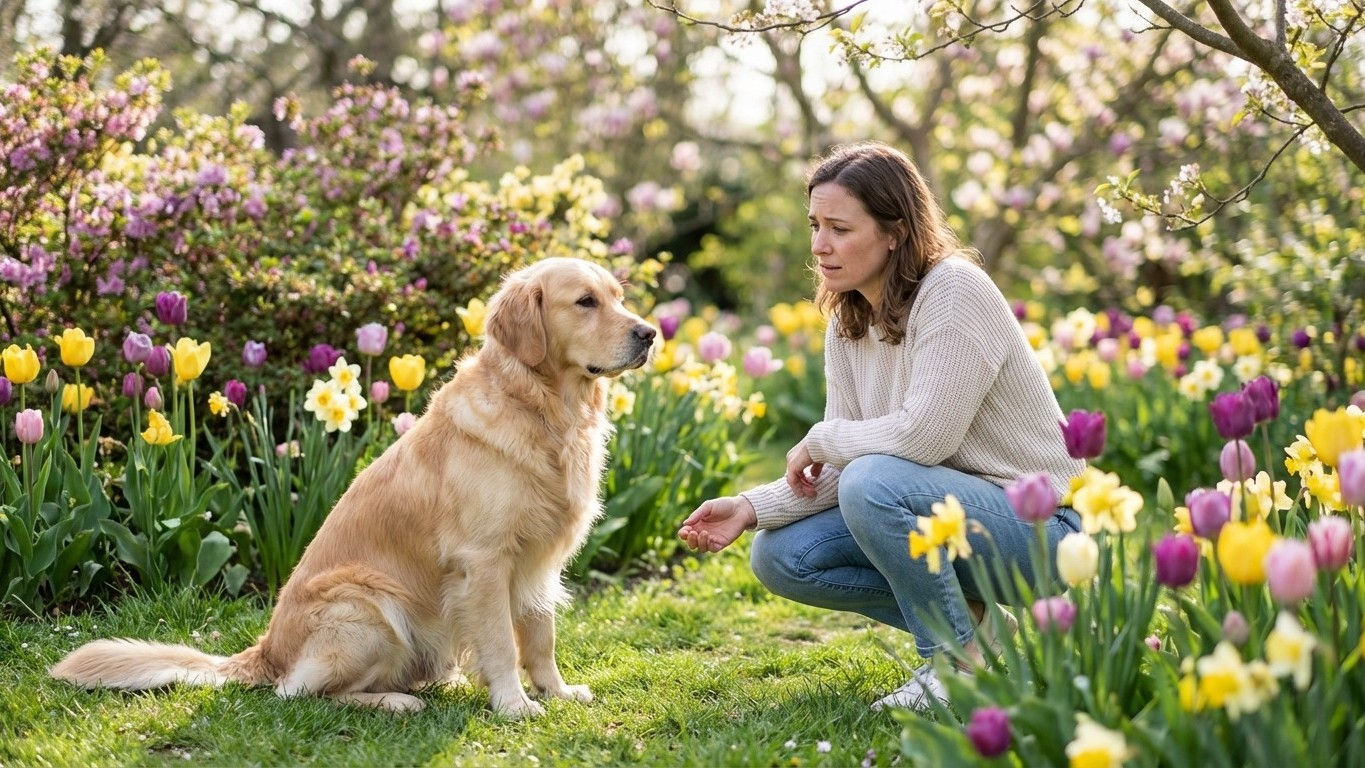
As spring breathes new life into our gardens and parks, it also introduces a host of plants that, while beautiful, can pose serious risks to our beloved cats and dogs. Understanding which plants are hazardous and how to respond if your pet encounters them is crucial for their safety.
Key takeaways
- Which common spring plants are toxic to cats and dogs?
- What symptoms indicate plant poisoning in pets?
- Critical steps to take if your pet ingests a dangerous plant.
Common Toxic Spring Plants
Several popular springtime plants are toxic to pets. Here are some to be particularly mindful of:
- Daffodils (Narcissus): All parts of the daffodil are harmful, especially the bulbs. Ingesting them can lead to vomiting, diarrhoea, and lethargy. Even drinking water from a vase containing daffodils can be hazardous. rspca.org.uk
- Tulips (Tulipa): The bulbs contain toxins that can cause irritation to the mouth and gastrointestinal tract, resulting in drooling, vomiting, and diarrhoea. thekennelclub.org.uk
- Bluebells (Hyacinthoides non-scripta): All parts of this plant contain toxins that can affect the heart. Symptoms may include vomiting, abdominal discomfort, and, in severe cases, heart irregularities. thekennelclub.org.uk
- Azaleas and Rhododendrons (Rhododendron spp.): Even small amounts can cause vomiting, diarrhoea, and potentially heart failure. rspca.org.uk
- Lilies (Lilium spp.): Extremely toxic to cats; even minimal exposure can lead to kidney failure. rspca.org.uk
Recognising Symptoms of Plant Poisoning
Signs that your pet may have ingested a toxic plant include:
- Vomiting
- Diarrhoea
- Excessive drooling
- Lethargy
- Loss of coordination
- Abdominal pain
- Changes in heart rate
These symptoms can vary depending on the plant and the amount ingested. If you notice any of these signs, it’s essential to act promptly.
Immediate Actions and Veterinary Care
If you suspect your pet has ingested a toxic plant:
- Contact your vet immediately: Provide details about the plant, the amount ingested, and any symptoms observed. rspca.org.uk
- Avoid home remedies: Do not attempt to induce vomiting or administer treatments without professional guidance. rspca.org.uk
- Prevent further exposure: Remove your pet from the area and ensure they cannot access the plant again.
Preventive Measures for Pet Owners
To safeguard your pets during spring:
- Identify and remove hazardous plants: Familiarise yourself with toxic plants and ensure they are not present in your home or garden.
- Supervise outdoor activities: Keep an eye on your pets during walks and prevent them from nibbling on unknown plants.
- Educate family members: Ensure everyone in the household is aware of the dangers certain plants pose to pets.
By staying informed and vigilant, you can enjoy the beauty of spring while keeping your furry friends safe. Remember, when in doubt, always consult your veterinarian for advice tailored to your pet’s specific needs.