
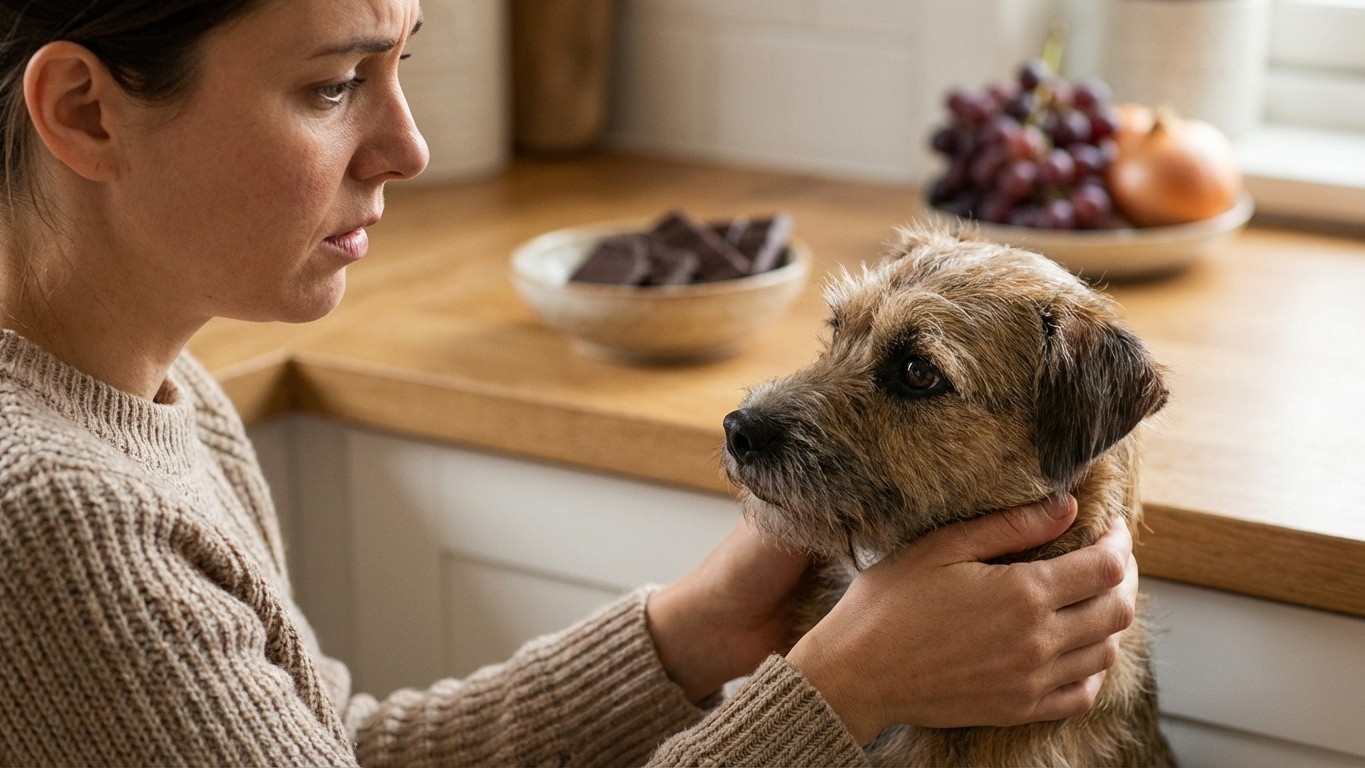
Our kitchens are often filled with foods that, while delightful to us, can pose serious risks to our feline and canine companions. Despite increased awareness, certain everyday items continue to endanger pets in 2026. Understanding these hidden hazards is crucial for ensuring the safety and well-being of our beloved animals.
Key takeaways
- Familiar foods in your kitchen may be silently toxic to pets.
- Some dangers, like grapes and xylitol, have unpredictable effects.
- Learn why vigilance is crucial to keep pets safe around food.
Chocolate: A Persistent Threat
Chocolate remains a well-known danger to pets, yet incidents of chocolate poisoning persist. The culprit is theobromine, a compound found in cocoa. Dogs and cats metabolize theobromine much more slowly than humans, leading to toxic accumulation. Even small amounts can cause vomiting, diarrhoea, and hyperactivity. In larger quantities, it may result in seizures, heart arrhythmias, or even death. Dark chocolate, with its higher cocoa content, poses the greatest risk. It’s imperative to keep all chocolate products, including cocoa powder and chocolate-containing baked goods, out of pets’ reach. thekennelclub.org.uk
Grapes and Raisins: Unpredictable Toxicity
Grapes, raisins, sultanas, and currants can cause acute kidney failure in dogs. The exact toxic mechanism remains unknown, and sensitivity varies among individual dogs. Some may ingest small amounts without immediate effects, while others can suffer severe reactions. Symptoms include vomiting, diarrhoea, lethargy, and abdominal pain. Given the unpredictability, it’s safest to avoid feeding any quantity of these fruits to dogs. dogstrust.org.uk
Allium Family: Onions, Garlic, and More
Onions, garlic, leeks, shallots, and chives belong to the Allium family and are toxic to both cats and dogs. These foods contain compounds that can damage red blood cells, leading to anaemia. Symptoms may not appear immediately but can include vomiting, diarrhoea, lethargy, and pale gums. Even small amounts, whether raw, cooked, or powdered, can be harmful. It’s essential to ensure that pets do not consume foods seasoned with these ingredients. thekennelclub.org.uk
Xylitol: A Hidden Danger
Xylitol, a sugar substitute found in sugar-free gum, sweets, some peanut butters, and even certain medications, is extremely toxic to dogs. Ingesting xylitol can cause a rapid release of insulin, leading to hypoglycaemia (low blood sugar), seizures, liver failure, and death. Symptoms can develop within 30 minutes of ingestion. Always check product labels for xylitol and keep such items well away from pets. dogstrust.org.uk
Alcohol and Caffeine: No Safe Amount
Alcohol and caffeine are both hazardous to pets. Even small amounts of alcohol can lead to vomiting, diarrhoea, decreased coordination, central nervous system depression, difficulty breathing, tremors, and coma. Caffeine, found in coffee, tea, energy drinks, and certain medications, can cause restlessness, rapid breathing, heart palpitations, muscle tremors, and seizures. Ensure that alcoholic beverages and caffeinated products are inaccessible to pets. dogstrust.org.uk
Avocado: A Risky Treat
Avocados contain persin, a substance that can be toxic to birds and rabbits. While dogs and cats are more resistant, the high fat content can lead to gastrointestinal upset and pancreatitis. Additionally, the large pit poses a choking hazard and can cause intestinal blockages if ingested. It’s best to avoid sharing avocados with pets. dogstrust.org.uk
Mouldy Foods: Hidden Toxins
Mouldy foods can contain mycotoxins, which are harmful to pets. Ingesting mouldy food can lead to muscle tremors, seizures, and liver damage. Ensure that pets cannot access compost bins, rubbish bins, or areas where mouldy food might be present. thekennelclub.org.uk
Macadamia Nuts: Unexpected Poison
Macadamia nuts are toxic to dogs, causing weakness, vomiting, tremors, and hyperthermia. Symptoms typically appear within 12 hours of ingestion and can last up to 48 hours. The exact cause of toxicity is unknown, so it’s safest to keep all nuts out of pets’ reach. thekennelclub.org.uk
Cooked Bones: A Choking Hazard
Cooked bones can splinter when chewed, posing risks of choking, mouth injuries, or intestinal blockages. It’s advisable to avoid giving pets cooked bones and to dispose of them securely. rspca.org.uk
Preventive Measures and Vigilance
To protect pets from these hidden dangers, it’s essential to store all potentially harmful foods securely and out of reach. Educate all household members about these risks and ensure that guests are also aware. If you suspect your pet has ingested a toxic substance, contact your veterinarian immediately. Prompt action can be life-saving.
By staying informed and vigilant, we can create a safer environment for our furry friends, ensuring they remain healthy and happy members of our families.