
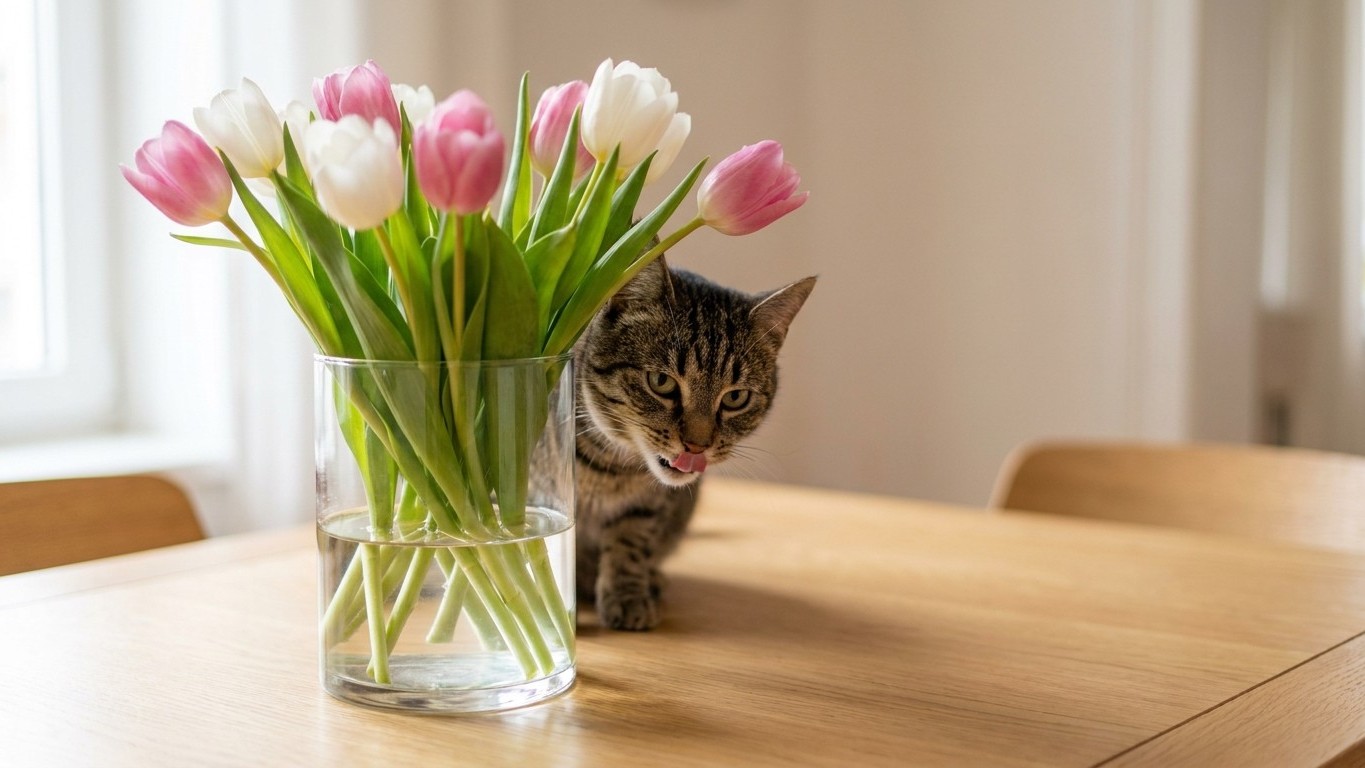
Tulips are the second most popular cut flower in the UK, and May is peak season for a fresh bunch on the dining table. They look cheerful, they’re affordable, and they last a Surprising number of days in a vase. The problem is that if you share your home with a cat, that vase of tulips is not the harmless centrepiece it appears to be. Water in a vase holding tulips absorbs compounds from the stems over time, and a cat that drinks from a flower vase is ingesting those compounds. It’s unlikely to cause severe poisoning from vase water alone, but it can trigger nausea and vomiting. That’s the quiet danger most cat owners never even consider.
Key takeaways
- Tulips contain tulipalin A and B—toxic compounds that leach into vase water over time
- Cats drinking from flower vases often show subtle symptoms owners mistake for an ‘off day’
- Symptoms can appear within minutes or days later, making the connection easy to miss
Why tulips are toxic to cats
Tulips are poisonous to cats because they contain alkaloid and glycoside compounds as well as allergenic lactones, which are harmful if ingested. More specifically, tulips belong to the Tulipa genus within the Liliaceae family and produce toxic compounds called tulipalin A and tulipalin B, allergenic lactones that act as irritants to a cat’s digestive system, skin, and mucous membranes. There’s a certain dark elegance to the biology here: these compounds are the plant’s natural defences to deter animals and pests from eating it, and glycosides can become toxic during digestion because the body breaks down the sugar molecules in them, changing how reactive they are.
Tulips are members of the Liliaceae family and the toxic compounds tulipalin A and B are present in the stems, leaves, and flowers of the tulip plant, though they’re particularly concentrated in the bulb. That said, no part of the plant is off the hook. The petals may be more likely to gain interest from a cat as they fall off when the flower ages, but the leaves and stems are also toxic, though in larger amounts. And then there’s the vase water issue, which is both the least obvious and one of the most common routes of exposure in a household with a cut bouquet.
Cats drink from flower vases far more often than most owners realise. Behind a cat’s attraction to unusual water sources is a mix of hunting instinct, curiosity, and natural behaviour, cats have kept their explorer’s temperament, inherited from their wild ancestors. They’ll often ignore a perfectly filled bowl in favour of something more interesting. A vase of tulips sitting on a dining table for a week? Entirely plausible that your cat has been quietly sipping from it daily.
What tulip poisoning actually looks like
The toxins quickly irritate a cat’s mouth and digestive system, and symptoms usually appear within minutes to a few hours. For mild exposure, a nibble of petal, or a few laps of vase water, cats often develop mild gastrointestinal symptoms like drooling, vomiting, or diarrhoea. They may also seem lethargic, hide away, or lose interest in food. These are easy to dismiss as “just an off day.” That’s the insidious part.
With larger ingestion, particularly of the stems or leaves, the picture can change significantly. Cats who eat a large amount of the plant can develop more severe symptoms like abdominal pain and low blood pressure, and the primary components causing toxicity include tulipanin A, tulipanin B, and calcium oxalate crystals. Those calcium oxalate crystals are microscopic jagged shards that abrade and irritate any part of the body they touch. In the worst cases, without prompt treatment and depending on the amount and part of the plant eaten, a cat can fall seriously ill with Life-Threatening signs such as difficulty breathing, cardiac arrhythmias, and even coma.
Tulip poisoning is usually not deadly if treated urgently, but it also depends on the amount of toxin ingested and the cat’s overall health, very young or older cats, those with underlying health issues, or those of a much smaller body weight may be more severely affected. If your cat has shown any of these signs and you have had tulips in the house, contact your vet immediately. Don’t wait to see if things improve on their own.
The vase: a hidden risk hiding in plain sight
One Overlooked risk is the water in a vase. Tulip toxins can leach into the water, and if your cat drinks from it, exposure can occur without chewing the plant itself. This can still lead to symptoms like vomiting or drooling. A bouquet left sitting for a full week in May, when rooms are warm and the water is rarely changed, creates the ideal conditions for toxin concentration to build up. Vase water can also contain bacteria and algae from decomposition, adding an additional layer of risk beyond the tulipalins themselves.
There’s also the pollen angle. Tulip pollen can stick to a cat’s fur, paws, or face. When the cat cleans itself, it may ingest small amounts of toxins. In some cases, skin contact can also cause mild irritation, though this is less common than digestive symptoms. If your cat has walked through tulips and has yellow pollen on its coat, rinse it off with water and monitor for any symptoms. It sounds precautionary, but it’s a genuinely simple step that takes thirty seconds.
If you do catch your cat drinking from a tulip vase, remove your cat from the area to prevent further ingestion and contact your veterinarian straight away to describe the situation and follow their advice. Unless specifically instructed by a vet, do not try to induce vomiting, as this can sometimes do more harm than good. Take note of how long the tulips have been in the vase and whether your cat may have chewed any part of the plant, your vet will want to know both.
What to display instead
Behind the rose, the tulip is the country’s most popular cut flower, so asking cat owners to simply give them up is a big ask. But the good news is that plenty of equally lovely alternatives carry no toxicity risk. Beautiful, pet-friendly petals include freesias, roses, and snapdragons. Gerbera daisies, with their vivid colours and cheery faces, are another option you can enjoy in the home with cats and dogs around. Many popular orchids, including the Phalaenopsis orchid, are considered non-toxic to cats, last a long time, and look polished even in a simple arrangement.
A word of caution on other spring favourites: tulips aren’t the only spring garden plant that puts cats at risk. Lilies (Lilium and Hemerocallis species) are among the most dangerous plants for cats, with even small amounts capable of causing acute kidney failure, and daffodils contain lycorine and other alkaloids, with bulbs that are especially toxic. Simple swaps work well, orchids instead of lilies, and snapdragons instead of tulips. If you’re buying flowers as a gift for someone with cats, it’s worth asking your florist to build you a pet-safe bouquet from the outset rather than picking out individual stems yourself.
One more thing worth knowing: symptoms of plant poisoning in cats can appear within minutes or may take several days to develop, depending on the plant. A cat that drank from a tulip vase on Monday might only seem under the weather by Wednesday. That delay is exactly why it’s easy to miss the connection, and exactly why knowing which flowers are in your home Matters More Than most people think.
Sources : basepaws.com | dialavet.com