
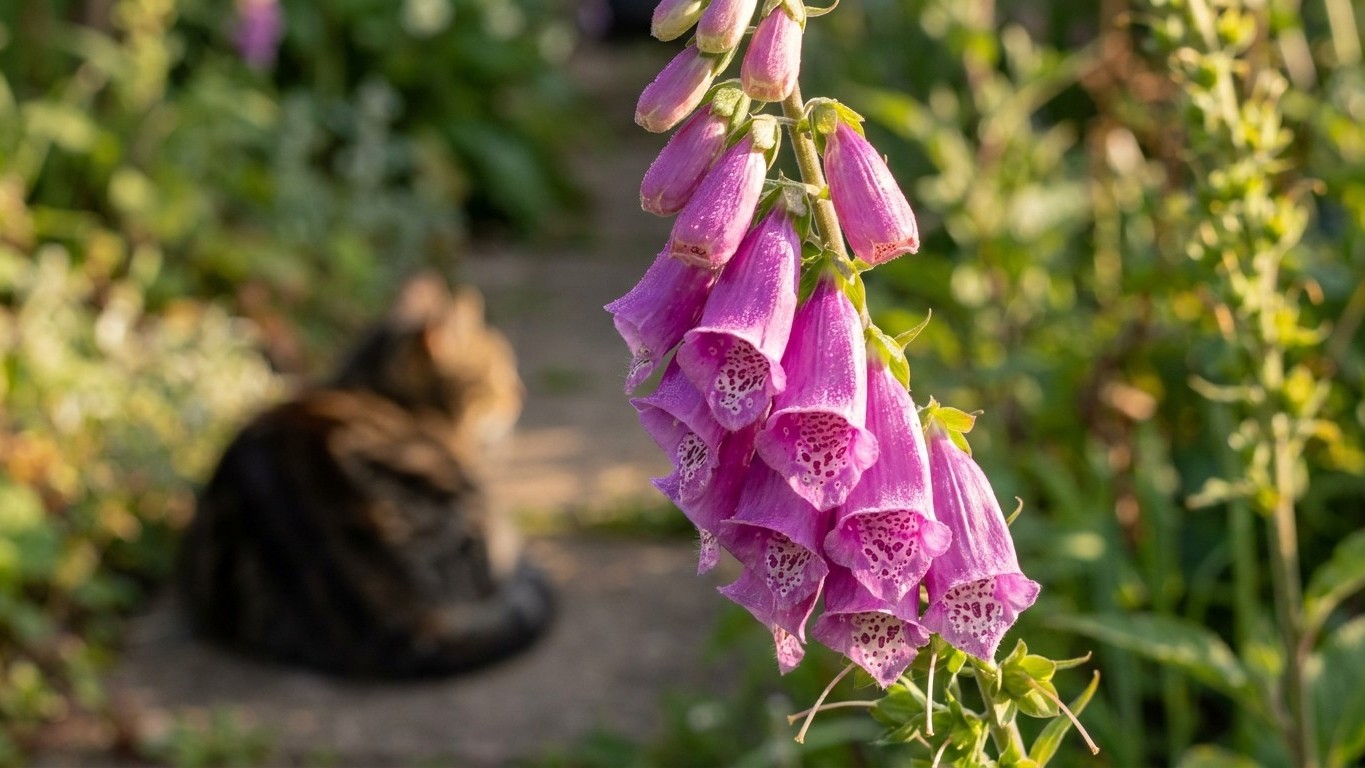
Foxglove, Digitalis purpurea, is in full bloom across British gardens right now, its tall purple spires impossible to miss. The common foxglove is a biennial often grown as an ornamental plant due to its vivid flowers, which range in colour from various purple tints through pink and pure white. It’s a classic of the cottage garden, a beloved British wildflower, and the very same plant that launched modern cardiology. It also happens to be one of the most acutely dangerous plants a cat can encounter. The two things exist in the same cheerful flower pot, and Most Cat Owners have no idea.
Key takeaways
- A beloved cottage garden flower contains powerful cardiac toxins with no established ‘safe dose’ for cats
- Toxins can enter your cat’s body through multiple hidden routes—not just chewing leaves
- Minutes matter: early recognition and emergency vet care dramatically improve survival odds
A plant that simultaneously saves hearts and stops them
Foxglove contains cardiac glycosides which interfere with the electrolyte balance of the heart muscles. That biological mechanism is so powerful it became the basis of a pharmaceutical revolution. The utility of this plant was introduced to Western medicine by William Withering in 1775, who was led to the medicinal value of digitalis through conversations with a Welsh woman known for healing dropsy using herbal remedies containing foxglove. The use of D. purpurea extract containing cardiac glycosides for the treatment of heart conditions was first described in the English-speaking medical literature by William Withering, in 1785, which is considered the beginning of modern therapeutics. The drug that came from his research, digoxin, has been utilised for centuries in managing various cardiac conditions due to its ability to increase myocardial contractility and regulate heart rate.
There is even a compelling art history footnote. The plant could induce xanthopsia, a condition that modifies colour perception, causing objects to appear yellowish or green and producing blue halos around light sources. Some art critics suspect that Vincent van Gogh’s ‘yellow period’ of 1886–90 was at least partly influenced by xanthopsia and, together with malnutrition and absinthe, digitalis may have been implicated. Admitted to the Saint-Rémy asylum in 1889, van Gogh was prescribed digitalis by his physician Dr Paul-Ferdinand Gachet. The same compound that helped failing hearts may have tinted the sun in The Starry Night.
The crucial point is this: the story of digitalis may well have been the origin of the famous adage in the field of pharmacy, namely that the difference between a poison and a medicine is simply a matter of dose. For a cat, there is no safe dose at all.
Why cats are especially vulnerable
Foxglove contains naturally occurring poisons affecting the heart and gastrointestinal tract, and is extremely poisonous to cats. All parts of the foxglove plant contain cardioactive glycosides, also called digitaloids or cardenolides, which are highly toxic to dogs and cats. There are about 100 different cardioactive steroid glycosides in the plant; the most important active substances are digitoxin and digoxin. A cat’s small body mass means the threshold for a dangerous dose is far lower than in humans or large animals. Due to their low body mass, cats need only consume a small amount of the plant to experience serious, potentially deadly symptoms.
The symptoms of foxglove poisoning typically develop within 2–6 hours after ingestion. They tend to arrive in waves. The gut goes first: vomiting, diarrhoea, excessive drooling, and abdominal pain. Then, if enough glycoside has entered the bloodstream, the heart follows. Cardiac glycosides interfere with the electrolyte balance within the heart muscle, causing cardiac arrhythmias, vomiting, diarrhoea, weakness, cardiac failure, and even death. Ingesting foxglove flowers can result in irregular heartbeats, vomiting, and diarrhoea in cats. Without prompt treatment, ingestion of foxglove can progress to convulsions and even death, depending on the amount consumed.
What makes this particularly treacherous is the variety of ways exposure can happen. Most people assume their cat would have to deliberately chew a leaf. But the toxins within these plants are similar to digitalis, and the degree of toxicity varies with the particular plant, part of the plant, and amount consumed. All parts of the plant are generally considered toxic, even the water in the vase has been reported to cause toxicosis. The concentration of glycosides varies between individual plants, between seasons, and between species of foxglove, which makes it impossible to estimate a “safe” quantity. A cat that drinks from the vase on your kitchen table is at genuine risk.
There is also the grooming problem. Even if your cat only brushes against the foxglove and later grooms itself, it can still be exposed to the toxins. Cats are meticulous self-cleaners, which is an asset in most situations and a liability in this one.
Recognising poisoning, and what to do immediately
Speed is everything. Cardiac glycosides cause rapid symptom progression, so recognising the early signs is vital to ensuring the poisoned animal receives timely emergency care. If you notice your cat is drooling excessively, vomiting, or seems suddenly weak or lethargic, and the plant is anywhere in your garden or home, assume exposure until proven otherwise. If you were able to take your cat to the veterinary clinic promptly, he or she has a high chance of survival.
Call your vet or the Animal Poison Line (run by the Veterinary Poisons Information Service) immediately. Do not wait for symptoms to appear. Take a sample or photo of the plant with you to the vet to help with diagnosis. At the clinic, managing symptoms will include performing gastric lavage, administering activated charcoal and intravenous fluid therapy. Treatment includes decontamination, if appropriate, along with ECG, blood pressure monitoring, and generalised supportive care. Mild cases, treated early, can see full recovery within 24 to 48 hours. Untreated cases can be fatal.
The minimum threshold for toxicity is not known and suspected consumption should be reported immediately. That line from the American College of Veterinary Pharmacists deserves underlining: there is no established “safe” amount. Do not wait and see.
Making your garden beautiful without the risk
The honest answer for cat owners who love the look of foxglove is to find alternatives that deliver the same vertical drama without the cardiac danger. Delphinium, larkspur, and snapdragons all have the same vertical impact as a foxglove with no risk of them causing reactions in pets or children. Snapdragons in particular make a strong substitute: snapdragons are a great pet-friendly option to use instead of foxgloves, which are toxic to cats and dogs. For those who want colour and height closer to the ground, marigolds are bright, cheerful, and non-toxic, while snapdragons are safe and great for adding colour.
If you cannot bring yourself to remove existing foxgloves, at minimum keep them out of reach of your cat, clear fallen leaves and seed pods daily, and never bring cut stems indoors. Foxgloves are valued ornamentals in temperate gardens, for their striking flowers. Also, for their capacity to attract pollinators. Numerous cultivars have been developed, including dwarf varieties. Cultivation guidelines emphasise caution, especially in gardens frequented by children or pets. It is also worth noting that foxglove readily self-seeds in suitable environments, sometimes to the point of invasiveness. A plant you removed last year may well be back this May as a seedling you haven’t spotted yet. Check the borders.
One last fact that tends to surprise people: drying does not reduce the toxicity of the plant. Dried flower arrangements brought inside are just as hazardous as the fresh plant in the border. The glycosides persist long after the bloom has faded, which means the danger doesn’t end when the petals drop in late summer.
Sources : pubmed.ncbi.nlm.nih.gov | vetgirlontherun.com