
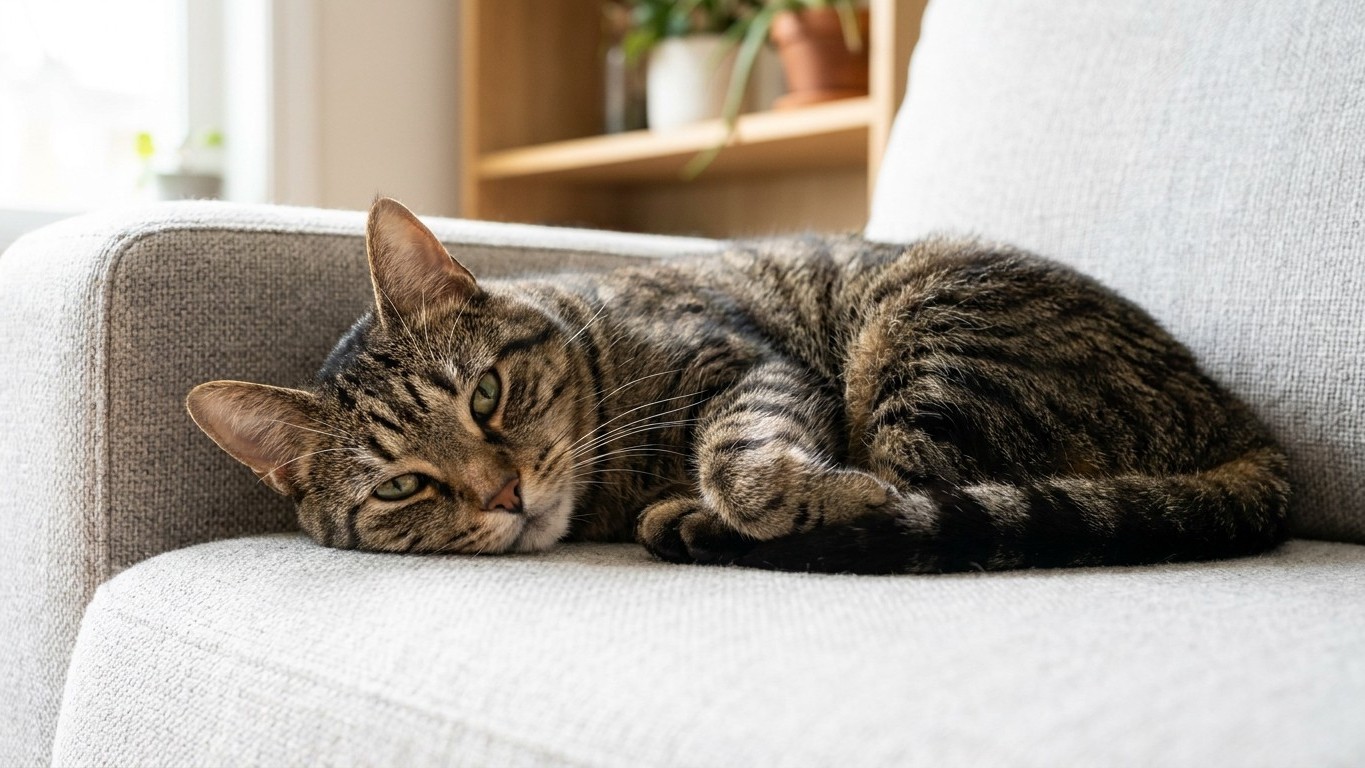
Every May, as the UK starts to thaw out and windows are thrown open for the first time in months, vet waiting rooms quietly fill up with cats. The owners arrive clutching cat carriers, and almost all of them say the same thing before the appointment has even properly begun: “But he never goes outside.” As though four walls and a warm sofa should be a medical shield. They’re not, and the list of conditions that strike exclusively indoor cats is longer than most owners realise.
Key takeaways
- Indoor cats aren’t protected from disease—they’re just better at hiding it
- Nearly 1 in 6 cats has dental disease, but you’d never know from watching them eat
- Your warm home is a flea paradise, and parasites don’t need an outdoor cat to thrive
The “indoor = safe” myth that vets keep correcting
The logic is understandable. The most significant risks to a cat’s safety are outdoors, where interaction with other cats carries risk of exposure to diseases such as Feline Leukemia Virus and Feline Immunodeficiency Virus. Keeping a cat indoors does reduce those hazards substantially. But it creates a completely different set of problems, ones rooted not in infection from outside, but in lifestyle, biology, and the fact that the home environment is, for a predator designed to roam several miles a day, rather boring.
The domestic cat has evolved in various aspects from original domestication to the present day. Many domestic cats today lead a sedentary indoor lifestyle with low environmental stimulation. They have changed their eating habits, transitioning from being carnivorous hunters to animals that eat commercial processed foods, and no longer need to hunt for food but instead have access to several portions throughout the day. That shift, from active hunter to passive sofa resident, sits at the root of almost every condition that sends indoor cats to the vet in May.
There’s also a deeper problem: cats are extraordinarily good liars. In the wild, showing signs of weakness makes a cat vulnerable to predators or other animals competing for food. This instinct hasn’t disappeared, even for indoor cats. As a result, cats will often mask pain, illness, or discomfort until symptoms become severe, meaning that by the time a cat shows obvious signs of illness, the condition may have already progressed. What an owner reads as a contented, quiet cat is sometimes a cat in significant pain, doing what millions of years of evolution have taught it to do: look fine.
The conditions hiding in plain sight
Dental disease is probably the most common diagnosis that shocks owners. Periodontal disease is the most commonly diagnosed disease in UK cats, with 15.2% diagnosed annually, estimated at 1.8 million cats affected every year in the UK, and many more likely going undiagnosed. Think about that for a moment: nearly one in six cats at any given vet surgery has it. Although periodontitis can be painful, it can be difficult to identify because cats have developed evolutionary survival habits of masking chronic pain from potential predators. The cat eating her dinner perfectly happily may actually be swallowing food whole to avoid using her aching teeth.
Obesity is the next piece of the puzzle, and it feeds directly into a cascade of more serious conditions. 63% of cats in the UK are overweight or obese, with middle-aged, neutered and indoor cats at greatest risk. Obesity in cats remains a concern for veterinary professionals, with 26% identifying it as one of the top welfare issues affecting cats in the UK today, and it is a risk factor for many serious conditions including diabetes and urinary tract disease. The connection between weight and illness is direct: obesity often goes hand in hand with diabetes, and excess weight can affect a cat’s joints, cartilage, bone structure, heart, and vascular system.
Then there’s dental disease’s quieter sibling: kidney disease. Kidney disease and failure are common issues in indoor cats, especially as they age, and it is more prevalent in cats than in most other pets, though younger cats can also be affected. The truly unsettling part is how silent chronic kidney disease is. It is extremely common in senior cats and often silent until advanced, with increased thirst and urination as early signs — but many owners don’t notice gradual changes.
Why your front door isn’t a parasite barrier
One of the most persistent myths in cat ownership is that indoor cats don’t need routine parasite treatment. Vets correct this daily. Yes, indoor cats are at a lower risk of getting parasites, but it is still possible. Parasites can come into your house on your clothes or shoes, and they can also be found on other animals in the house, for example, fleas can jump from dogs to cats.
A house with central heating and fitted carpets creates a warm and humid condition that is perfect for fleas to flourish. The average British home in spring is, in fact, something close to ideal flea habitat. One flea can lay up to 50 eggs a day, which fall off wherever your cat goes. That’s a problem that spreads from cat to sofa to carpet before most owners have noticed a single scratch. The worm connection makes it worse: as fleas can transmit tapeworm, if your cat shows signs of having fleas, there is a good chance they have tapeworm too.
Both indoor and outdoor cats are commonly prone to a variety of intestinal parasites such as roundworm, hookworm and tapeworm. Sometimes, a cat can show few to no outward signs of having worms, and this subclinical, undetected condition can cause serious health complications. Ask your vet about tailoring a parasite prevention plan to your cat’s specific circumstances, if your cat doesn’t go outside, they may need treatment less frequently than an outdoor cat, but the assumption that they need none at all is one that leads cats to the clinic every spring.
What to actually watch for, and when to act
The challenge with indoor cats is precisely that they look so settled. Cats are hardwired to mask pain and sickness, a survival instinct from their wild ancestors, and by the time symptoms are obvious, the condition may already be advanced. Owners describe a cat who seemed completely normal until, suddenly, it wasn’t.
The clues are there, but they’re subtle. Changes in appetite or water intake, eating less, refusing favourite foods, or drinking excessively — can indicate kidney disease, dental pain, or other metabolic issues. Cats in pain often lash out when touched in sore areas, with many displaying more aggression and hiding more than usual before other symptoms appear. A previously Affectionate cat that suddenly swats or retreats to quiet corners may be signalling internal discomfort. Grooming changes are equally telling: a greasy, matted coat develops when pain or nausea prevents normal self-cleaning, while bald patches from over-grooming point to allergies, stress, or skin irritation.
Annual wellness visits, or twice-yearly checkups for senior cats, are so important because these visits give the veterinary team a chance to detect subtle changes in weight, behaviour, and overall health. During your cat’s regular vet checkup, a simple blood test and urinalysis can reveal kidney issues before they cause major health problems. The same visit catches dental disease in its early, still-reversible stages, checks weight against last year’s record, and gives you the parasite protocol your cat actually needs.
One detail worth knowing: diabetes is becoming increasingly common in cats, especially those who are overweight or middle-aged, and the early signs can be subtle, things like drinking more water, urinating more often, or unexplained weight changes. The good news is that diabetes can often be managed successfully when caught early — in fact, some cats may even go into remission with prompt treatment. That outcome is only possible if the cat actually sees a vet while the disease is still in its early stages, not six months after the owner noticed the water bowl was emptying faster than usual. If anything changes in your cat’s behaviour, appetite, drinking habits, or grooming, that is the moment to ring your vet, not a reason to watch and wait.
Sources : comfortedkitty.com | veterinary-practice.com