
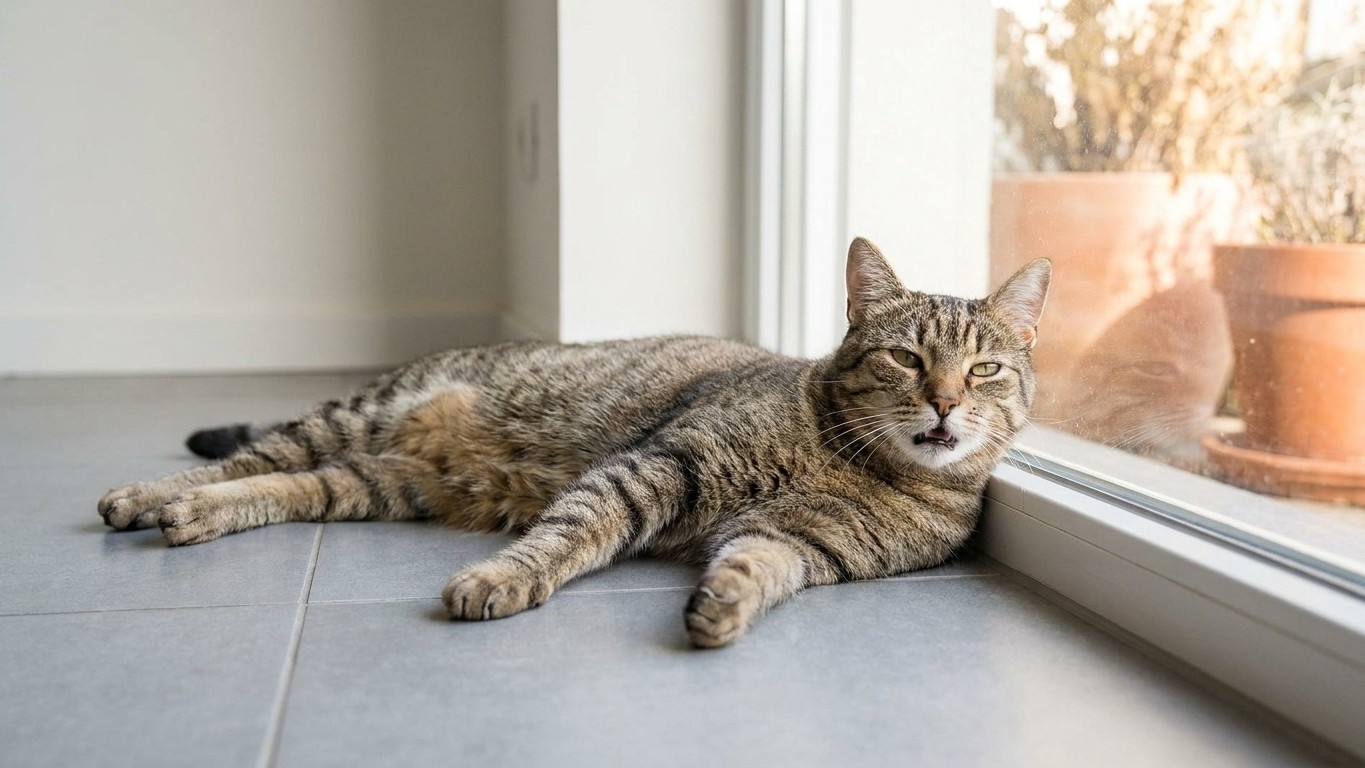
A cat curled up in a sun-drenched patch of carpet, purring loudly, and its owner smiling, thinking: perfectly content. The purr is the universal signal of a happy cat, right? Not always. On a hot day, that ramped-up rumble might actually be your cat’s way of managing distress, not expressing bliss. And that distinction, small as it sounds, could one day save your cat’s life.
Key takeaways
- A cat’s purr isn’t always a sign of happiness—it can also be self-soothing during pain, fear, or heat stress
- Cats have extremely limited cooling abilities and can develop dangerous heatstroke in just 20-30 minutes
- A flat, unresponsive cat that purrs but refuses to engage may be in serious danger, not contentment
The purr is not what most people think it is
Cats purr for several reasons, and it’s not always about being happy. While a curled-up, relaxed cat often purrs to show contentment, research shows that this vocal vibration can also support healing, help kittens communicate with their mother, reduce stress, and even act as a self-soothing behaviour during pain or fear. That last part is what catches most owners off guard.
Purring is usually thought of as a sign of contentment, but some cats purr when they are frightened or hurting, this is particularly true for cats with easygoing or gentle personalities. The logic is counterintuitive, but the biology is clear. The act of purring may help soothe the cat and alleviate pain, similar to people in distress finding comfort in moaning or rocking back and forth, and the associated vibrations could potentially stimulate the cat’s body to release endorphins — natural pain-relief chemicals.
Purring is produced by the rapid twitching of the muscles within a cat’s larynx. This twitching causes a sudden separation of the vocal cords during both inhalation and exhalation, creating the characteristic sound. The frequency of cat purrs typically ranges between 25 and 150 Hertz. Those frequencies are not arbitrary. Domestic cats, servals, ocelots, and pumas produce dominant frequencies at exactly 25 Hz and 50 Hz, the two low frequencies that best promote bone growth and fracture healing. The purr, is partly a biological repair toolkit. Cats purr when giving birth to kittens and mending from physical trauma, and broken felid bones take significantly less time to heal than broken dog bones — low-frequency vibrations in the range of cat purrs are even used to treat complex fractures in humans.
So when your cat escalates its purring on a warm afternoon, lying flat and heavy-eyed, it is worth pausing before you feel flattered.
Why heat is genuinely dangerous for cats, and why they hide it
While cats are considered desert animals, they don’t actually cope with heat any better than other animals or even us humans. Their thermoregulatory toolkit is surprisingly limited. Technically, cats do sweat, but not the same way that humans do. As humans, we sweat all over our bodies, but cats have much more limited sweating capabilities. Humans have sweat glands located just about everywhere, but cats have sweat glands only in a few areas that lack hair, including their paws and chin. That tiny surface area simply cannot shift meaningful heat. A cat cannot lower its core temperature meaningfully through pad sweating alone — the surface area is too small, evaporation too inefficient, and output too low.
To compensate, instead of panting, cats groom themselves, licking their coat, as a method of evaporative cooling to lower their body temperature. Although panting is the most efficient way of cooling, it is not a common occurrence in cats like it is in dogs. Only extremely heat-stressed cats will pant, so if your cat is panting, you need to be concerned that she is too hot.
Heatstroke can progress from mild Discomfort to a dangerous emergency within 20–30 minutes. A cat’s normal body temperature is around 100–102.5°F, and organ damage begins when their temperature exceeds 104°F. Prolonged high body temperature can damage a cat’s kidneys, liver, heart, and brain, and kidney problems are common after heatstroke, sometimes not showing symptoms until days later. That delayed presentation is part of what makes the condition so treacherous.
Any cat can be at risk for heatstroke, but brachycephalic (short-nosed) breeds may be more susceptible. Persians and Himalayans, for example, may be predisposed to developing heatstroke or be especially sensitive to the effects of heat and humidity, as they are unable to cool themselves effectively. Kittens, senior cats, and flat-faced breeds heat up faster due to their smaller size or breathing limitations.
Reading the real signs, not just the purr
The purr alone is not enough to diagnose heat stress. Context is everything. When a cat is purring, look at their body language and the situation to determine why. A purring cat that approaches you with their tail held up may be greeting you and soliciting attention, but if the cat is crouched down with ears pulled slightly to the side while purring, they may not be feeling well.
Signs of heat exhaustion in cats include restless behaviour as they search for a cool spot, panting, drooling, sweaty paws, and excessive grooming, all efforts to cool themselves down. As things escalate, severe heatstroke shows as heavy panting, drooling, bright red or purple gums, and vomiting — and your cat may seem confused, walk unsteadily, or collapse. A cat that is purring but flat, limp, unresponsive to its name, or reluctant to move deserves immediate attention. If a cat is purring but refuses to engage, play, or move, assume they are in pain, not happy. Never let the sound of a purr delay your trip to the vet.
If you suspect overheating, act fast, but carefully. Get the cat to a cool, calm environment like an air-conditioned room. If water stresses your cat, try rubbing them with a damp towel. Do not place ice cubes on your cat or submerge them in cold water, as this can increase stress and put them at higher risk of medical complications. One slightly counterintuitive approach is to use warm water on the ears, paws, and abdominal region and place the cat close to a fan — this creates a cooling effect similar to sweating. Then get to a vet. If your cat isn’t cooled down promptly, it can lead to irreversible organ damage or loss of life.
Practical steps for the warmer months
Prevention requires almost no effort, just a few consistent habits. Cats will often take it upon themselves to find shady or cool spots, under structures, near cooling vents, or by fans, to prevent heat exhaustion. Your job is to make sure those options exist. Multiple fresh water bowls around the house are non-negotiable; increasing fluid intake by feeding wet food, or by adding water or tuna water to dry food, is one of the simplest ways to keep a cat hydrated in warm weather. Indoor cats can develop heatstroke, especially if they’re in a house without air conditioning in the summer months, a fact many UK owners still underestimate during our increasingly warm summers.
Regular grooming also helps. Removing loose fur prevents mats and allows air to circulate better through your cat’s coat, especially important for long-haired breeds. And never leave a cat in a parked car. Not even briefly. A locked vehicle on a warm day can quickly reach temperatures that harm or kill a cat.
One final thought worth sitting with: cats are thought to have evolved from desert animals, which may explain why some cats have a propensity to drink minimal water, making dehydration a particularly serious risk in summer. Their ancestors survived scorching environments by being behaviorally brilliant — resting during peak heat, hunting at dawn and dusk. Your domestic cat has inherited those instincts, but not the freedom to act on all of them. That gap, between wild adaptation and indoor life, is precisely where owners need to step in.
Sources : usefulbs.com | aplaceforanimals.com