
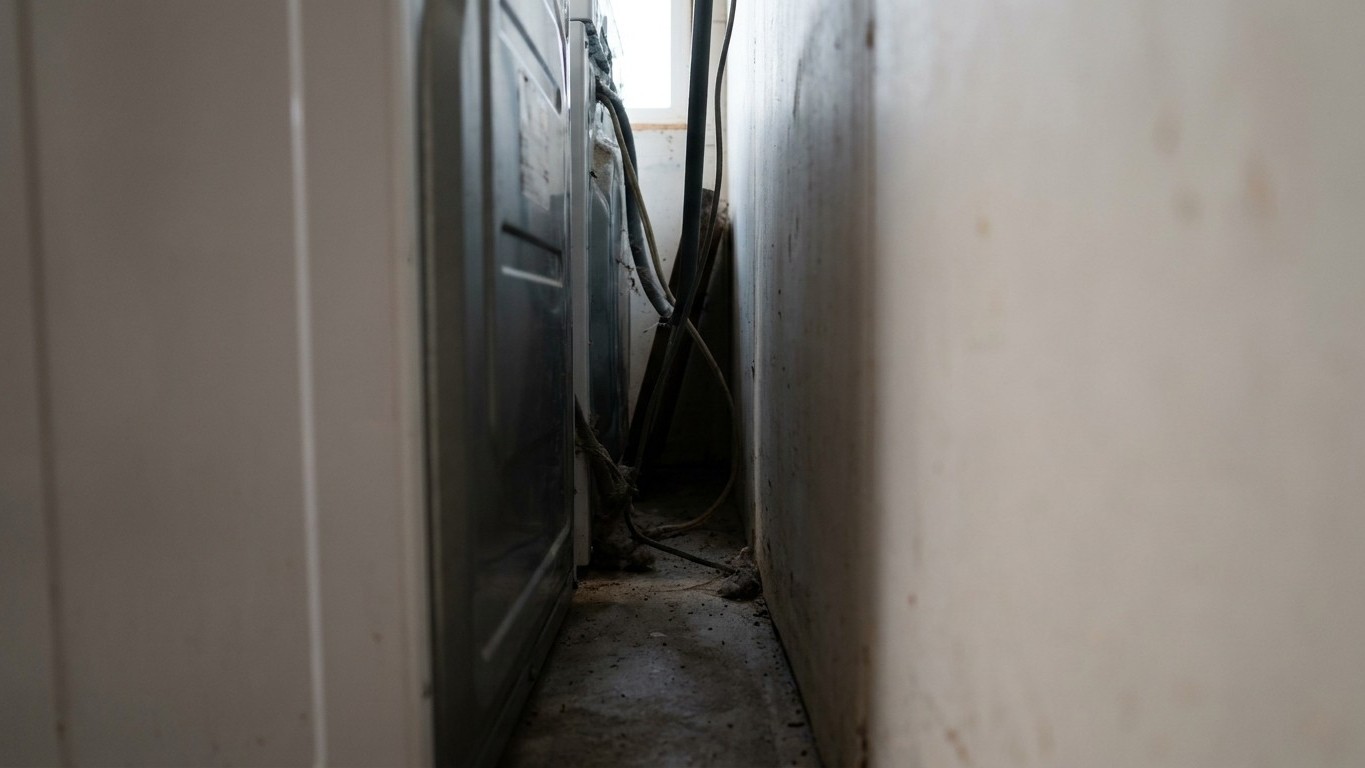
The gap behind the washing machine looks, from a cat’s point of view, like five-star accommodation. Dark, slightly warm, vibrating gently at tumble time, and utterly inaccessible to humans, what’s not to love? The problem is that this cosy little nook is one of the most dangerous spots in the entire house, and the risks extend far beyond a cat getting a fright when a spin cycle starts.
Key takeaways
- Cats are instinctively drawn to the gap behind washing machines, but what feels safe to them hides multiple life-threatening hazards
- Even a ‘quick cold wash’ can cause fatal injuries if a cat gets trapped inside, but the dangers extend far beyond the drum itself
- Simple solutions exist—but experts warn that blocking hiding spots without offering safe alternatives can cause severe stress and anxiety
Why cats are magnetically drawn to that gap in the first place
Cats are natural predators but also prey animals. In the wild, small enclosed areas provide a crucial advantage, allowing them to observe their surroundings without being seen and protecting them from potential threats. That survival wiring never switched off, not even in the most pampered house cat who has never come within a whisker of actual danger.
The most convincing theory as to why cats seek small spaces is that, as a prey species, they’re often targeted by birds and other land carnivores, leaving them vulnerable and craving shelter. Although cats are predators and hunt small animals, they feel comfortable when they’re out of sight and hide as a way to protect themselves. The gap behind the washing machine ticks every instinctive box: it’s enclosed, it’s elevated slightly off the floor, and it’s dark. Add the warmth radiated by the motor, and for a heat-seeking feline it’s basically irresistible.
During the winter, cats may seek out warm places near the water heater or dryer. The washing machine functions in exactly the same way, a reliable heat source tucked into a corner. Kittens are especially vulnerable here, because their curiosity is maxed out and their sense of self-preservation has not quite caught up.
The real dangers lurking behind the drum
The most catastrophic scenario is accidental entrapment inside the machine itself. Two clinical cases of accidental entrapment of cats in front-loading washing machines have been documented, with one cat dying the day after presentation as a result of aspiration pneumonia and head trauma, despite supportive care. These are not freak accidents. Inside your washing machine or dryer is a warm and tempting sleeping place for cats, and if someone in your household puts clothes in without checking and turns the appliance on, the consequences could be fatal.
Animals entrapped in functioning washing machines are at risk for near-drowning, aspiration pneumonia, chemical damage to body tissues, thermal injury, and head trauma. Even a “quick cold wash” is enough to cause severe harm in minutes. Chemical damage to the lungs, eyes, skin, gastrointestinal tract, and upper respiratory tissues can occur following exposure to and inhalation of laundry detergent present in wash water. Many laundry detergents are highly alkaline, increasing the risk of tissue injury with exposure.
But even a cat that never climbs inside the drum is not necessarily safe behind the machine. The appliances can pose a risk of injury, and there are also potential dangers from electrical cords. The area behind most washing machines is a jungle of cables, drainage pipes, and exposed connections, none of which should be anywhere near curious teeth. Laundry detergent chemicals are highly dangerous and potentially fatal, especially to cats. They are designed to dissolve fat, grease and oil — and an animal’s cell membranes are also made of lipids, so if exposed, the detergent dissolves the cells, causing burns.
There is also the straightforward danger of getting physically trapped. The back of a refrigerator, or washing machine, can pose risks such as getting trapped or encountering hazardous items like wires. A cat wedged tightly in a gap behind a large appliance can suffer crush injuries, panic-induced exhaustion, and dehydration before anyone even notices they are missing. Cats are famously stoic: by the time a problem becomes obvious, it may already be serious. Always consult your vet if you suspect your cat has been trapped or injured.
How to block the gap properly
Cats Protection, one of the UK’s leading feline welfare charities, is unambiguous on this: “Small spaces are attractive to cats, and it is natural for them to hide when feeling anxious, or just because they want a peaceful rest. Block off any areas where your cat could become trapped and keep the doors of household appliances such as the washing machine or tumble dryer, firmly shut.”
Blocking the gap behind your washing machine does not need to be complicated or expensive. To keep the cat from going behind the washer and dryer, you can block access to that space by either putting a heavy box or a couch in front of it. Purpose-made gap fillers, cut-to-size foam wedges, or even a plank of wood secured against the wall all do the job effectively. The goal is simply to remove the entry point. If the machine sits in a dedicated utility room, the simplest solution of all is to keep that door shut, and make sure every member of the household, including children and any regular visitors, understands why.
The best way to keep cats out of dangerous hiding spots is to provide safe options, such as alternative perches or cardboard boxes lined with blankets or towels. Cats who aren’t able to hide can become very stressed. This is a genuinely important point. Blocking a hiding spot without offering an alternative is not a kindness, it creates anxiety. A hooded bed in the corner of the laundry room, a cardboard box with a blanket inside it, or a cat cave tucked away in the living room all give your cat the sense of security they’re biologically wired to need. Placing a comfortable hooded bed in the laundry may prevent cats from slipping into the dryer.
A final check you should do every single time
The only way to prevent this sort of incident is to be vigilant and check appliances before turning them on. This applies equally to the machine’s interior and to the gap behind it, a cat who cannot get behind the drum may simply decide to climb inside it instead. Make it a household rule: before you press start, account for every cat in the home. Even when you “know” you’ve seen no cats enter, don’t turn them on until you’ve made visual contact with each cat who had access to the area.
One thing worth knowing: while hiding is a natural and healthy behaviour, excessive hiding can sometimes indicate illness. Cats instinctively conceal signs of weakness, which means they might retreat to an enclosed space when they are not feeling well. If your cat suddenly starts hiding more than usual and also exhibits other symptoms like lethargy, loss of appetite, or changes in behaviour, it’s a good idea to schedule a vet visit. The gap behind the washing machine may be a comfort zone for your cat, but it can also be a sign that something else is going on entirely.
Sources : quora.com | pmc.ncbi.nlm.nih.gov