
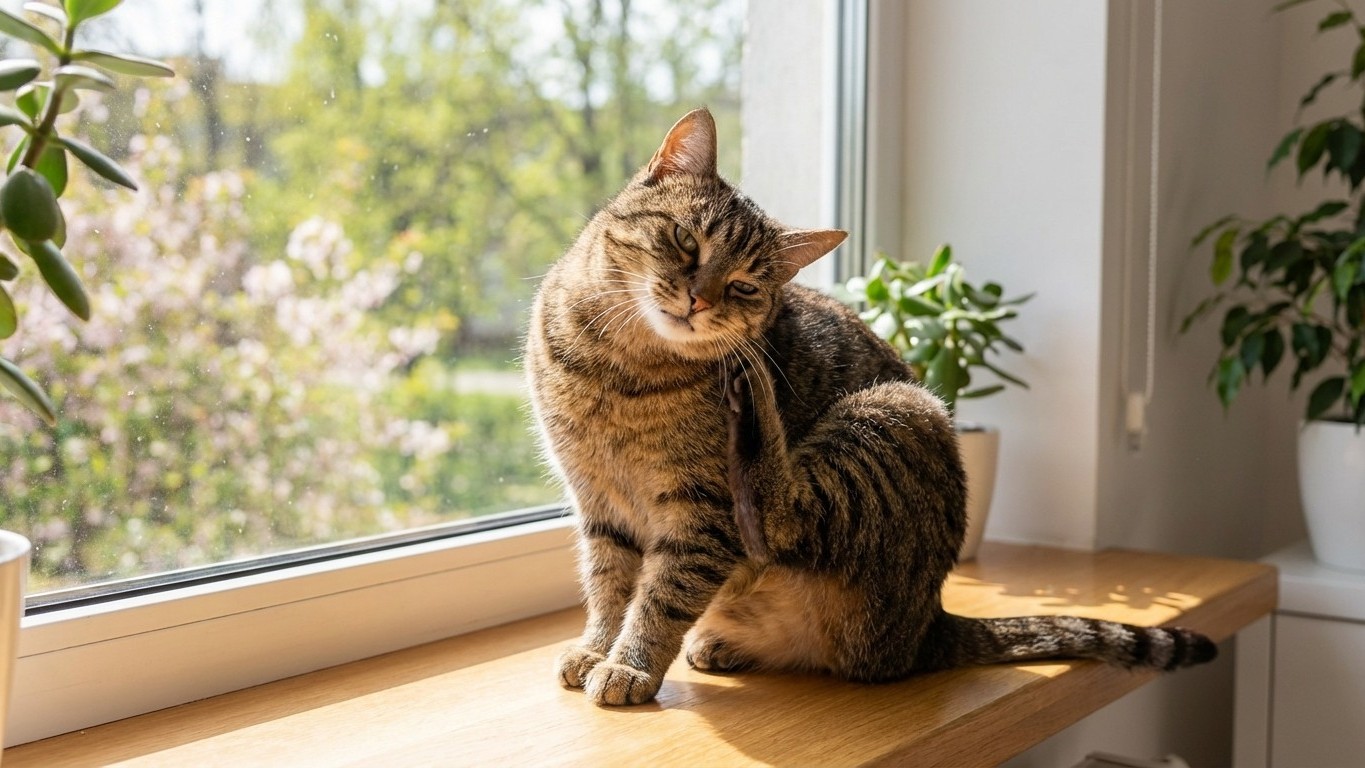
April arrives, the windows finally open, the garden smells of damp earth and possibility, and most cat owners breathe a sigh of relief that winter is behind them. The heating gets turned down. The cat starts venturing outside again. And that is precisely when many owners make the mistake that quietly sets the stage for a flea-and-parasite disaster that will run right through to September. The mistake isn’t dramatic or unusual. It is, in fact, entirely understandable: they stop treating their cat for parasites.
Key takeaways
- One April decision stops parasite treatment entirely—but vets say this is exactly when fleas become most dangerous
- 95% of fleas live in your home, not on your cat—meaning one missed month could mean hundreds of parasites by August
- Even indoor cats face risk, and the consequences go far beyond itching
Why April Is the Critical Turning Point
As the days get longer and the temperatures start to rise, spring brings plenty of opportunities for pets to enjoy the great outdoors. Unfortunately, it also marks the start of peak parasite season. The logic that tempts owners to skip prevention is seductive: winter is cold, fleas die off in the cold, so why bother? The problem is that logic is built on a myth. Fleas thrive in warm conditions and historically tended to be active when British weather warmed up in the spring and summer, but nowadays, with centrally heated houses, fleas are a year-round threat.
So the cat that seemed fine all winter, cosy in a heated home, may already be carrying dormant trouble. Flea pupae, the cocoon stage, can lay dormant for long periods, waiting for the right conditions so adult fleas can emerge. Fleas can also find warmth and shelter during the winter months by living on wildlife such as foxes and rats, or in animal dens. Then April comes, your cat starts rolling around in the garden, and conditions suddenly become perfect for these pupae to hatch in their thousands.
UK vets report a noticeable increase in flea infestations, tick bites and worm cases from March onwards. The owner who stopped treatment in November, fully intending to restart “when summer properly arrives”, has already let a gap open up in their cat’s defences. By the time they notice the scratching or the tiny black specks in the fur, the infestation is rarely just on the cat.
The Scale of What You’re Actually Dealing With
Here is the thing about fleas that genuinely stops me in my tracks every time I think about it: approximately 95% of the flea population doesn’t actually live on your pet, they live in the surrounding environment as eggs, larvae and pupae. Which means treating only the cat, or treating too late, is like mopping the floor while the tap is still running. The carpets, the sofa, the cat’s favourite sleeping spot by the radiator — all of them become breeding grounds.
A flea can live from between 14 days to a year, and a female can lay up to 50 eggs in one day, that’s 1,500 in a lifetime. Do the maths: a single untreated cat in an unprotected home in April could, by August, be sharing the house with an extraordinary number of parasites. Fleas thrive in warm, humid environments, meaning your home is the perfect breeding ground during spring and summer. If you spot even one flea, there are likely hundreds more hiding in your home.
And it’s not just the irritation. Flea bites can cause a number of additional problems in both pets and humans, including anaemia (especially in young kittens or elderly pets with a heavy infestation), Flea Allergic Dermatitis, tapeworms and Bartonella (cat scratch disease). Flea larvae can become infected with tapeworm eggs, and if your pet eats an infected flea it can become host to this parasite. A flea problem, left to run through summer, really isn’t just a skin issue.
The Indoor Cat Is Not Off the Hook
Many owners believe indoor cats don’t need parasite prevention. Unfortunately, that’s a myth. Fleas in indoor cats are common in UK homes, and eggs can be carried inside on shoes, clothing or visiting pets. This catches a lot of well-meaning owners off guard. They genuinely believe their flat-dwelling, sofa-loving cat has no exposure risk. But even occasional access to a garden increases the risk of exposure to fleas, ticks and worm eggs present in grass and soil, and once inside, fleas spread quickly through carpets and bedding. A small flea problem can lead to tapeworm infection in cats during grooming.
Indoor heating and milder winters in recent years mean parasites are surviving for longer and becoming active earlier. This is the new normal for UK cat owners, and the advice from British vets has shifted accordingly. UK vets recommend regular flea and worm treatment for indoor cats. Not occasional. Not seasonal. Regular.
What to Actually Do Right Now
If you’ve let the treatment lapse over winter, April is the perfect time to restart and not the moment to delay further. Skipping doses or stopping for a season leaves your pet vulnerable, and missing just one month can lead to a lifetime of health complications. Prevention is easier, safer, and far more affordable than treatment.
The first and most important step is speaking to your vet. Parasite Protection is not “one-size-fits-all,” as certain factors affect the type and dose of the product that can be used, including the age, species, breed, lifestyle and health status of your pet, as well as any medications they are receiving. This matters enormously for cats in particular. Never use flea treatment intended for dogs on your cat, as this can be fatal. Many dog flea treatments contain permethrin, which is toxic to cats.
Beyond treating the cat itself, the home needs attention too. It is estimated that vacuuming can remove up to 50% of flea eggs. Vacuuming regularly under furniture, along skirting boards and in the cat’s sleeping area is genuinely effective. Washing pet bedding regularly at 60°C helps kill flea eggs. If you share your home with other pets, they all need to be treated at the same time. Treating all pets in the home and the environment concurrently is what stops the cycle from simply continuing.
Maintaining a regular treatment schedule matters most, because prevention works best before pests are seen. That’s the crux of it. By the time you notice the problem, you’re already playing catch-up with a very determined insect that has been reproducing in your soft furnishings for weeks.
The month of April sits at an odd crossroads: warm enough that parasites surge into action, but still early enough that a timely restart of prevention can spare your cat, your home, and your sanity the full misery of a summer-long infestation. The question worth sitting with is this, when did you last actually check whether your cat’s treatment is up to date? Your vet can answer everything else from there.
Always consult your vet before starting, switching or stopping any parasite treatment for your cat. They can tailor a prevention plan to your pet’s specific needs, age and health status.
Sources : merck-animal-health.com | yfvets.co.uk