
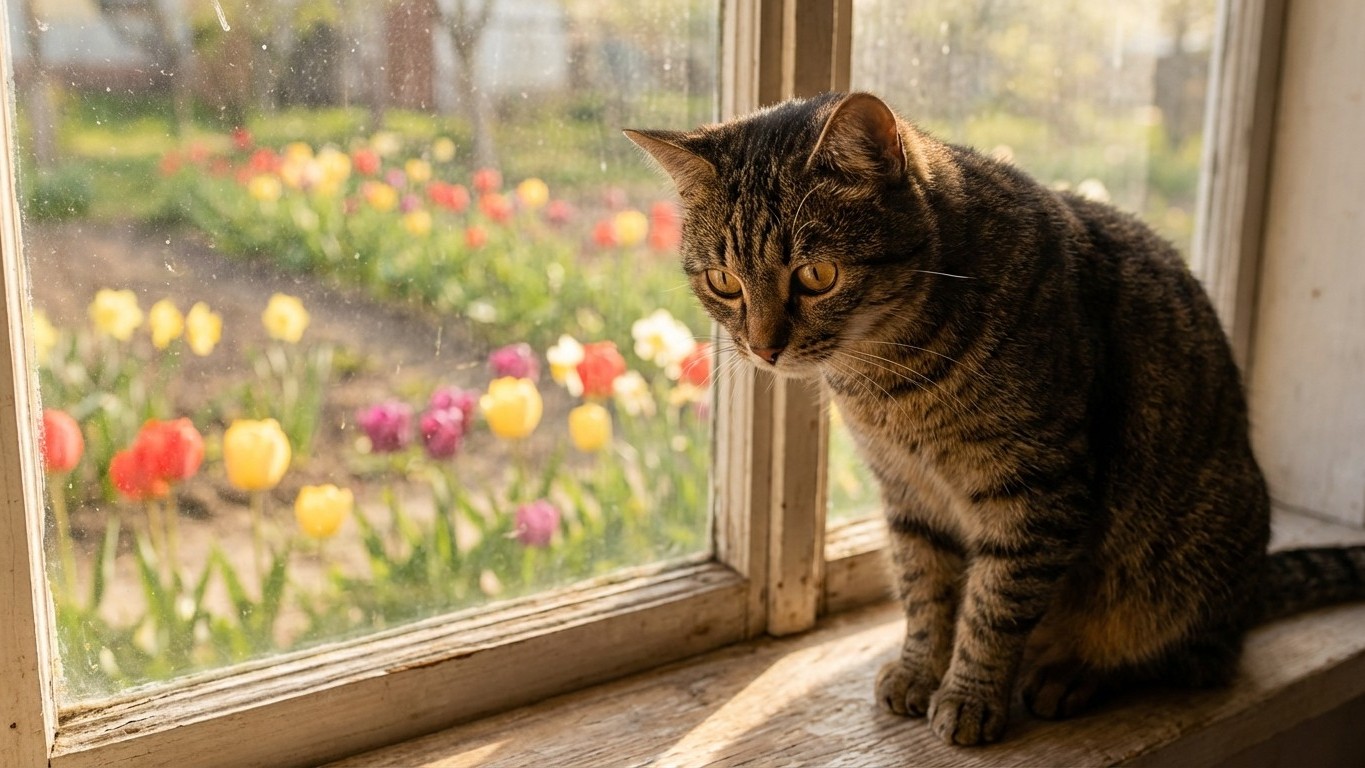
Spring bulbs are the garden staple that almost every British household digs up, stores over winter, then replants with a certain sense of quiet ritual. Daffodils, tulips, hyacinths, crocuses, they are the very definition of seasonal hope. And yet, that papery little bulb you’re pressing into the soil right now is, for your cat, one of the most dangerous objects in the garden. If your cat has been sitting at the window watching you with unusual intensity, there may be more to that stare than you think.
Key takeaways
- Spring’s most beloved bulbs contain toxins that can cause severe reactions in cats, from gastrointestinal distress to seizures and organ damage
- Cats don’t need to eat bulbs outright—simply grooming their paws after walking through treated soil can trigger poisoning
- The danger peaks when bulbs are handled and stored before planting, but safe alternatives and containment strategies exist
The Bulb Is the Problem : But Not Only the Bulb
Tulips are poisonous to cats if they ingest any part of the plant, from the leaf and flower to the stem and bulb. The same logic applies to many of the bulbs you’re most likely growing. Tulips, hyacinths, and irises are all considered toxic to cats and can cause vomiting, diarrhoea, and drooling if ingested. Daffodils are more alarming still. Not only are daffodil flowers toxic to cats, but the bulbs contain lycorine, which is known to cause serious heart and respiratory problems in pets.
What makes spring planting season particularly risky is the moment when bulbs are out in the open, before they go into the ground. Spring is a time for planting bulbs, but it’s important to remember that bulbs often have a higher concentration of nutrients than leaves or flowers, meaning they can be more dangerous for your pet. The toxic substances in tulips, tulipalin A and tulipalin B, can be found in all parts of the plant, but eating the bulbs causes the most severe cases because the bulbs contain the highest concentration. So that basket of daffodil bulbs sitting on the patio while you decide where to plant them? A curious cat could investigate and lick, bite, or even just brush past it.
When a cat does become unwell from toxic plants, it is usually because something has brushed onto their fur or paws, which they have then ingested while grooming. That detail Changes the threat level entirely. Your cat doesn’t need to take a bite of a bulb. Simply walking through the soil where you’ve been handling them, then grooming later, could be enough to cause a reaction.
How Serious Can It Get?
The spectrum of harm runs from mild to life-threatening, and that range depends entirely on which plant and how much was consumed. Depending on how much your pet ingests and which parts of the plant are ingested, significant vomiting or diarrhoea may occur, which can lead to more serious concerns such as dehydration, lethargy, and abdominal pain. For daffodils specifically, the risks escalate quickly. Unlike other bulbs, daffodils may cause depression, hypotension, or even seizures when ingested in large amounts.
There is also a category of spring flower that deserves its own conversation: lilies. Certain lilies, such as Asiatic, Day, Easter, Japanese Show, and Tiger lilies, are highly toxic to cats, and even lily pollen can be dangerous if ingested during grooming. Just a few leaves or water from a vase containing these flowers can be fatal. This isn’t a “monitor and see” situation. If you have cut flowers in the house and your cat has been near them, acting fast matters.
There are two types of crocus worth knowing about, and the difference between them is not obvious to most gardeners. The spring crocus and the autumn crocus (Colchicum autumnale) are entirely different plants. Both spring and autumn crocus plants are toxic to cats. Ingesting spring crocus can lead to gastrointestinal issues like vomiting and diarrhoea, while autumn crocus is highly toxic and all parts of the plant can cause severe symptoms, including vomiting, bloody diarrhoea, organ damage, respiratory failure, and seizures. If you grow crocuses and aren’t sure which variety, that’s worth finding out now.
Your Cat’s Behaviour Around Plants : What to Watch For
Cats are inquisitive animals, renowned for showing curiosity and happy to investigate new plants and flowers within their environment. Indoor cats, particularly kittens who lack exposure to plants or grasses, may enjoy interacting with new vegetation within their homes and can easily, through this exploratory behaviour, inadvertently consume flowers. That’s the charming reality of living with a cat. They investigate everything, usually at the worst possible time.
There is greater risk within the home, as it is a confined area, and a bored or curious cat might investigate an indoor plant or a cut flower display by playing and nibbling. A vase of tulips or daffodils on the kitchen table is more dangerous than most people realise, and the water in that vase is not safe either. Bunches of daffodils and tulips are lovely ways to brighten a home, but all parts of spring bulbs are poisonous to pets, and cats and dogs should not be allowed to drink the water from the vase.
Signs that something is wrong include excessive salivation, vomiting, diarrhoea, breathing difficulties, and fitting. The timing matters enormously. If you think your cat has been poisoned, contact your vet immediately, don’t wait for signs of illness to develop. This is one area where the instinct to “wait and see” could cost your cat dearly. Always call your vet first and let them guide you.
Making the Garden Safer Without Abandoning It Entirely
The good news is that you don’t have to choose between a beautiful spring garden and a safe one. It requires some thought, but it’s far from impossible. Camellias, nasturtiums, rosemary, snapdragons, and roses are considered non-toxic to cats and dogs, and all are just as beautiful. Snap decisions about what to plant can be swapped for a bit of research beforehand, a few minutes with a reliable source like Cats Protection or the PDSA can save a lot of heartache.
If you’re committed to your tulips and daffodils, the approach is about containment and access. Daffodil, tulip, and allium bulbs contain toxins that would cause issues if your cat ingested them, so it’s best to keep these out of reach before planting and to plant them deep in the ground. Bulbs planted indoors, such as hyacinths or amaryllis, should be kept well out of reach of animals. Indoor cyclamen are also a danger if ingested. And bulbs in backyard storage should also be kept securely away from pets.
A few practical habits make a real difference. Wash your hands after handling bulbs before interacting with your cat. Store unused bulbs in a sealed container in a shed or cupboard your cat can’t access. And if you’re cutting daffodils from the garden to bring indoors, place them in a room your cat doesn’t freely roam. Do not attempt to force your cat to vomit if you’re concerned they’ve swallowed a toxic plant, contact a vet for advice straight away, and try not to panic, because staying calm should help your cat stay calm too.
There’s something quietly poetic about the fact that one of Spring’s most cheerful traditions carries a hidden sting. Millions of bulbs are planted across British gardens every year with the best of intentions, colour, hope, the end of grey skies. Most cats will never come to any harm. But for those that do, the outcome can be severe and fast-moving. The cat at your window, tracking your every move in the garden, is doing what cats have always done: watching. Whether or not they’re warning you is a matter of interpretation. Either way, it’s probably worth returning the favour.
Sources : sonoraliveoakvet.com | countryfile.com