
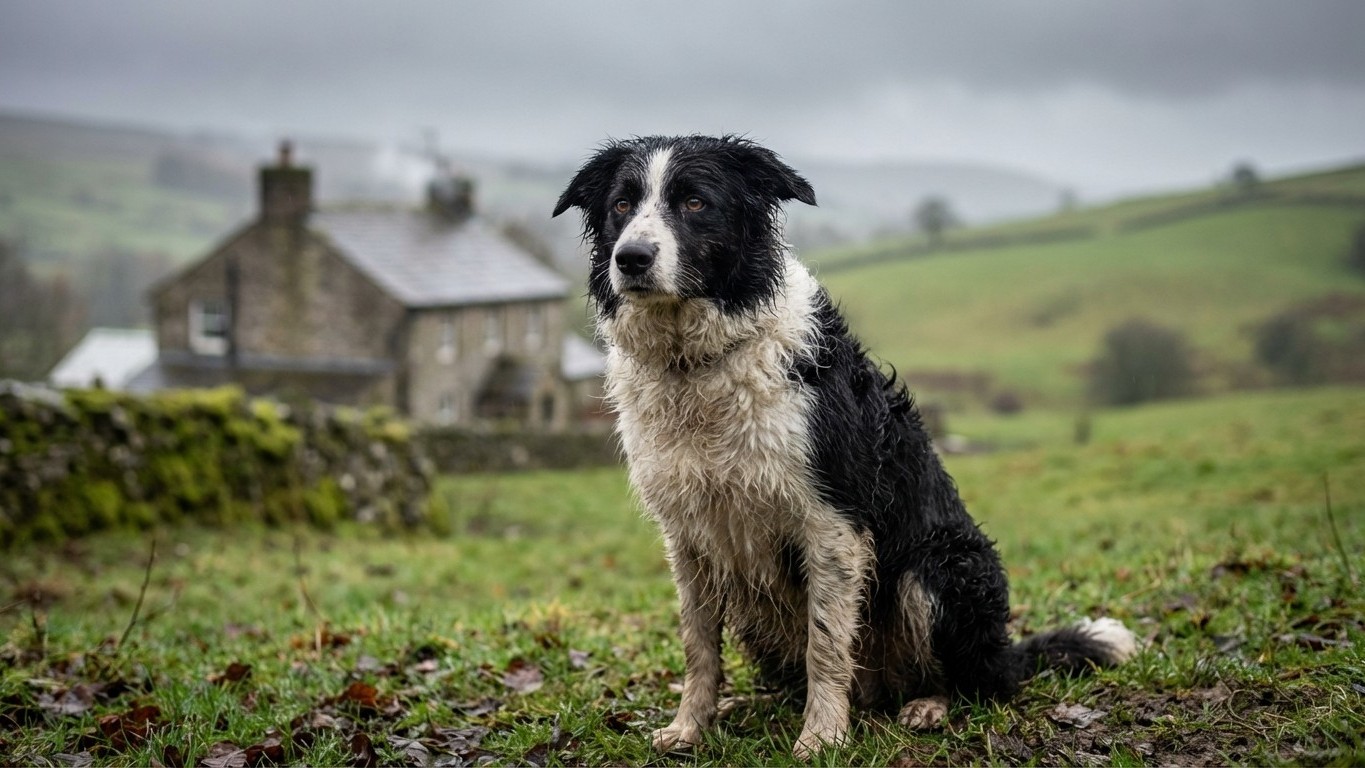
Britain and its dogs share a uniquely complicated love affair. The UK has one of the highest rates of dog ownership in Europe, with millions of households sharing their lives with a canine companion, and yet choosing the right breed here involves considerations that a generic global guide simply cannot cover. The weather alone would humble any dog owner who hadn’t thought it through – for detailed guidance on this crucial aspect, this dog breeds guide for UK weather (cold/rain) provides essential insights. Add a distinct set of laws, a housing landscape dominated by terraced houses and flats, and a cultural attachment to certain working breeds that goes back centuries, and you start to understand why a specifically British approach to breed selection matters enormously.
Why the UK Demands Its Own Approach to Dog Breed Selection
Pick up almost any international guide to choosing a dog and you’ll find sunny lifestyle photos, advice calibrated for large suburban gardens, and zero mention of the Dangerous Dogs Act. That’s the gap this guide exists to fill. Owning a dog in the United Kingdom means navigating a specific legal framework, a climate that oscillates between damp and very damp, and a rental market where pet-friendly properties remain stubbornly scarce in many cities. For those facing the particular challenge of flat living, this best dog breeds for UK flats guide addresses the specific considerations of apartment-based dog ownership.
The cultural dimension matters too. British dog culture has deep roots. The Kennel Club, founded in 1873, is the oldest official canine organisation in the world, and its breed standards and registration systems shape how breeders operate across England, Scotland, Wales, and Northern Ireland. This rich heritage has shaped preferences that can be seen in this most popular dog breeds in the UK guide. Prospective owners who understand this landscape make better decisions, not just for themselves, but for the dog they’re bringing home. For a broader international starting point, the dog breeds guide offers a useful foundation before diving into UK-specific nuances.
The British Lifestyle and Canine Legislation
Life in the UK varies enormously depending on where you are. A flat in Zone 2 London is a world away from a farmhouse in the Scottish Borders or a terraced house backing onto the South Downs. Dog ownership legislation, however, applies uniformly (with some devolved variations). The Dangerous Dogs Act 1991 and its amendments set out restrictions at a national level, while local councils add their own rules around leads, fouling, and access to public spaces. Understanding what you can legally own, and where you can exercise a dog, is the non-negotiable starting point for any prospective owner. For detailed information about prohibited breeds, this UK dog breed restrictions guide (banned breeds) provides essential legal information. For a comprehensive overview of these cultural and practical specificities, this dog breeds guide UK provides valuable insights into the British canine landscape.
The Most Popular Dog Breeds in the UK Right Now
The Kennel Club’s registration data tells a fascinating story about British taste in dogs, and that story has shifted considerably over the past decade. The French Bulldog’s meteoric rise dominated the 2010s, reaching the top spot in 2020 and holding it for several years, though welfare concerns about brachycephalic (flat-faced) breeds have since prompted both public debate and responsible breeding efforts. The Labrador Retriever, a perennial British favourite, remains stubbornly popular and for good reason: it combines adaptability, trainability, and a temperament that suits families, retirees, and working environments alike.
The Breeds Britons Love Most and Why
Beyond Labs and Frenchies, the golden retriever, the cocker spaniel (both English and American varieties), the springer spaniel, the Staffordshire bull terrier, the miniature schnauzer, and the border collie consistently feature in the UK’s top registrations. Each tells a story about British life. Spaniels thrive here partly because they were bred for British terrain, working through dense undergrowth in precisely the kind of wet, temperate conditions that describe most of an English autumn. The Staffordshire bull terrier, despite its reputation in some quarters, is one of the most family-oriented breeds in existence and has been a working-class companion dog in Britain for well over a century.
The miniature schnauzer’s surge in popularity reflects urban living trends: small enough for a flat, alert enough to satisfy owners who want a dog with personality, and low-shedding enough to cope with carpeted Victorian terraces. For a thorough breakdown of which breeds are dominating registrations and what’s driving those trends, the most popular dog breeds in the UK guide covers the data in detail.
How UK Preferences Differ from European and Global Trends
Compared to continental Europe, Britain shows a stronger attachment to working and gundog breeds. While the poodle reigns supreme in France and the dachshund commands extraordinary devotion in Germany, British owners have historically gravitated toward spaniels, retrievers, and terriers with a functional heritage. This isn’t mere nostalgia. It reflects the fact that many UK dog owners still engage in walking, hiking, and rural activities where a breed with stamina and trainability earns its keep. The border collie, virtually unknown as a pet in most of Southern Europe, is a fixture on British farms and increasingly in urban households where owners can meet its formidable exercise requirements.
How Britain’s Climate and Geography Should Shape Your Choice
There’s a reason the UK produced so many hardy, weatherproof working breeds. The climate here is mild but relentless in its dampness. Average annual rainfall across much of England sits around 600-700mm, rising to well over 2,000mm in parts of Scotland and Wales. If you’re choosing a dog and you live in Manchester or Glasgow, that’s not a trivial consideration. A breed with a thin, single-layer coat and low cold tolerance will be miserable on a wet November morning, and so will you.
Breeds That Genuinely Thrive in British Weather
Double-coated breeds tend to handle the British climate with ease. The Labrador’s dense, water-resistant coat was quite literally designed for retrieving game from cold water. The Welsh corgi, the Border terrier, the Bernese mountain dog, and the golden retriever all carry coats that manage moisture effectively. Interestingly, the rough collie and the bearded collie (both British in origin) developed their distinctive coats in direct response to Scottish and Welsh hill conditions.
Conversely, breeds that struggle include sighthounds like the whippet or Italian greyhound (though many whippet owners simply invest in a good dog coat, which is a very British solution to a very British problem), short-coated breeds like the boxer or Weimaraner, and any brachycephalic breed that already has breathing limitations exacerbated by cold, damp air. For a thorough analysis of which breeds genuinely suit the UK’s weather patterns across different regions, the dog breeds guide for UK weather (cold/rain) is the definitive resource.
Distinctly British Breeds: Origins and Character
Several breeds can be considered genuinely home-grown, and they remain some of the most sensible choices for life on these islands. The English springer spaniel emerged as a working gundog in the English countryside and brings tireless energy, affection, and a coat well-suited to muddy fields. The Border terrier, developed along the Anglo-Scottish border for hunting foxes over rough terrain, is compact, hardy, and adaptable to both rural and urban life. The Welsh springer spaniel, the Cardigan Welsh corgi, the Scottish terrier, and the Sealyham terrier all carry centuries of adaptation to British conditions in their genetics.
There’s something quietly wonderful about choosing a breed whose ancestors worked the same landscapes your dog will explore. That’s not sentiment for its own sake; it’s recognition that genetic heritage shapes temperament, coat type, and exercise needs in ways that matter practically day to day.
UK Dog Breed Regulations: What Every Owner Must Know
This is where the UK diverges most sharply from many other countries, and where ignorance carries real legal consequences. The Dangerous Dogs Act 1991 prohibits the ownership of four specific types of dog in England, Wales, and Scotland: the Pit Bull Terrier type, the Japanese Tosa, the Dogo Argentino, and the Fila Brasileiro. Northern Ireland operates under slightly different legislation but with comparable restrictions. Critically, the law applies to “type” not just registered breed, meaning a dog can be seized and destroyed based on physical characteristics alone, even if it has no documented lineage and its owner had no idea of its classification.
The Banned Breeds List and Legal Restrictions
The implications of the type-based approach have been controversial and, at times, devastating for owners of mixed-breed dogs that happen to resemble a prohibited type. The Index of Exempted Dogs exists as a pathway for certain dogs already in ownership to remain with their families under strict conditions, including muzzling in public, microchipping, and specific insurance requirements. This is a complex area of law and one where owners of any muscular, broad-headed mixed breed should take professional advice before assuming they’re in the clear. A comprehensive breakdown of the legal landscape is available in the UK dog breed restrictions guide (banned breeds), which covers the specifics of each restriction, the exemption system, and the rules as they apply across the devolved nations.
Owner Responsibilities: Insurance, Microchipping, and Public Spaces
Beyond breed-specific law, all dog owners in England, Scotland, and Wales are legally required to have their dog microchipped by the age of eight weeks. This has been mandatory since 2016, and non-compliance can result in a fine of up to £500. Dogs must also wear a collar and tag in public displaying the owner’s name and address, a requirement that predates microchipping by decades but remains in force.
Pet insurance is not a legal requirement, but it functions almost as a practical necessity given the cost of veterinary care in the UK. Third-party liability insurance (which covers injury or damage caused by your dog) is sometimes included in home insurance policies but worth checking explicitly. The Dogs Trust offers a free third-party liability policy to members, and several UK-specific insurers offer dedicated policies calibrated to breed risk profiles. Always consult a vet and an insurance adviser about the right level of cover for your specific dog and circumstances.
Choosing the Right Breed for Your UK Life
The most common mistake prospective dog owners make is choosing a breed based on appearance and then retrofitting their lifestyle to suit. It works occasionally, but it’s a gamble with an animal’s wellbeing. A more reliable approach starts with honest self-assessment: how much outdoor space do you have, how many hours per day will the dog be alone, what’s your exercise capacity across a grey January week (not just a sunny August afternoon), and does your housing situation accommodate a dog at all?
Matching Breed to Lifestyle: City, Country, Flat, Family
City dwellers in London, Manchester, or Edinburgh are well-served by breeds that combine moderate exercise needs with adaptability: French bulldogs (with awareness of their health vulnerabilities), cavalier King Charles spaniels, pugs (again, with eyes open about brachycephalic health issues), Shih Tzus, and miniature schnauzers all manage flat living with appropriate daily walks. Families with gardens and active lifestyles in suburban or rural settings open up a much wider field: Labradors, golden retrievers, springer spaniels, boxers, and standard poodles all thrive with space and engagement.
Rural households, particularly those with livestock, need to be especially careful about herding instinct and prey drive. A border collie loose near sheep without proper training is a welfare crisis waiting to happen. Equally, a working-line cocker spaniel in a house with cats requires considered management. The dog breeds guide provides a strong framework for matching breed characteristics to your lifestyle in detail.
Accessing Vets, Training, and Rescue in the UK
The UK has a well-developed network of veterinary practices, and the Royal College of Veterinary Surgeons (RCVS) maintains a register of qualified vets that owners can use to verify credentials. Always register with a local vet before you bring a dog home, not after. The Association of Pet Dog Trainers (APDT) and the Institute of Modern Dog Trainers (IMDT) both maintain directories of accredited trainers who use reward-based methods aligned with current behavioural science.
Rescue organisations deserve serious consideration as a first port of call. Dogs Trust, the RSPCA, the Blue Cross, and hundreds of breed-specific rescue groups rehome thousands of dogs every year, many of them young, healthy animals whose circumstances changed through no fault of their own. Breed-specific rescues are particularly valuable because they can match you with a dog whose temperament has already been assessed against your lifestyle.
Where to Find Reliable Guidance as a UK Dog Owner
The Kennel Club’s website is the authoritative starting point for breed information, registered breeder lists, and health testing schemes. Every breed recognised by the Kennel Club has a breed standard and, increasingly, a health improvement programme that sets out the genetic tests responsible breeders should conduct. This matters enormously when buying a puppy. A reputable breeder will welcome questions about health testing and will provide documentation.
For legislative updates, the Government’s own guidance pages cover the Dangerous Dogs Act, microchipping regulations, and local authority powers in accessible language. CFSG (the Companion Animal Sector Council) and the Dog Advisory Council provide sector-level guidance and campaign for improved welfare standards. If you’re in Scotland, NatureScot and Scottish Government guidance covers specific access rights under the Land Reform (Scotland) Act 2003, which gives dog owners and their pets broader access to land than exists in England and Wales, provided dogs are kept under control near livestock.
The question of what makes a responsible dog owner in the UK has become more nuanced, not less, as legislation evolves and as the science of canine welfare develops. Choosing a breed that suits your climate, your home, your legal obligations, and your honest daily capacity for care is not a one-afternoon decision. But it’s one of the most rewarding you’ll ever make, provided you get it right from the start.