
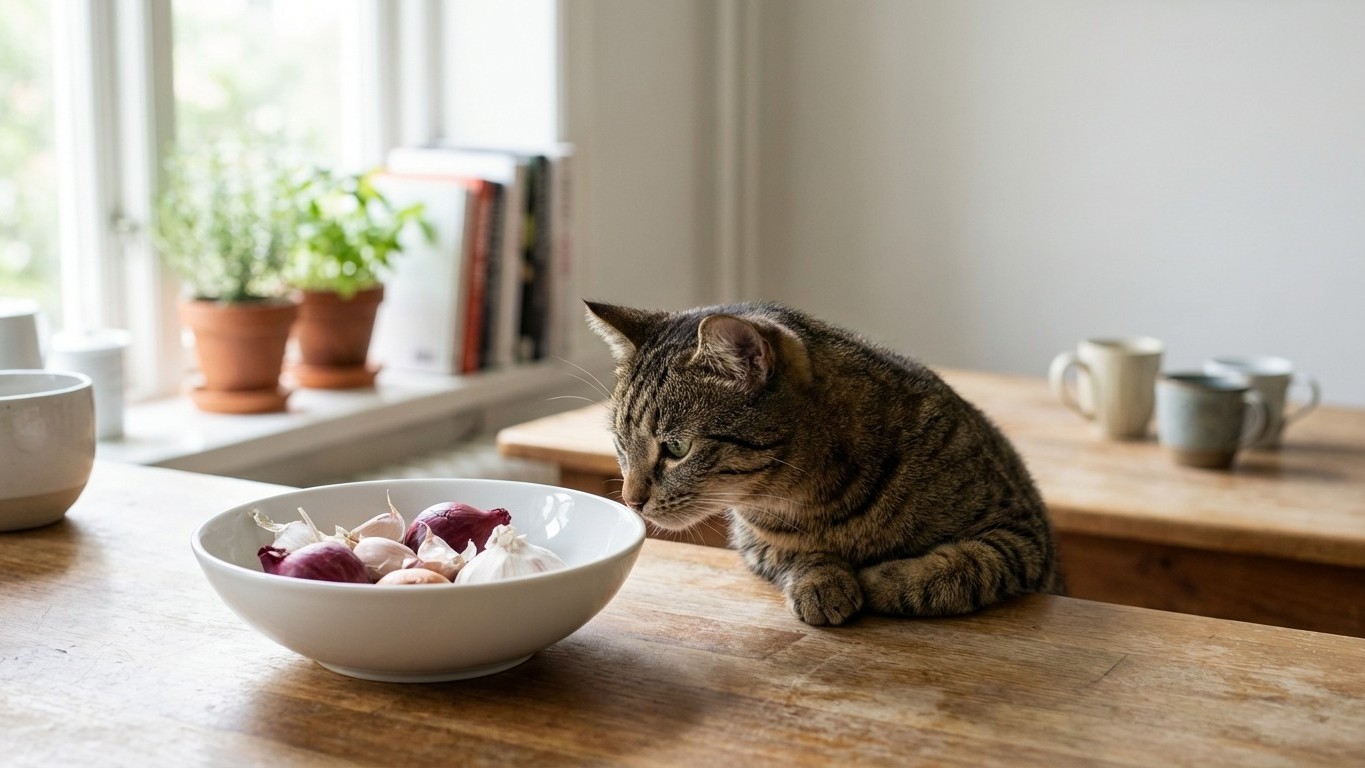
Your cat watches you cook with those wide, calculating eyes, and the temptation to share a little something is real. But your kitchen, with all its comforting smells and familiar ingredients, is hiding a surprising number of dangers for your feline companion. According to a report released by the Pet Poison Helpline, three of the top five pet poisons for cats are common ingredients found in most homes: chocolate, onions, and garlic. These aren’t exotic toxins. They’re things you probably used yesterday.
Key takeaways
- Allium vegetables like garlic and onions damage cats’ red blood cells at doses smaller than a teaspoon
- Chocolate is even more dangerous to cats than dogs—dark chocolate poses the greatest risk
- Grapes and raisins can cause kidney failure, but scientists still don’t understand exactly why
The Allium Family: Garlic, Onions, Chives and Leeks
This is the one that catches people off guard most often, because these ingredients are in practically everything. Soups, stocks, stir-fries, pasta sauces, garlic and onions, along with leeks, shallots, and chives, are all members of the Allium genus. They contain a compound that gives them their signature strong aroma, but that same compound can damage red blood cells in cats who eat these ingredients in any form, raw, cooked, and even as powdered spices, potentially causing life-threatening anaemia.
There are reports of toxicosis in cats after eating less than a teaspoon of cooked onions. Compounds in alliums damage cats’ red blood cells, leading to anaemia. Cat haemoglobin is two to three times more sensitive to oxidative damage than dog or human haemoglobin. Symptoms can be delayed. Signs of garlic Poisoning can be delayed and not apparent for several days, which means you might not connect the dots until your cat is already seriously unwell. Watch for pale gums, weakness, and discoloured urine, and call your vet straight away if you notice any of these.
Chocolate, Coffee and Caffeine: A Triple Threat
Most people know chocolate is dangerous for dogs, but fewer realise felines are generally more sensitive to chocolate poisoning than canines. Chocolate contains a double dose of stimulants, theobromine, which stimulates the heart, and caffeine, which stimulates the brain and central nervous system. The higher the percentage of cacao in the chocolate, the greater the risk to your cat.
Symptoms of chocolate toxicity in cats include vomiting, diarrhoea, restlessness, and hyperactivity. More severe cases can cause tremors, frequent urination, and seizures. Severe or untreated cases can end in coma or death. The same logic applies to your morning coffee. Within one to two hours of exposure to caffeine, cats can experience mild to severe hyperactivity, restlessness, vomiting, elevated heart rate, abnormal heart rhythms, tremors, elevated body temperature, seizures, and collapse. A licked coffee spoon might seem trivial. It isn’t.
Grapes, Raisins and the Mystery Toxin
Science still hasn’t pinned down exactly what makes grapes so dangerous, which is precisely what makes them so frightening. Even in small quantities, grapes and raisins can be deadly to cats. Eating them can cause vomiting, lethargy, and diarrhoea, or worse, kidney damage and even kidney failure. It is difficult to predict how severe any cat’s reaction will be, so it is best to prevent your cat from eating any grapes or raisins at all. Bear in mind that raisins turn up in everything from fruit cake to cereal bars — foods that end up on low tables or accessible kitchen surfaces. Keep them well out of reach.
Four More Everyday Kitchen Culprits
Raw dough is one that genuinely surprises people. If your cat gets into unbaked bread or pizza dough, the consequences go beyond a stomach upset. Yeast dough can rise and cause gas to accumulate in your pet’s digestive system, which can be painful and cause the stomach to bloat and potentially twist, becoming a life-threatening emergency. The yeast also produces alcohol as a by-product in the stomach environment once ingested, so raw bread dough exposures can develop complications of alcohol toxicity.
On the subject of alcohol — even tiny amounts are genuinely dangerous. Alcohol has the same effect on a cat’s brain and liver as it does on humans, but it takes far less to see the effects. As little as a teaspoon can cause a coma in a cat and can easily cause severe liver or brain damage. This means tiramisu left on the worktop, a glass of wine left unattended, or food cooked with wine or beer all carry real risk.
Onion powder and garlic powder deserve a separate mention because they are more concentrated than fresh versions. Onions, garlic, shallots, and scallions can cause damage to your cat’s red blood cells and lead to anaemia. Exposure to concentrated forms such as onion soup mix or garlic powder can also be toxic. Check the ingredient lists of stock cubes, seasoning blends, and ready-made sauces in your cupboard, they’re almost everywhere.
Finally, there is the surprisingly dangerous case of raw eggs. Raw eggs can contain hazardous bacteria including Salmonella and E. coli, which can cause vomiting, bloody diarrhoea, dehydration, and weakness in cats. Raw egg whites also contain an enzyme called avidin that could cause a vitamin deficiency over time. Cats who try to steal raw ingredients during baking prep are more at risk than owners might think.
What to Do If Your Cat Has Eaten Something Toxic
Cats lack the enzymes needed to process many common human foods, and some items in your kitchen can cause organ failure within hours. Speed genuinely matters here. Remove any remaining food immediately, keep your cat calm, and contact your vet without delay. Do not induce vomiting unless specifically instructed, some toxins cause more damage coming back up. Never give your cat hydrogen peroxide, salt water, or other home remedies without veterinary direction.
The ASPCA Animal Poison Control Centre operates 24 hours a day, and your own vet’s out-of-hours service will always be your best first call. If you can, bring the packaging of whatever was eaten, it helps enormously.
Perhaps the most unsettling thing about all of this is how unremarkable these foods look sitting in your Kitchen. A clove of garlic. A handful of raisins. A square of dark chocolate. None of them look like a threat. But for a cat, the dose needed to cause serious harm is far smaller than most owners would ever imagine, which raises a question worth sitting with: how much of what’s currently on your kitchen worktop is actually within paw’s reach?