
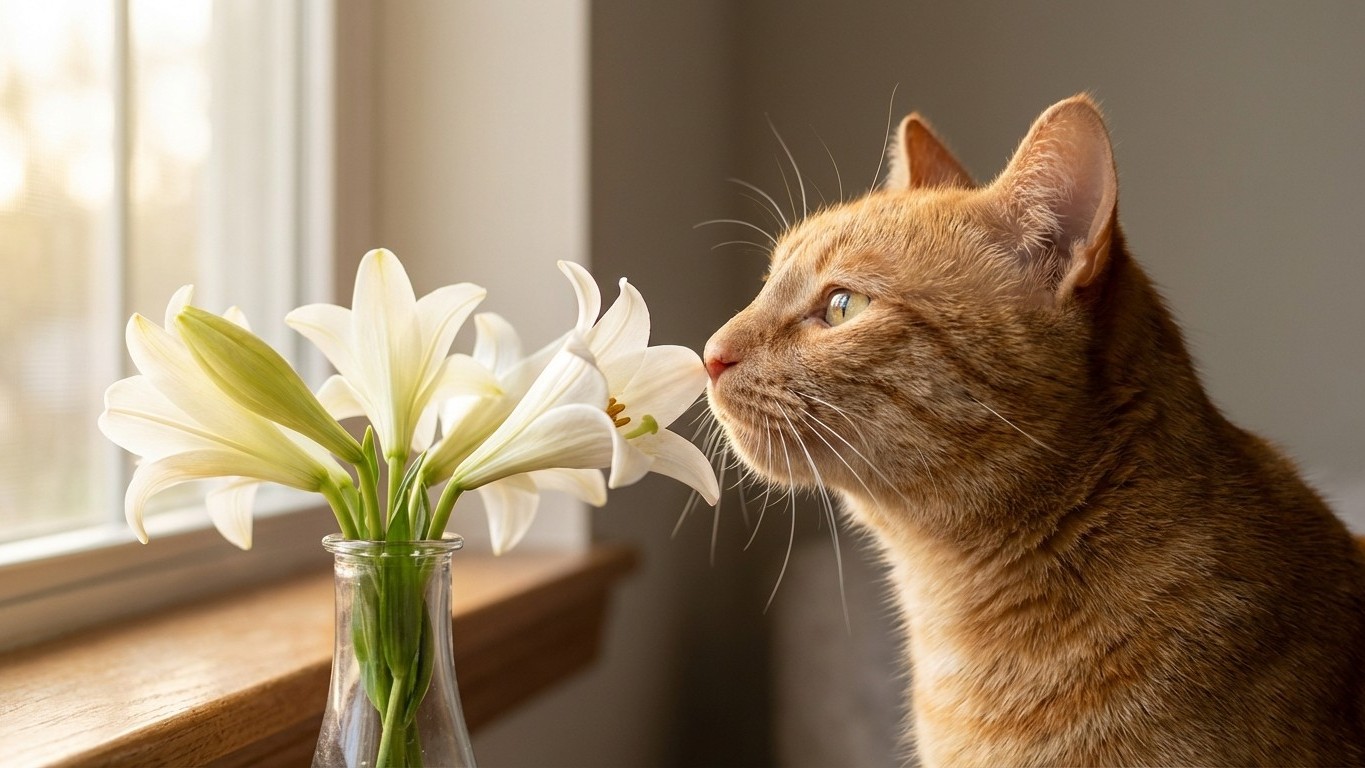
Every spring, veterinary practices across the UK brace themselves. The calls come in clusters, a cat that’s stopped eating, one that’s been vomiting for hours, another found collapsed near a vase of freshly cut flowers. The seasonal pattern is so predictable that many vet nurses can practically recite it from memory. The culprit, more often than not, isn’t something exotic or obscure. It’s sitting on your kitchen counter, in your living room, or in the Easter basket your children just ripped open.
Key takeaways
- A single lily petal can trigger kidney failure in cats within 24-72 hours—but owners won’t notice until it’s nearly too late
- Easter’s favourite foods and decorations are quietly toxic to cats in ways that surprise even experienced pet owners
- The window to save a poisoned cat closes fast—but vets reveal exactly what to do if you suspect exposure
The Spring Foods and Plants That Are Genuinely Dangerous
Lilies are the single biggest springtime threat to cats in the UK, and the danger cannot be overstated. Every part of the plant, the petals, leaves, stems, pollen, even the water in the vase — is toxic to cats. We’re talking about true lilies here: Easter lilies, tiger lilies, Asiatic and Oriental varieties. A cat grooming pollen off its fur after brushing past a bouquet on the windowsill has ingested enough toxin to cause acute kidney failure within 24 to 72 hours. The tragedy is that cats often seem fine at first. They might vomit a little, seem slightly off. Then, as kidney function deteriorates, they stop drinking, become lethargic, and by the time owners realise something is seriously wrong, the window for effective treatment may already be closing.
If you have cats at home, the safest approach is simply not having true lilies in the house at all. Not in a high spot, not in a closed room, cats are resourceful climbers and opportunists. Spring flower arrangements from supermarkets and florists frequently include lilies Without any warning label, so it’s worth checking every bouquet before it comes through the front door. (Daffodils, tulips, and hyacinths also pose significant risks, though lily toxicity tends to produce the most severe outcomes.)
Easter Brings a Chocolate Surge : And Cats Aren’t Immune
Dogs get most of the chocolate-toxicity headlines, and for good reason, they’ll eat anything left unattended. But cats can and do consume chocolate, especially in households where Easter eggs are hidden around the home or left on low surfaces. Chocolate contains theobromine, a compound cats metabolise very slowly. Dark chocolate and cocoa-based products carry higher concentrations than milk chocolate, but no variety is safe.
The signs of chocolate toxicity in cats include vomiting, restlessness, increased heart rate, and in serious cases, tremors or seizures. Cats are generally less likely than dogs to seek out sweet foods (they lack sweet taste receptors entirely, a quirk of their biology that still surprises many owners), but curious cats, bored cats, or kittens exploring their environment don’t always follow the script. If there’s any suspicion your cat has eaten chocolate, contact your vet immediately rather than waiting to see if symptoms develop.
The Kitchen Ingredients Nobody Warns You About
Spring often brings a burst of cooking : Easter roasts, garden party nibbles, fresh herb gardens coming back to life on windowsills. This is where some less-publicised dangers creep in. Onions and garlic, in any form (raw, cooked, powdered, in stocks and gravies), are toxic to cats because they damage red blood cells, leading to a form of haemolytic anaemia. A cat sneaking a lap of leftover gravy or helping itself to a bit of roast lamb that’s been cooked with garlic is getting a dose of something that accumulates over time.
Grapes and raisins deserve a mention here too. The exact toxic mechanism in cats is still not fully understood by researchers, but the association with kidney damage is well-established. Hot cross buns, a staple of the British Easter table, are full of raisins and sultanas. Leaving one on a low surface while you pop to the kettle is all it takes.
Chives, which many people grow alongside other herbs in spring kitchen gardens, belong to the same allium family as onions and garlic. A nibble here and there might seem harmless, but repeated small exposures accumulate, and cats seem drawn to the Texture of grass-like plants when they’re craving vegetation.
What to Do If You Think Your Cat Has Been Poisoned
Speed matters more than almost anything else in toxicity cases. The sooner a vet can intervene, whether by inducing vomiting, administering activated charcoal, or starting IV fluid support for kidney protection — the better the outcome tends to be. Never wait and see with a known or suspected toxic ingestion.
The Animal Poison Line (run by the Veterinary Poisons Information Service) offers a 24-hour advice line for UK pet owners, and your regular vet or an emergency out-of-hours practice should be your first call if they’re not available. When you ring, try to tell them what was ingested, roughly how much, and when, even a rough estimate helps the vet assess urgency.
Keep the packaging or take a photo of the plant if you can. For lily exposure specifically, even if your cat seems perfectly well, please go to the vet anyway. The early symptom-free window is part of what makes lily poisoning so deceptive and so devastating.
Spring is genuinely one of the most joyful times to share a home with a cat, longer days, open windows, that particular feline ritual of reclaiming sunny spots on the floor. The seasonal hazards don’t have to spoil any of that. They just require a moment of awareness before the Easter lilies go in the vase and the chocolate eggs get hidden around the sitting room. That moment might be the one that makes all the difference.