
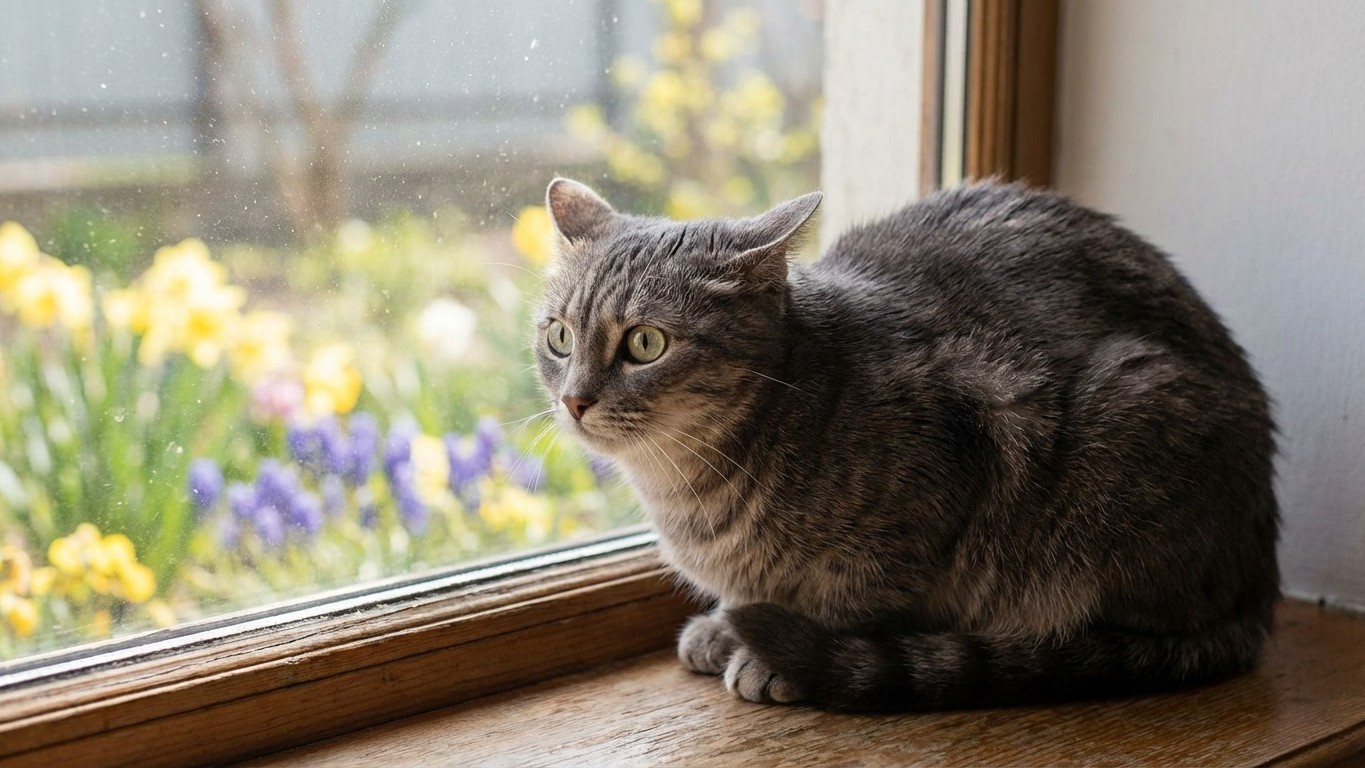
Spring should be a time of renewed energy, longer evenings, and cats sprawled across sunny windowsills. But the shift in season brings with it a set of physical stressors that many pet owners simply don’t register, and cats, being the supremely private creatures they are, will often hide discomfort until it becomes impossible to ignore. Knowing what to look for could make all the difference.
Key takeaways
- Temperature fluctuations and barometric pressure changes can intensify joint pain in cats during spring transitions
- Cats won’t tell you they’re hurting—but their posture, grooming habits, and facial expressions reveal everything
- Seasonal allergens and returning parasites create pain responses that look like behavioral problems to unsuspecting owners
Why Seasonal Change Is Harder on Cats Than You’d Think
Cats are exquisitely sensitive to environmental shifts. As temperatures fluctuate between cold nights and warmer days, joints that have been stiffened by winter can struggle to adapt. Older cats especially, and any cat with underlying arthritis, which is far more common in felines than many owners realise — may experience a genuine increase in discomfort during these transitional weeks. The problem is compounded by Changes-everything/”>Changes in barometric pressure, which some animal researchers believe may influence pain perception in mammals, though the science on this is still developing.
Spring also means an explosion of allergens. Tree pollen, grass pollen, mould spores released by thawing soil, all of these can trigger inflammatory responses in sensitive cats. Unlike humans who typically sneeze and sniffle, cats with seasonal allergies often present with skin irritation, excessive grooming, or eye discharge. It looks behavioural. It’s actually physical suffering.
There’s also the matter of parasites. Fleas and ticks become active again as soon as temperatures consistently stay above around 8°C, which in the UK can happen as early as February in milder regions. A cat who suddenly becomes irritable, twitchy, or obsessively grooming one particular area may well be reacting to a bite, not a mood.
Reading the Signs Your Cat Would Rather Keep Hidden
Cats evolved as solitary hunters, which means showing weakness was, in evolutionary terms, a survival risk. That Everything/”>Instinct hasn’t gone anywhere. A cat in pain will often do everything in its power to appear normal, which is why owners so frequently say they had “no idea” something was wrong until a vet visit revealed a serious issue.
The signs, when you know them, are subtle but consistent. A previously sociable cat who starts withdrawing to quieter, darker spots is worth watching. Changes in grooming habits are telling: over-grooming (creating bald patches or skin lesions) can indicate itching and allergic discomfort, while a coat that’s becoming dull and matted may mean Your Cat Is Struggling to reach certain areas because movement hurts.
Posture is another window. A cat holding its back hunched, sitting with its legs tucked tightly rather than in a relaxed loaf position, or reluctant to jump onto furniture it normally claims as its throne, these are quiet distress signals. Watch how your cat uses the litter tray. Hesitating before stepping in, adopting an unusual stance, or going outside the tray altogether can point to joint pain or urinary discomfort. Neither should be dismissed as simply “bad behaviour.”
Facial expression matters too. Research into feline pain assessment has produced tools like the Feline Grimace Scale, developed through academic study and used by vets to gauge discomfort. Key indicators include orbital tightening (the area around the eyes appearing squinted or tense), flattened or rotated ear position, and whisker tension. These aren’t expressions cats consciously control, they’re involuntary, which makes them reliable.
Specific Spring Triggers Worth Watching For
One thing that catches owners off guard is how much seasonal shedding can mask symptoms. Cats shed heavily in spring as they lose their winter coat, and all that grooming activity can make normal behaviour look suddenly strange. The key is to look for patterns and clusters of signs, not individual quirks in isolation.
Eye and nose discharge that appears around the same time each year, with no obvious infectious cause, is a reasonable indicator of seasonal allergy. Cats with white or pale fur around the face may develop reddish-brown tear staining from porphyrins in the discharge, striking to look at, but worth mentioning to your vet. Respiratory signs are less common in cats than dogs with allergies, but sneezing fits, coughing, or any wheezing should always be taken seriously.
Skin changes deserve close attention in spring. Miliary dermatitis, a condition where tiny scab-like bumps appear across the skin (often felt before they’re seen), is strongly associated with flea allergy dermatitis and can flare as flea season begins. Run your fingers gently along your cat’s back and sides, if it feels like you’re stroking sandpaper, that warrants a vet check.
For cats with arthritis or joint issues, the cold-to-warm transition can initially feel like relief, and it often is, but warming weather also means more outdoor activity, more jumping, more exertion. A cat who seemed comfortable through winter may suddenly show increased stiffness after adventuring in the garden again. Don’t assume spring automatically means improvement for a cat with joint pain.
What You Can Do, and When to Call the Vet
The single most useful thing an owner can do is keep a brief record. Note changes in behaviour, appetite, grooming, and mobility across a week or two. Patterns are what vets find most useful, and your observations from home are genuinely valuable diagnostic information. A short video of your cat moving, jumping (or refusing to), or showing unusual behaviour can save a lot of guesswork in the consulting room.
For flea prevention, ensuring year-round treatment rather than seasonal application is the approach most vets now recommend, given how mild UK winters have become. If you’re unsure whether your current product is still effective, a conversation with your vet or a registered veterinary nurse is worth having.
Pain relief and anti-allergy treatment for cats requires veterinary prescription, please don’t reach for human antihistamines or any over-the-counter remedy without professional guidance, as several common human medications are toxic to cats. If your cat is showing signs of discomfort, get them checked. Cats are stoic almost to a fault, and by the time they make it obvious, they’ve usually been managing something quietly for longer than you’d like to think.
Spring is beautiful. It just asks a little more vigilance from those of us sharing it with an animal who won’t tell us when something’s wrong.