
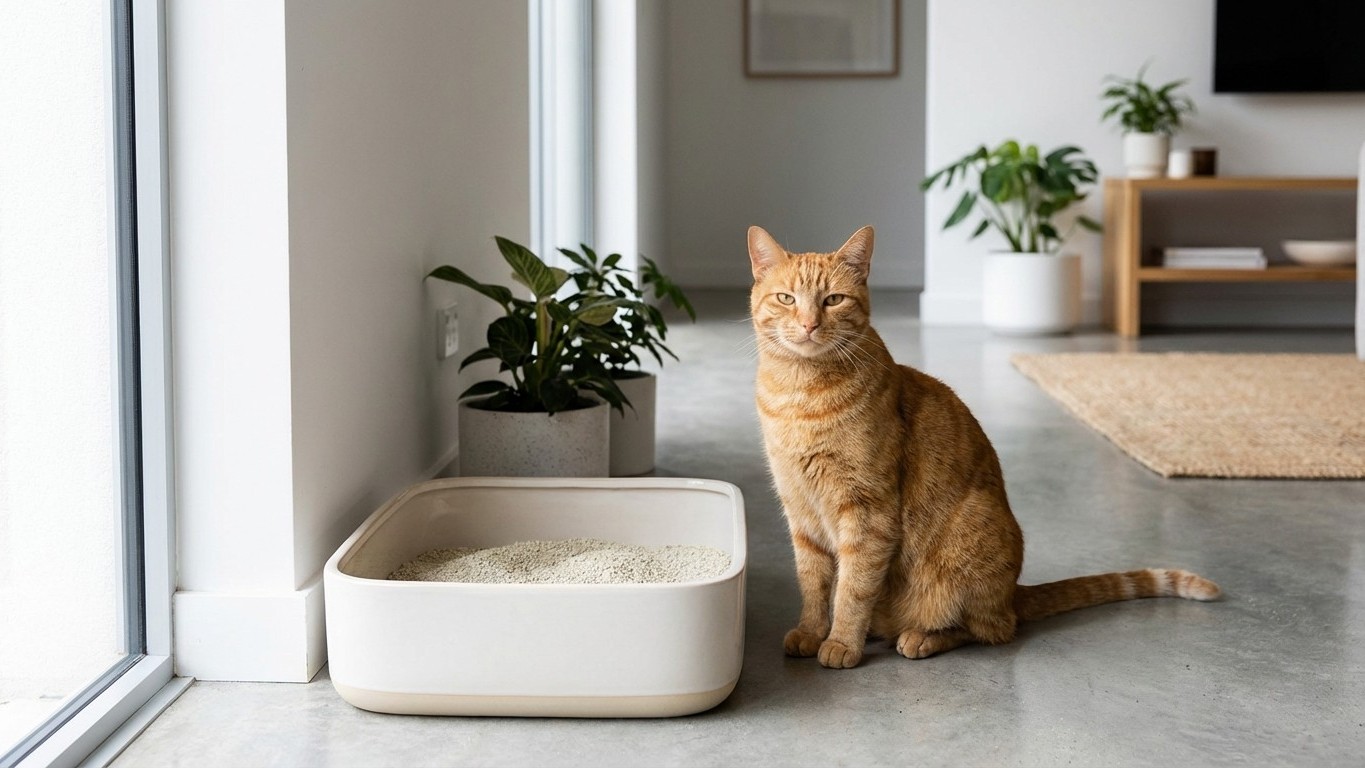
The covered litter box sat pristine in the corner for three weeks. My cat, Margot, sniffed it once, gave it the sort of withering look only cats can manage, and walked away. She never went back. I, meanwhile, had spent good money on what the packaging promised would give her “privacy and odour control.” What I’d Actually bought, as I later discovered, was a well-intentioned trap that made every basic instinct Margot possessed scream no.
Covered litter trays are one of the bestselling cat accessories in the UK, and the logic behind them feels sound: cats are private creatures, humans don’t enjoy the smell, everyone wins. Except cats haven’t read the marketing copy. The reality of how cats experience these enclosed spaces is quite different from what we imagine, and understanding that gap can genuinely transform your cat’s wellbeing.
Key takeaways
- Cats don’t experience ‘privacy’ like humans do—they actually feel trapped and vulnerable in enclosed spaces
- The odor control benefit is designed for humans, not cats with their 14x stronger sense of smell
- Litter box avoidance can signal serious health issues, so knowing what cats truly need matters
Why the “privacy” argument doesn’t hold up
We project a lot onto cats. We assume that because we’d want privacy in the bathroom, they must too. But the behaviours cats display during elimination tell a different story. In the wild, going to the toilet is one of the most vulnerable moments for any animal. Cats deal with this not by hiding themselves away, but by choosing locations where they have a clear view of their surroundings and multiple escape routes. A covered litter box does the opposite: it limits their sightlines and traps them inside a confined space with only one exit.
Think about what a hooded tray looks like from a cat’s perspective. You crawl in, you’re enclosed on all sides, you can’t see what’s approaching, and if another pet (or even a child) wanders over, you have nowhere to go. For multi-cat households especially, this can be genuinely stressful. A more dominant cat can position themselves at the entrance and the cat inside has no way out. Even if this never Actually-leave-your-cat-home-alone-veterinary-guidelines-for-2026/”>Actually happens, the possibility is enough to make some cats refuse the box entirely.
The scent issue that nobody talks about
Here’s where covered trays really fall down, and it’s the detail that surprised me most. The “odour control” benefit is for the human in the room, not the cat using the box. Cats have a sense of smell that is estimated to be 14 times stronger than ours. That enclosed space doesn’t contain smells politely, it concentrates them. Every time a cat steps inside a hooded tray, they’re walking into an ammonia-heavy environment that, to their nose, is genuinely overwhelming.
This is why cats who do accept covered boxes often spend as little time in them as possible, scratch frantically to bury waste quickly, or start going just outside the entrance instead. These aren’t acts of defiance. They’re a cat communicating, as clearly as they can, that something is wrong with the setup.
Cleanliness makes a significant difference here. Any litter box, covered or not, needs scooping at least once daily. But with a covered tray, it’s easy to forget, out of sight, out of mind, which makes the odour problem worse and the avoidance more likely. If you do use a covered box, the cleaning schedule needs to be more rigorous, not less.
What cats actually want from a litter tray
Cat behaviour research consistently points toward the same preferences. A large, open tray in a quiet but accessible location tends to get the best acceptance rates. Size matters more than most owners realise: the tray should be roughly one and a half times the length of your cat. Most standard trays sold in pet shops are, frankly, too small for an adult cat to turn around in comfortably, which is a problem before you even add a lid.
Location is the other variable that owners underestimate. Cats don’t want their toilet next to their food, in a high-traffic corridor, or in a space where they feel cornered. A quieter corner with good visibility tends to work well. The general guidance from feline behaviour specialists is one tray per cat, plus one extra, so two cats means three trays, spread across different areas of the home.
Litter type also feeds into this. Many owners buy scented litters thinking their cat will appreciate it, when cats typically prefer unscented, fine-grained substrates. The scented varieties are, again, designed to please the human’s nose. If you’ve tried a covered box and scented litter together and found your cat toileting elsewhere, you may have inadvertently combined the two most common deterrents in one setup.
When to talk to your vet
Litter box avoidance is one of the most common reasons cats end up in veterinary consultations, and it’s worth taking seriously rather than writing it off as pickiness. While preference and comfort explain a lot of cases, sometimes a cat refusing the litter tray is the first sign of a urinary tract issue, kidney problems, or pain during urination. If your cat is going outside the box frequently, straining, or producing only small amounts of urine, please contact your vet promptly. These can be symptoms of conditions that need swift attention.
If the avoidance is clearly behavioural rather than medical, your cat is otherwise healthy, eating well, and the issue started when you introduced a new tray or moved things around — then adjusting the setup usually resolves it. Going back to an open tray, trying a different litter, repositioning the box, or simply adding another option often turns things around within days.
Margot, for what it’s worth, is now a devoted fan of a large, open tray with unscented clumping litter, positioned in a corner where she can see the room. The covered box became a storage crate. Perhaps the real lesson isn’t that covered trays are universally wrong, some cats do accept them, especially if introduced very gradually from kittenhood — but that we’d all do better if we started from what cats actually need, rather than what we find aesthetically convenient.