
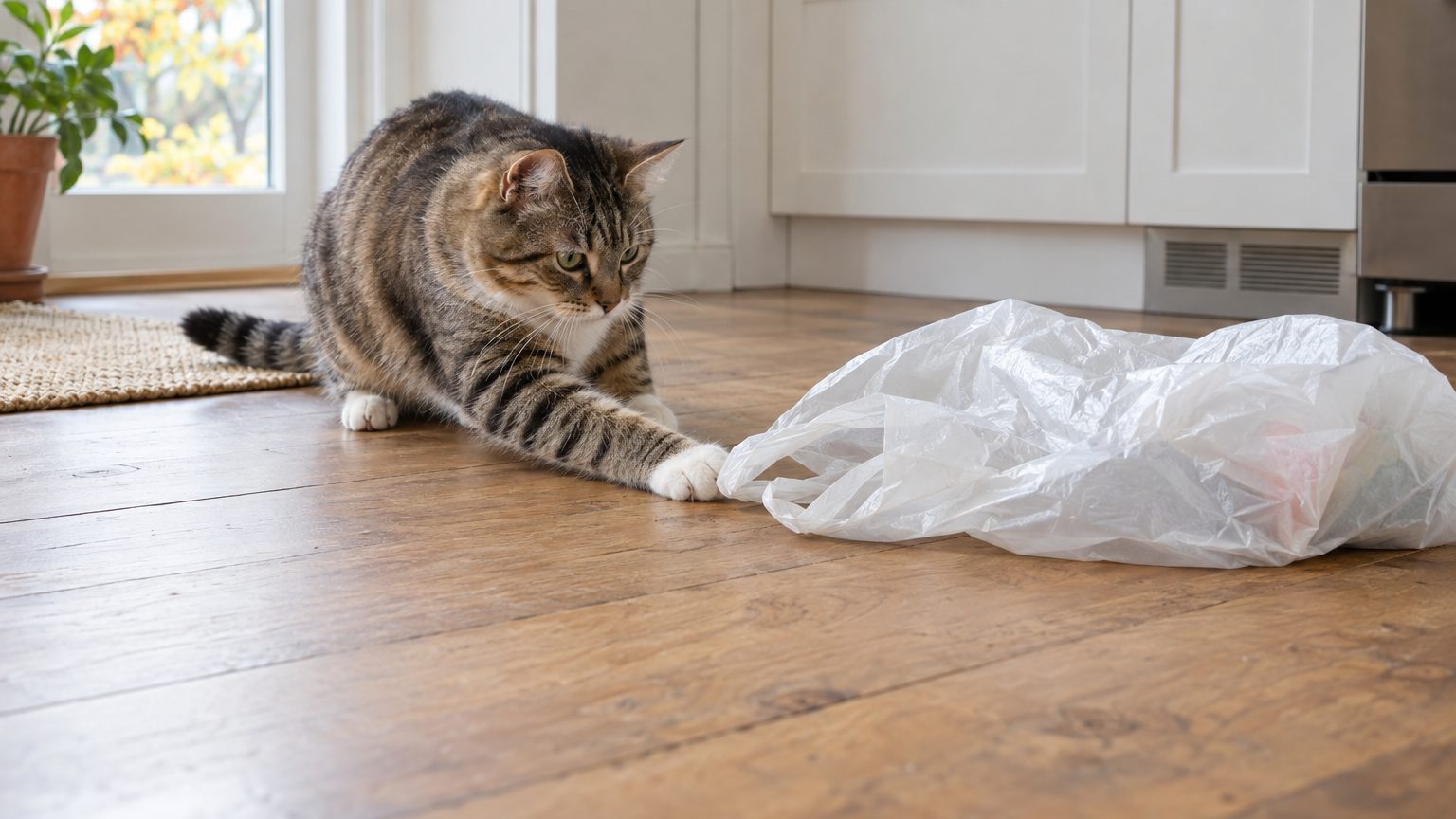
Cats chew plastic bags for a mix of reasons: the crinkly texture, a smell or taste that appeals to them, boredom or stress, and occasionally an underlying medical problem. Whatever the trigger, the habit deserves to be taken seriously, because swallowed plastic can block a cat’s gut.
A bag on the floor is never just a bag to a cat.
- Plastic bags appeal to cats because their rustling mimics prey sounds and they may carry food odors or fatty manufacturing residues.
- Swallowed plastic pieces can lodge in the intestines and form dangerous blockages, sometimes requiring emergency surgery.
- Remove plastic access, provide interactive play, puzzle feeders, and safe chew alternatives like cat grass or crinkle toys designed for cats.
What is behind the crunch
Plastic bags rustle, which can sound a lot like small prey moving through undergrowth. Some bags may also carry a savoury smell from whatever they once held, and it is often suggested that certain manufacturing residues, such as fatty compounds used in processing, add to the appeal. Nobody has pinned down one definitive attractant, so treat that last point as a theory rather than settled science.
Behaviour plays its part too. A cat with too little to do will invent entertainment, and a noisy, bendy, chewable object fits the bill nicely. Stress can push things further, whether it comes from a house move, a new pet, a change of routine or a stand-off with a neighbourhood cat at the window. Oriental breeds such as the Siamese and Burmese are often reported by vets and behaviourists as more prone to chewing and sucking non-food items, though any cat can pick up the habit.
Chewing non-food objects repeatedly is called pica, and it is not always behavioural. Dental pain, gastrointestinal disease and other illnesses can sometimes sit behind it, which is why a check-up comes before any home remedy.
Why it is more dangerous than it looks
Cats cannot digest plastic, and a swallowed piece can lodge in the stomach or intestines and cause a blockage. Strips of plastic are especially troublesome because one end can catch while the rest keeps being pushed along by the gut, bunching the intestine up like a drawstring. Vets call this a linear foreign body, and it often needs surgery. Even small amounts nibbled off over weeks can add up.
Then there is suffocation.
Cats that burrow into bags can get their heads stuck, panic and run, and handles can loop around a neck. Thin carrier bags are the worst offenders because they cling to the face.
Watch for vomiting, a drop in appetite, lethargy, constipation, straining in the litter tray or a tender belly, particularly if you know your cat has been chewing plastic. Any of these means a call to your vet that day, not a wait-and-see approach. If you find a bag with chewed edges and cannot account for the missing pieces, mention that too.
How to stop it
Start by taking away the supply. Keep carrier bags, bin liners and bin bags in a closed cupboard or a drawer, and tie up rubbish bags rather than leaving them by the back door.
Next, give the chewing urge somewhere safer to go. A few short play sessions each day with a wand toy, ideally ending with a small meal so the hunt feels complete, burn off a surprising amount of energy. Puzzle feeders and snuffle mats make mealtimes last longer, and shelves or window perches give an indoor cat something to watch. Rotating toys weekly keeps them from going stale.
Cat grass, or pots of oats and barley grown for the purpose, offers something safe to nibble. Dental chews or cat-safe chew toys can help too, as long as your vet is happy with them for your cat’s teeth. Crinkle toys made for cats satisfy the sound-and-texture itch without the risk.
Telling the cat off rarely works and can add to stress.
If the habit continues despite these changes, book a vet appointment to rule out health causes, then ask about a referral to a qualified clinical animal behaviourist. In the UK, look for someone registered with a recognised body such as the Animal Behaviour and Training Council (ABTC). Referrals through your vet are usual, and they help the behaviourist see the full medical picture.
One more thing: biodegradable or compostable bags are not a safe swap, as a cat that swallows one can still end up with a blockage. Paper bags with the handles removed, however, make a decent hiding spot for a cat who simply likes rustling and burrowing.