
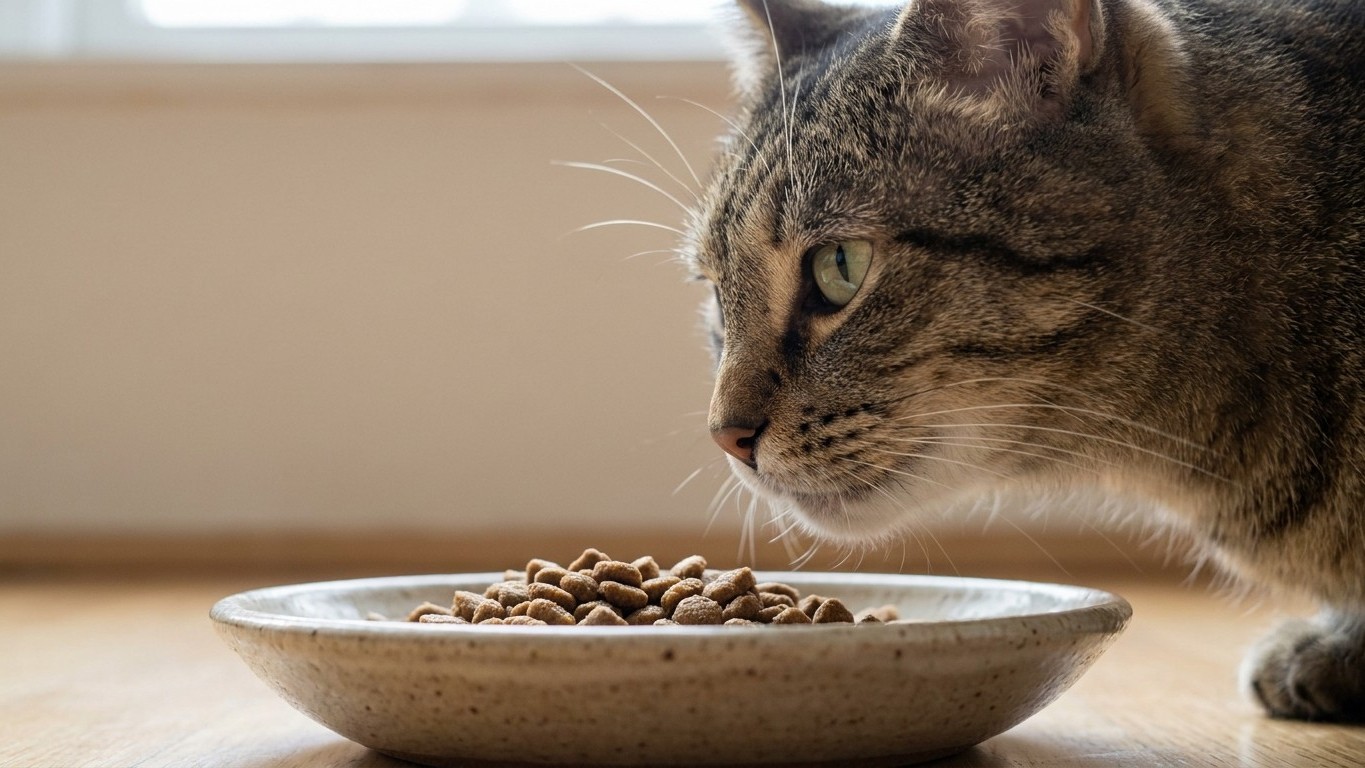
Cats have between 100 and 200 nerve endings wrapped around the base of every single whisker, a follicle that runs three times deeper into the skin than an ordinary hair. When those whiskers scrape the sides of a deep, narrow bowl at every single mouthful, that’s not a fussy cat being dramatic. These tactile hairs called vibrissae possess unique structural properties that make them incredibly sensitive, with each follicle containing 100-200 nerve fibers compared to regular hair follicles that contain only 2-3 nerves. Multiply that sensitivity by three meals a day, every day, for years, and you start to understand why a cat might paw food onto the floor rather than dip her face back into the bowl.
Key takeaways
- A cat’s whiskers contain 100-200 nerve endings each, making them incredibly sensitive to bowl contact
- Whisker fatigue symptoms mimic pickiness but could mask serious health issues—vets say check medical first
- The fix is surprisingly simple, but scientific evidence remains surprisingly murky
What’s Actually Happening Under Those Whiskers
Whiskers aren’t decorative fluff. When air flows or an object brushes up against a whisker, the sensitive whisker vibrates and stimulates the nerves in the hair follicle, detecting subtle changes in air currents and transmitting information about the size, shape, and speed of nearby objects. That’s a phenomenally sophisticated early-warning system, built for a predator that hunts in near-darkness and needs to judge, instantly, whether a gap between rocks or fence panels is wide enough to slip through.
The condition vets call whisker fatigue refers to overstimulation of the whiskers and often comes from excessive contact with food and water bowls, especially those that are too shallow or deep. Picture the sensation of wearing a scratchy jumper collar all day, brushing your neck with every movement. Uncomfortable, low-grade, relentless. That’s roughly the theory here: a bowl with high, tapering sides forces the whiskers inward at exactly the moment a cat is trying to focus on eating, and every time a cat dips their head into a deep or narrow bowl, the sides press against the whiskers and send signals to the brain. A little contact is fine. Constant contact, meal after meal, can become uncomfortable.
The Signs Owners Mistake for Fussiness
This is where so many of us go wrong, myself included with a fluffy tabby I once thought was simply spoilt. A cat with sore, overstimulated whiskers rarely refuses food outright. Instead she’ll hover near the bowl, dip a single paw in to fish out kibble and eat it off the floor, or eat for a few seconds before backing away and pacing. This unpleasant sensation can cause stress and discomfort, which can lead to cats not eating or drinking properly, or pawing at their food and water, spilling it onto the floor. Owners top up the same deep bowl, assuming the cat wants more variety or a different flavour, when the actual problem is the shape of the dish itself.
Here’s the catch, and it’s an important one for anyone reading this while nodding along: identical symptoms, reluctance to eat, hovering, pawing at food, can also signal dental pain, nausea, kidney disease or a dozen other genuine medical problems. It’s important to schedule a visit with your veterinarian any time a cat stops eating or drinking because it can be a sign of a serious medical issue, so always have your cat checked out instead of assuming it’s a behavioural issue. A vet examination should always come first. Only once illness has been ruled out does it make sense to start looking at crockery.
Is Whisker Fatigue Real? What Vets Actually Think
Here’s where I have to be honest with you, because good journalism means not oversimplifying a genuinely murky picture. Whisker fatigue is not universally accepted as an established medical diagnosis. Currently, most of the evidence for whisker fatigue is anecdotal, with sometimes conflicting views between vets, behaviourists and cat owners, and more research is needed to investigate if and why it occurs and which cats are susceptible. One frequently cited study on whisker-friendly bowls found underwhelming results across the board. A recent study found no support for the theory of whisker stress, though some of the study cats did seem to prefer the whisker-friendly dishes.
That doesn’t mean vets dismiss the underlying anatomy. Quite the opposite. A cat’s whiskers are extremely sensitive; these thick, hollow structures are deeply embedded into nerve-filled follicles under the skin. The debate isn’t over whether whiskers are sensitive (they demonstrably are) but whether bowl-induced irritation translates into the specific cluster of feeding behaviours owners report. My honest take, having read through the research on this: even without a landmark peer-reviewed trial proving the theory conclusively, the biology makes it entirely plausible, and switching bowls costs nothing and risks nothing. It’s a reasonable precaution rather than a miracle cure.
Fixing It Without the Panic
If your vet has given your cat a clean bill of health and the odd mealtime behaviour persists, the fix genuinely is simple. Replace narrow, deep food and water bowls with something flat or wide and shallow so your cat’s whiskers don’t touch the sides of the dish. You don’t need a designer product to test the theory; an old dinner plate does the job just as well as any bowl marketed specifically for the purpose. Steer clear of repurposed dog bowls too, since they are too deep for a cat’s sensitive whiskers, and watch out for tapering designs in particular, as bowls that get narrower toward the bottom are especially tough, since the whiskers get squeezed into a smaller space as the food gets eaten down.
Water deserves the same rethink. Many cats drink far more readily from a wide, shallow saucer or a gently flowing fountain than from a tall glass or narrow dish, simply because nothing brushes their face while they lap. Given that low water intake is linked to feline kidney and urinary tract problems, that small crockery swap might do more for your cat’s long-term health than you’d ever expect from something as unglamorous as a plate.
Sources : greycatsanatomy.com | catster.com