
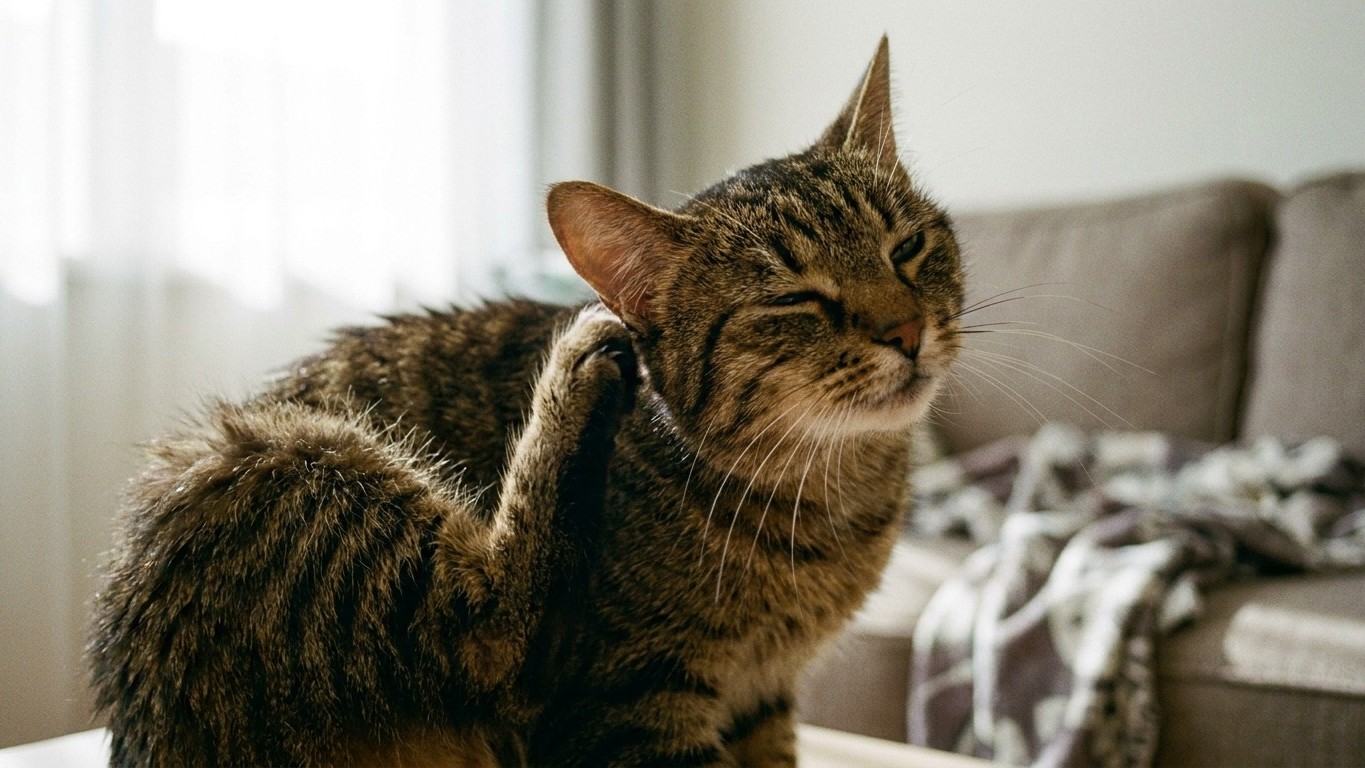
A pipette on the first of the month, one cat blissfully unaware, job done. That’s what most owners believe. But here’s the uncomfortable truth vets and parasitologists keep repeating: only around 5% of a flea population actually lives on your cat. The other 95%? They’re eggs, larvae and pupae scattered through your carpets, sofa cushions and skirting boards, quietly waiting their turn. As much as 95% of a flea population at any given time is thought to be in the environment, and these stages are usually inaccessible to on-animal agents. Which means that monthly pipette you’re so proud of is only ever fighting a small fraction of the war.
Key takeaways
- 95% of the flea population in your home isn’t even on your cat—it’s in your carpets, sofas, and skirting boards
- Flea pupae can stay dormant in cocoons for up to a year, emerging months after you thought the problem was solved
- Central heating has turned British homes into year-round flea breeding grounds, making seasonal treatment dangerously outdated
The maths behind the infestation
Fleas breed with an efficiency that would put most pests to shame. Female fleas are prolific egg producers with some producing an average of 25 eggs a day, and some sources put the figure as high as fifty. Crucially, the eggs have shiny shells, so slip easily through your pet’s coat and land wherever your pet is, whether that’s your sofa, your bed, or the rug by the radiator. Once on the floor, the population splits roughly like this: larvae make up 35% of the flea lifecycle, hatching when conditions are warm and humid, and pupae account for another 10%, sealed inside a cocoon that’s almost impossible to kill with standard sprays.
That cocoon is the real villain of this story. Once a flea is in the pupal stage they can be more resistant to many environmental conditions and insecticides, and the pupal stage may last three days, or it can last as long as one year. I find that statistic genuinely unsettling. You could treat your home thoroughly, see no fleas for months, then have a fresh wave emerge from cocoons that have been lurking under the skirting board since last summer, triggered simply by the vibration of footsteps or a rise in temperature.
Why the pipette alone can’t win
Topical treatments and oral tablets are genuinely effective at what they’re designed to do: killing adult fleas on your cat before they can bite, feed and lay more eggs. The snag is timing. Even the best product can’t retroactively deal with the thousands of eggs already dropped around your home before treatment began, or the larvae currently feasting on flea dirt deep in your carpet pile. The resulting larvae are free-living and feed on adult flea faeces containing large amounts of incompletely digested blood, and also feed on organic debris and on flea eggs in the environment, which is a rather grim image but explains why they thrive so readily indoors, entirely independent of your cat’s own treatment schedule.
Central heating hasn’t helped matters either. Warm, dry British homes running radiators through fourteen degree “summers” create near-perfect breeding conditions all year round, meaning fleas are no longer a purely seasonal nuisance confined to July and August. Without treating the environment, fleas can be a permanent problem, no longer restricted to the summer months only, since warm, damp conditions are great for fleas and central heating can ensure perfect conditions in a house all year round. An indoor-only cat isn’t automatically safe from this either. Indoor cats are at risk of getting fleas, which can hitch a ride on humans or other pets that go outdoors, or through infested items brought into the home, like used furniture or clothing.
Breaking the cycle properly
So what actually works? Treating the cat is step one, not the whole plan. The environment needs attention too, and this is where owners most often fall short. A few practical habits make a genuine difference:
- Vacuum carpets, skirting boards and upholstery thoroughly and frequently, disposing of the bag or emptying the canister outside each time (vacuuming can also help trigger dormant pupae to emerge, so it’s worth doing before applying any household treatment).
- Wash pet bedding on a hot cycle weekly during an active infestation, since eggs and larvae congregate wherever your cat sleeps.
- Use a household spray containing an Insect Growth Regulator (IGR) alongside the on-cat treatment. Insect Growth Regulators are chemicals that mimic natural compounds in the flea’s metabolism, and these metabolic pathways do not exist in mammals, so these products are very safe to use, interrupting the life cycle of egg-larva-pupa-flea by preventing one stage from developing to the next.
Patience matters more than most owners expect. Given how long pupae can lie dormant, a genuinely settled flea-free home might take several weeks to achieve even after starting a proper combined regime, and a single missed treatment cycle can undo weeks of progress. If your cat is scratching persistently, has visible flea dirt (those tiny black specks that turn reddish-brown on a damp tissue), or shows signs of skin irritation, it’s always worth booking a proper check-up with your vet rather than guessing at over-the-counter fixes, particularly since flea allergy dermatitis and even tapeworm can follow on from an untreated infestation.
One final fact worth tucking away: fleas don’t actually need your cat home to move in. A flea can happily complete part of its life cycle waiting in an empty house, then home in on the carbon dioxide and warmth of the first living creature that walks through the door, cat, dog or human. So even between pets, or after a house move, that pipette schedule you’ve been diligently keeping needs a household-level backup plan running alongside it.
Sources : onlynaturalpet.com | geniusvets.com