
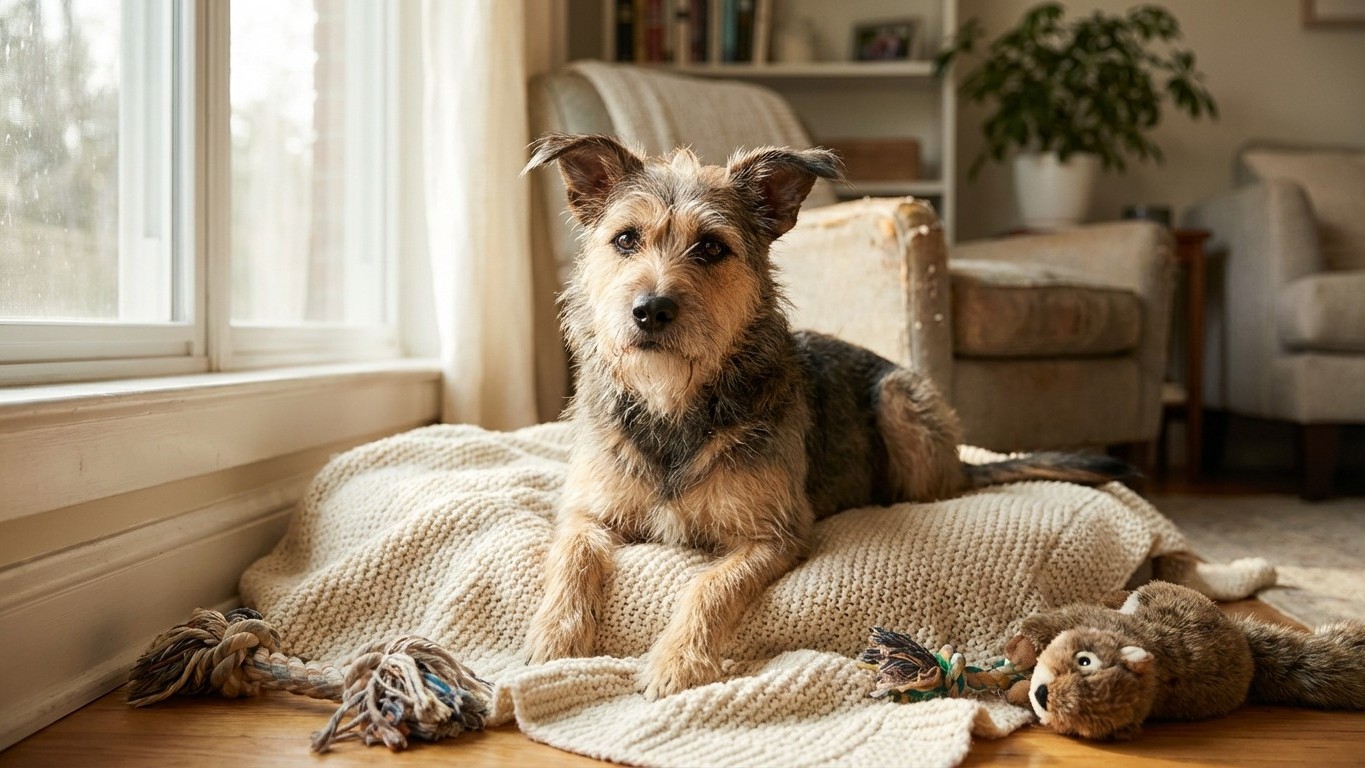
As the days grow shorter and temperatures drop, our canine companions often find themselves spending more time indoors. While this might seem cosy, the reduced activity can lead to boredom, manifesting in ways that might surprise even the most attentive dog owners. Recognising these signs and addressing them is crucial to maintaining your dog’s mental and physical well-being during the winter months.
Key takeaways
- Is your dog showing unusual behaviour during the colder months?
- Discover hidden signs of boredom that many owners overlook.
- Explore simple indoor activities to keep your dog happily stimulated.
Unusual Behaviours: Indicators of Boredom
Dogs, much like humans, can exhibit changes in behaviour when they’re not mentally or physically stimulated. Some signs to watch for include:
- Excessive Barking or Whining: If your dog starts vocalising more than usual, it could be a plea for attention or an outlet for pent-up energy. This behaviour often indicates a lack of stimulation. petplan.co.uk
- Destructive Tendencies: Chewing furniture, digging through bins, or shredding household items can be a dog’s way of entertaining themselves when bored. Such behaviours are not acts of defiance but rather signs of unmet needs. rover.com
- Restlessness and Pacing: A dog that can’t seem to settle, constantly moving from room to room or pacing, may be seeking an outlet for their energy. This restlessness is a common indicator of boredom. toothtail.com
- Overeating or Loss of Appetite: Changes in eating habits, such as eating more out of boredom or losing interest in food, can signal that your dog isn’t getting enough stimulation. towcester-vets.co.uk
- Increased Sleeping: While it might seem normal for dogs to sleep more during colder months, excessive lethargy can be a sign of boredom or even depression. bluecross.org.uk
Combating Boredom: Engaging Activities for Your Dog
Addressing your dog’s boredom doesn’t necessarily require braving the cold. There are numerous indoor activities that can keep your dog engaged and happy:
- Interactive Toys and Puzzle Feeders: These toys challenge your dog’s mind, requiring them to solve problems to access treats. They tap into natural foraging instincts and can keep dogs entertained for extended periods. roundwoodvets.co.uk
- Hide-and-Seek Games: Engaging your dog’s sense of smell and problem-solving skills, hide treats or toys around the house and encourage them to find them. This game provides both mental and physical stimulation. adaptil.co.uk
- Indoor Obstacle Courses: Using household items like chairs, cushions, and blankets, create a mini agility course. Guiding your dog through tunnels, over jumps, and around obstacles can be both fun and physically engaging. fieldstoneanimalinn.com
- Training Sessions: Winter is an excellent time to teach your dog new tricks or reinforce existing commands. Short, regular training sessions provide mental stimulation and strengthen the bond between you and your pet. bluecross.org.uk
- Scheduled Playtime: Setting aside dedicated time each day for play can help alleviate boredom. Games like tug-of-war or gentle indoor fetch can be both fun and energy-burning. thecaninehub.co.uk
Maintaining Routine and Social Interaction
Dogs thrive on routine. The disruptions that often come with winter, such as reduced walks or changes in household activity, can affect their mood. Maintaining a consistent schedule for feeding, play, and rest can provide a sense of normalcy. Additionally, social interaction is vital. If outdoor playdates aren’t feasible, consider arranging indoor play sessions with familiar dogs or visiting dog-friendly indoor venues.
Ensuring Physical Comfort
While mental stimulation is crucial, don’t overlook your dog’s physical comfort during winter. Ensure they have a warm, cosy place to rest, away from drafts. After outdoor excursions, dry them thoroughly to prevent chills, and consider using dog coats or sweaters for added warmth during walks. rspca.org.uk
By recognising the signs of boredom and proactively engaging your dog in stimulating activities, you can ensure they remain happy and healthy throughout the winter months. Remember, a stimulated dog is a content dog, regardless of the season.