
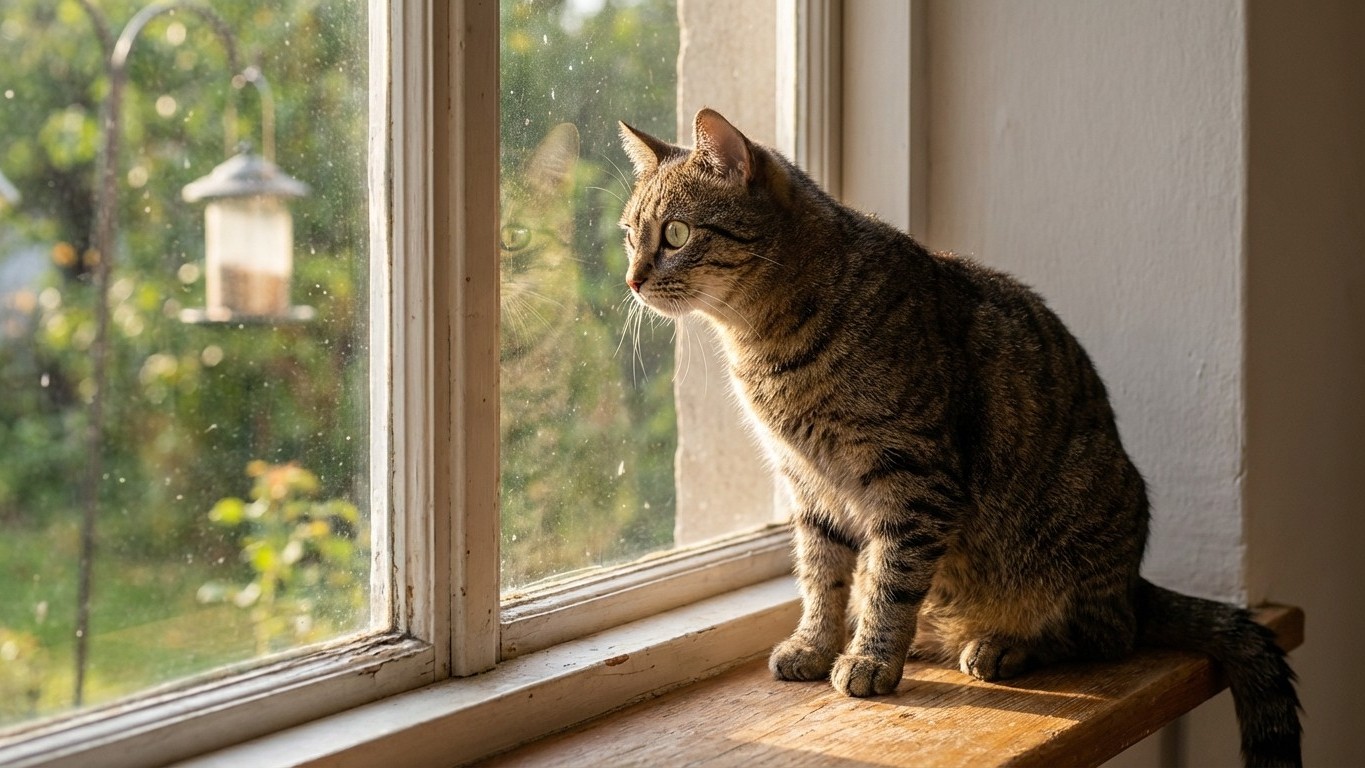
One day your cat is the picture of composed domesticity, draped across the sofa with studied indifference. The next, she’s ricocheting off the walls at 5am, yowling at the window and treating your ankles as prey. Spring hasn’t broken your cat. It has, quite literally, rewired her brain, and The Science Behind it is genuinely surprising.
Key takeaways
- Spring daylight doesn’t just affect your cat’s mood—it triggers a neurological rewiring of their entire circadian system
- Melatonin plummets as nights shorten, unleashing a cascade of hormonal activity that drives dramatic behavioral changes
- Even neutered indoor cats experience the upheaval, but understanding the science transforms frustration into compassion
Light is the master switch
Cats rely on something called a circadian rhythm, a biological internal clock that helps regulate sleep-wake cycles, hunger, activity levels, and pretty much Everything that makes them creatures of habit. What most owners don’t realise is just how sensitive that clock is to Changes in natural light. Cats have a finely tuned sense of patterns deeply ingrained in natural light cycles — they interpret time through changes in sunlight, your routines, and the rhythm of household life.
As the days lengthen through March and April, something shifts in the feline brain that no amount of cosy indoor living can override. Light is a principal synchroniser of behaviour, circadian rhythms, and hormone release patterns, including stress responses. Even filtering through a double-glazed window, that extra hour of morning sun is enough to flip a neurological switch. Research has highlighted the impact of daylight fluctuations, separated from other environmental daily variations such as ambient temperature and humidity, on the locomotor and feeding rhythms of cats. In plain terms: it’s the light, not the warmth, doing most of the work.
The feline circadian rhythm works like an internal timer that nudges cats toward activity around dawn and dusk, the classic “crepuscular” behaviour many cats display. In spring, when dawn arrives noticeably earlier each day, that timer fires sooner and sooner. The 7am tapping at your bedroom door in January becomes 5:30am by late March. Your cat isn’t being difficult. She’s being a cat.
What’s actually happening inside the brain
The biology here is more layered than you might expect, and it goes well beyond a disrupted sleep schedule. Melatonin, a neuromodulatory substance, is produced and secreted by the pineal gland of the central nervous system. The duration of melatonin secretion is proportional to the length of the night, in one study, melatonin concentrations in cats were 15-fold higher during the dark phase than the light phase.
As spring arrives and nights shorten, melatonin levels plummet, and that drop is a starting pistol for a cascade of hormonal activity. The cat is a long-day breeder species, meaning that ovarian activity starts during early spring time when day length is increasing. As a direct effect of increasing light on the cerebral cortex, melatonin secretion from the pineal gland is suppressed, resulting in a suppressive effect on hypothalamic secretion of GnRH. Consequently, the secretion of gonadotropins from the anterior hypophysis is increased, leading to an increase in sexual steroid hormones.
The result? In the northern hemisphere, increasing daylight length in January and February promotes the onset of estrous activity, with peak estrous activity usually seen from February to April. For unneutered cats, this is the engine driving some of the most dramatic behavioural changes. When cats go into heat, they exhibit noticeable changes in behaviour. Initially, they become more affectionate and vocal, but as their restlessness increases, their meowing intensifies and can even escalate to a screaming level. If you’ve ever heard a female cat in full spring voice at 3am, you won’t forget it.
Even for neutered cats, the hormonal quietness doesn’t mean the brain goes entirely unaffected. While some cats may act very differently with the arrival of spring, others may not show noticeable changes. Spayed and neutered cats may experience fewer hormonal influences associated with certain behaviours, like marking behaviour, eating, and vocalising. But the circadian upheaval still lands, just with less drama.
What “spring fever” actually looks like day to day
One of the most noticeable signs of spring fever in cats is a sudden surge of energy. The increased daylight hours and the stimulating scents wafting through the air will entice cats to get up earlier, become more active and playful, and spend more time in the sunshine. For indoor cats, that last part means pressed against the window, pupils blown wide, chattering at pigeons.
Cats may suddenly become more interested in windows, doors, or even attempting outdoor escapes. This natural instinct to explore is influenced by the sights and sounds of spring, including birds and insects. There’s something almost poignant about watching an indoor cat track a bumblebee through glass, every muscle in her body coiled with instinct that has nowhere to go.
Research confirms the seasonal eating shift too. Cats were observed to spend the most time eating in spring, followed by summer and winter, and the least in autumn. A spring appetite spike makes sense from an evolutionary standpoint, more daylight, more prey activity, more hunting. Free-roaming cats have been shown to be more active in spring and summer than in autumn and winter. Your sofa-dwelling moggy carries that same wiring.
The coat joins in too. Spring is synonymous with shedding season for many cats. As the weather warms up, your cat may start shedding their winter coat to prepare for the summer months. If you’re finding fur on every surface you own, that’s not a malfunction, it’s a seasonal feature.
How to help your cat through the chaos
Understanding what’s driving the behaviour makes it far easier to respond sensibly rather than with bewilderment. The goal isn’t to suppress what spring triggers, it’s to give it somewhere useful to go.
Playing with your cat before bedtime and feeding them right after mimics their natural hunt-and-eat rhythm. This is one of the most effective things you can do. A proper predatory play session, a wand toy, genuine effort, ten solid minutes, takes the edge off that 5am energy surplus. Toys and activities that mimic natural hunting behaviours, like feather wands and treat puzzles, can help burn off excess energy. A structured play routine keeps them mentally and physically stimulated.
Setting up a cat-safe window perch or an enclosed outdoor space, like a catio, can allow cats to satisfy their curiosity in a secure way. Window perches are genuinely underrated, a cat with a good view and morning sun on her face is a calmer cat. If appetite noticeably changes or the behavioural shift seems extreme rather than seasonal, a quick check with your veterinarian can rule out health issues like hyperthyroidism and help your cat get back to their natural sleep rhythm.
There’s something worth sitting with here. Your indoor cat, in her centrally heated flat, watching the bins from the first floor window, is still running on software written for a very different world, one of lengthening days, waking prey, and the specific urgency of spring. The least we can do is meet that with curiosity rather than frustration, and perhaps wonder what it would feel like to have the season change your brain overnight.