
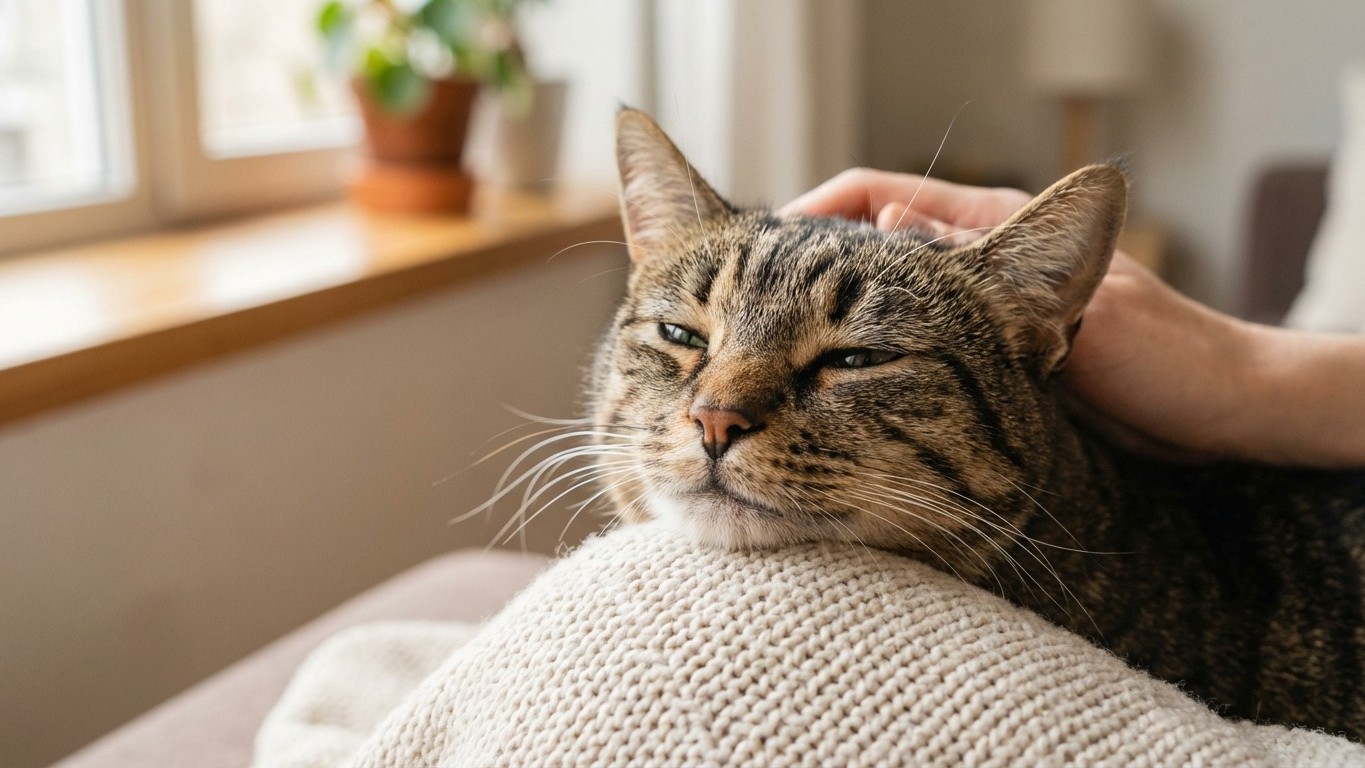
Your cat settles onto your lap, eyes half-closed, and that familiar low rumble fills the room. You think: she’s happy, all is right with the world. Most owners do. In one survey, 92% of cat owners said they view their cat purring as a sign that they are happy or in a positive state of mind. The trouble is, that assumption, comforting as it feels, gets the full picture badly wrong.
Key takeaways
- A cat’s purr isn’t a simple sign of happiness—it’s far more complex and mysterious than most owners realize
- The same purring sound can mean your cat is blissfully content OR terrified, injured, or stressed—the difference lies in subtle body language cues
- Your cat’s purr is essentially a biological healing tool that benefits both feline and human—but only if you understand what your cat is actually trying to tell you
A purr is not a smile
Many pet parents assume a cat’s purring is a sign of happiness, but purrs can Actually be produced when a cat is either in a positive or a negative emotional state. Think of it less like a smile and more like a human laugh. The biggest myth about cats is that a purr equals a smile. In reality, a purr is more like a human laugh, we laugh when we are happy, but we also laugh nervously when we are uncomfortable or trying to diffuse tension.
The mechanics behind the sound are elegant. The sound originates from the rapid contraction and relaxation of the muscles within a cat’s larynx (voice box), which causes the vocal cords to separate, creating a rhythmic and consistent sound. That vibration runs continuously on both the inhale and the exhale, which is why it never seems to stop. But the trigger for that mechanism? Far more complicated than contentment.
What we now know is that cats purr when they’re happy and content. Also, when they’re frightened, in pain, or stressed. Vets see this constantly. Some cats may purr when they are being examined by a veterinarian or once they get home from the veterinary clinic, they may be trying to recover and self-soothe from a stressful situation. So the cat you Thought-my-cat-was-difficult-until-i-discovered-this-crucial-signal/”>Thought was blissfully enjoying the car journey to the surgery? Possibly terrified.
How to tell the difference
Context is everything. When a cat is purring with content, they have a relaxed facial expression and body language. Tail pointing upward, small pupils, whiskers relaxed, these are the companions of a genuinely happy purr. Contrast that with a cat purring while their ears are flat or turned to the side, eyes wide open with wide pupils, and whiskers pointing forwards or down — it is likely that they are stressed.
The pitch matters too. When cats are purring out of happiness, the purr tends to be lower pitched, while a stressed-out cat might have a higher-pitched purr. It’s thought that when cats purr because they are anxious, it is done intentionally, whereas when cats purr out of contentment, it seems to be an almost automatic response. That distinction is subtle but worth tuning into, you’re effectively learning to hear the emotional register behind the sound.
There is also the question of pain. Veterinarians frequently witness cats purring when they are in severe pain or near death, this is likely an instinctive attempt to heal themselves, or to signal to predators that they are not a threat. If your cat is purring a lot more than usual or in different situations than they normally would, this could be a sign that something is wrong. If that happens, the advice is simple: get them checked by a vet. Don’t assume all is fine just because the purring is there.
One behaviour that trips up a lot of owners is overstimulation. Your cat is on your lap, purring away, lovely. Then, out of nowhere, a nip. If you are petting your cat and they are purring but suddenly give you a gentle nip, this is often a “love bite” or a sign of overstimulation. They are saying, “I like this, but it’s getting too intense.” If the purr continues but the tail starts flicking rapidly, the skin on their back twitches, or the ears turn back, stop petting immediately.
The purr as a biological Swiss Army knife
Here is where things get genuinely surprising. The vibrations produced during purring occur at a frequency of 25 to 150 Hertz, which has been shown to promote healing and tissue regeneration and is known to positively affect bone density and tendon and muscle repair. Your cat, may be running a low-grade physiotherapy session on herself every time she purrs, whether she’s happy or hurting.
Every felid in one study generated strong frequencies between 25 and 150 Hz. Purr frequencies correspond to vibrational and electrical frequencies used in treatment for bone growth and fractures, pain, oedema, muscle growth and strain, and joint flexibility. Mother cats often purr while in labour, and it’s believed to be a form of self-medication. Purring evens out and regulates breathing, and it also produces a low-frequency vibration believed to stimulate healing.
The benefits spill over to us, too. Purring not only releases endorphins in cats but can also induce the same thing in humans. Petting a cat or listening to their purring triggers the release of oxytocin, a hormone that promotes happiness and reduces stress. This calming effect lowers cortisol levels, the stress hormone associated with high blood pressure, and can help alleviate pain, easing chronic discomfort. Whether or not you are in tune with your cat’s Emotional state, her purr is quietly doing you good.
There is also the famous “solicitation purr”, the one cats deploy when they want feeding. Researchers have identified a “solicitation purr” as a specific type that includes a high-frequency element, similar to a baby’s cry, designed to grab the attention of people and elicit a response, such as feeding. Researchers who played a recording of the solicitous purr to people without cats reported that it still incited feelings of urgency. Cats, it turns out, have evolved a sound that bypasses our better judgement entirely. Hard not to admire the audacity.
What good owners do with this knowledge
Learning to read a purr properly is one of the most useful skills a cat owner can develop. The next time you hear your cat purring, consider the context, whether they are hiding, sitting looking at you, or resting on your knee — and consider the rest of their body language: tail movement, posture, facial expression. This gives you a fuller picture of whether it is the sound of a happy, sad, stressed, painful, or attention-seeking cat.
If your cat used to purr and has suddenly stopped, or if they don’t normally purr and have suddenly started, this could indicate they are unhappy or unwell. Take them to a vet for a check-up. And if your cat purrs continuously alongside other Changes, lethargy, loss of appetite, unusual posture, always consult your vet rather than reassuring yourself that the rumbling means everything is fine.
The purr has been woven into feline life since long before cats ever curled up beside us. Kittens can purr as young as two days of age, purring when they are nursing from their mother and only stopping long enough to swallow. It is one of the oldest and most layered forms of animal communication we share a home with. Once you start listening past the surface, you realise you have been hearing only half the conversation, and the other half has been going on all along.