
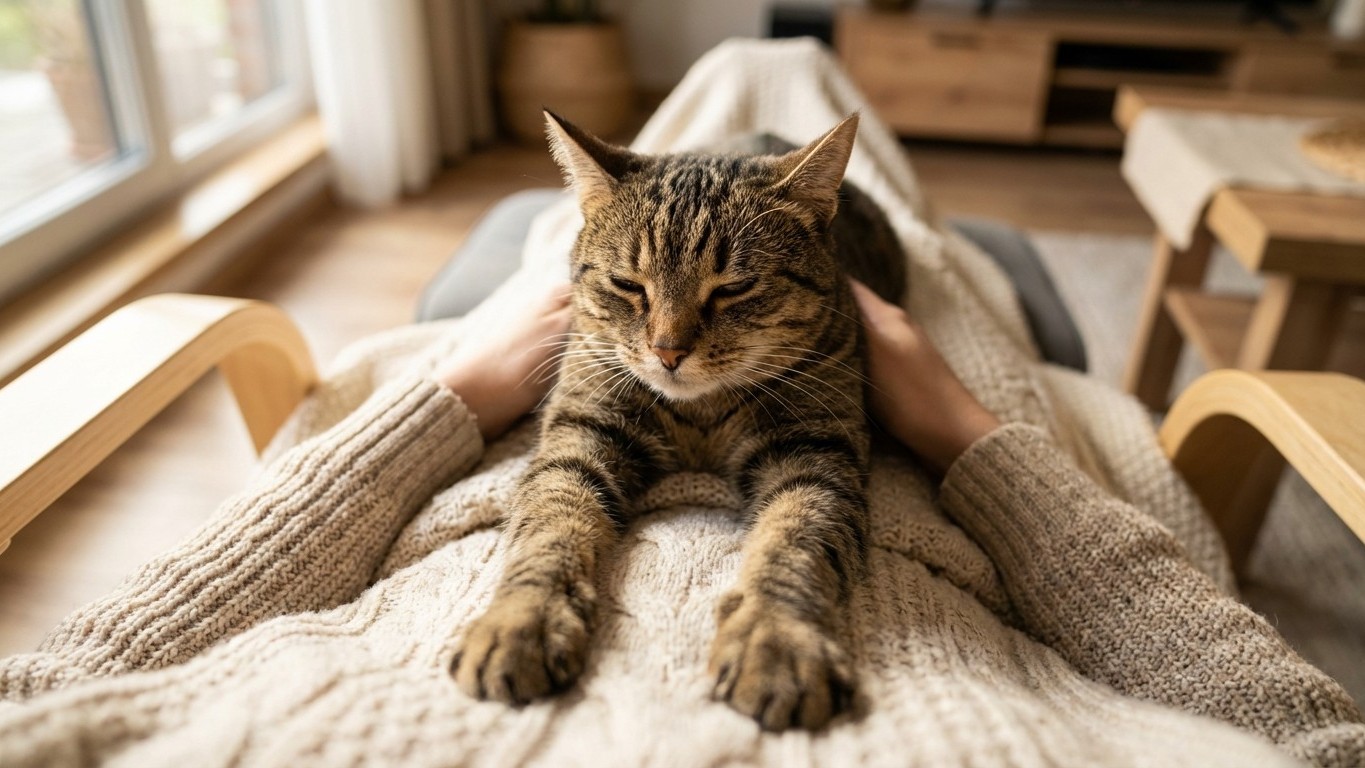
That rhythmic push-and-pull motion your cat makes with their paws, pressing into your lap, a soft blanket, or even your favourite cushion, isn’t just an adorable quirk. This kneading behaviour, often accompanied by purring and that blissful, half-closed eye expression, reveals profound insights into your feline’s emotional world and psychological well-being.
The roots of this behaviour Stretch back to kittenhood, when nursing kittens instinctively knead their mother’s belly to stimulate milk flow. Those tiny paws, working in alternating motions, create the perfect conditions for feeding while strengthening the vital bond between mother and offspring. What makes this particularly fascinating is that cats retain this comforting behaviour throughout their entire lives, transforming it into something far more complex than simple muscle memory.
Key takeaways
- Your cat’s kneading has origins in nursing behavior but serves entirely different emotional purposes in adulthood
- The speed, intensity, and timing of kneading patterns reveal distinct emotional states—from deep relaxation to stress-seeking comfort
- Changes in kneading behavior can signal health issues or emotional distress, requiring attention from cat owners
The Science Behind the Comfort
When your adult cat kneads, they’re essentially reverting to their most secure emotional state. The motion triggers the release of endorphins, those natural feel-good chemicals that create a sense of calm and contentment. Think of it as your cat’s version of meditation, a self-soothing mechanism that helps them process emotions and reduce stress levels.
Veterinary behaviourists have observed that cats who knead regularly tend to display fewer anxiety-related behaviours. The repetitive motion serves multiple purposes beyond emotional regulation. Cats have scent glands in their paw pads, and the kneading action deposits their unique scent onto surfaces, effectively marking territory in the gentlest possible way. Your cat isn’t just getting comfortable; they’re claiming you and your space as part of their secure world.
The intensity and frequency of kneading can vary dramatically between individual cats. Some barely press their paws, creating gentle, barely perceptible movements, while others engage in vigorous kneading sessions that might leave you with tiny claw marks (and the need to trim those nails). This variation often reflects their early experiences and overall temperament rather than any underlying health concern.
What Your Cat’s Kneading Style Reveals
Different kneading patterns offer glimpses into your cat’s emotional landscape. Slow, deliberate kneading typically indicates deep relaxation and trust. Your cat feels completely secure in your presence, Comfortable enough to enter this vulnerable state of contentment. Fast, almost frantic kneading might suggest your cat is seeking comfort during times of uncertainty or mild stress.
Pay attention to when your cat chooses to knead. Morning kneading sessions often coincide with your cat’s natural greeting behaviour, their way of reconnecting after the separation of sleep. Evening kneading usually Signals winding down, preparing for rest. Some cats knead when they’re hungry, associating the motion with the comfort and satisfaction that feeding provides.
The choice of kneading surface matters too. Cats who consistently choose soft, warm materials like fleece blankets or woolly jumpers are seeking maximum comfort and security. Those who knead harder surfaces might be engaging in more territorial marking behaviour, though the emotional comfort aspect remains present.
When Kneading Becomes Concerning
While kneading is typically a positive behaviour, sudden changes in patterns warrant attention. A previously non-kneading cat who Suddenly begins intensive kneading sessions might be experiencing stress or discomfort. Conversely, if your regular kneader stops this behaviour abruptly, it could indicate illness or emotional distress.
Excessive kneading, particularly when accompanied by other repetitive behaviours like over-grooming or pacing, might suggest anxiety requiring professional attention. Some cats who were weaned too early display more intense kneading behaviours, sometimes combined with suckling on fabrics. While generally harmless, if the suckling involves ingesting fabric fibres, veterinary consultation becomes necessary.
Senior cats sometimes develop arthritis that makes kneading uncomfortable. If your older cat’s kneading patterns change, particularly if they seem to avoid the behaviour they once enjoyed, discussing pain management options with your veterinary team can help maintain their quality of life.
Nurturing the Bond
Understanding your cat’s kneading behaviour opens doors to deeper connection. Rather than viewing it as purely instinctive behaviour, recognise it as your cat’s way of expressing trust, comfort, and affection. Creating soft, warm spaces where your cat can knead safely encourages this healthy emotional outlet.
Some cats prefer kneading on their owner’s body, which, while potentially uncomfortable due to claws, represents the ultimate compliment. You’ve become their equivalent of a mother cat, their source of security and comfort. Gentle nail trims can help make these sessions more comfortable for both parties without discouraging the behaviour.
The next time your cat begins that familiar kneading motion, take a moment to appreciate the complex emotional communication happening. That simple push-and-pull rhythm represents millions of years of evolutionary bonding behaviour, adapted and refined into your cat’s personal expression of contentment. Perhaps the most remarkable aspect isn’t just what it reveals about your cat’s emotions, but what it says about the trust they’ve placed in you as their chosen family.