
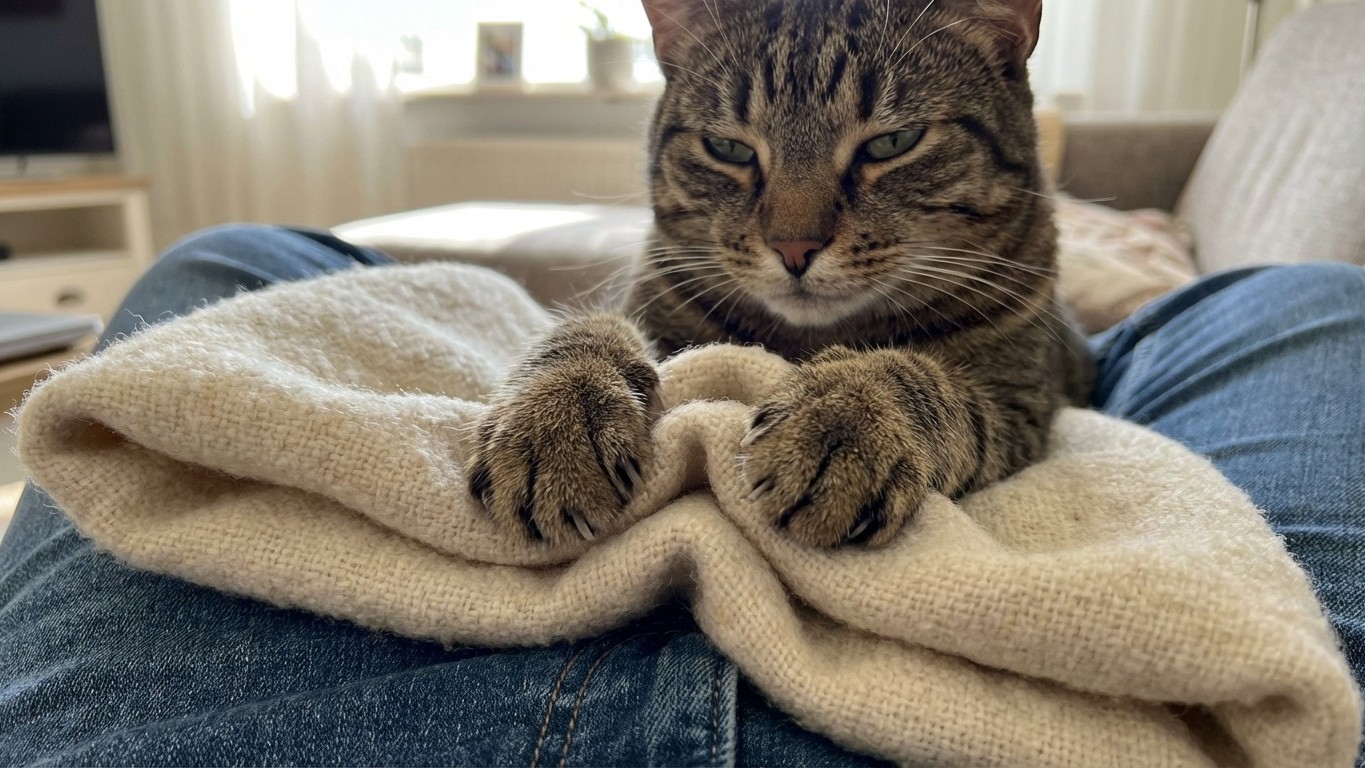
Your cat circles three times, finds the perfect spot on your lap, and then starts rhythmically pushing their paws in and out Against your thighs like a tiny, purring baker. It looks odd. It feels slightly painful if their claws are out. And yet something about it is deeply endearing, even if you’ve never quite known what it means. Kneading is one of those cat behaviours that looks quirky on the surface but runs surprisingly deep emotionally.
Key takeaways
- Kneading begins in kittenhood as a nursing reflex, but adult cats repurpose it for something far more meaningful
- When your cat kneads you specifically, they’re marking you with scent glands in their paws and claiming you as their safe place
- This behavior reveals your cat’s genuine emotional attachment to you—something science confirms cats absolutely do form with their humans
Where the behaviour comes from
Kittens knead their mother’s belly almost from birth. The pressing motion stimulates milk flow during nursing, and it’s paired from the very start with warmth, safety, and being fed. That’s a powerful combination of associations for a young animal’s developing brain. The behaviour becomes so deeply wired that most cats carry it into adulthood, long after they’ve Stopped nursing entirely.
What you’re witnessing on your sofa, then, is essentially a leftover Comfort reflex, one that got repurposed. Adult cats who knead aren’t confused about where their next meal is coming from. They’re reaching back, unconsciously, for a feeling. The warmth of your lap, the softness of a blanket, the sound of your voice: these trigger the same sense of security that their mother once provided. If that doesn’t make you feel slightly special the next time your cat uses your stomach as a bread proving drawer, I’m not sure what will.
Interestingly, not all cats knead with equal enthusiasm. Some use all four paws, others stick to two. Some drool slightly while doing it (yes, really, another holdover from nursing). Cats who were weaned too early tend to knead more intensely and more frequently throughout their lives, which tells us something about how early experiences shape lasting habits.
What your cat is actually communicating
The emotional content of kneading shifts depending on context, and reading that context makes all the difference. A cat kneading before sleep is typically self-soothing, settling themselves down, regulating their own comfort in the way humans might fluff a pillow or pull a duvet tighter. It’s a pre-sleep ritual, and for many cats it works reliably. Watch closely and you’ll often notice their eyes glazing slightly, their breathing slowing. The kneading is actively calming them.
When a cat kneads you specifically, that’s a different layer of meaning. Cats have scent glands in their paw pads, and kneading on a person or a surface releases that scent. Your cat, whether they know it consciously or not, is marking you. This isn’t territorial aggression, it’s closer to claiming something beloved. You are their safe thing. They are, in their own way, saying so.
There’s also a social bonding dimension that often gets overlooked. Cats are frequently misread as solitary animals who tolerate humans rather than genuinely attaching to them. The science tells a more complicated story. Cats do form secure attachments to their owners, and kneading directed at a person is one of the more reliable signs of that bond. A cat doesn’t knead a stranger. They save it for the people, and the places, they trust completely.
Should you ever be concerned about it?
For the vast majority of cats, kneading is entirely normal and healthy. It requires no intervention, no training, and no worry. That said, there are a handful of situations where it’s worth paying closer attention.
Excessive kneading that seems compulsive, that goes on for very long periods, or that’s accompanied by other repetitive behaviours can occasionally point to anxiety or stress. If your cat’s kneading has changed noticeably in frequency or intensity, it’s worth thinking about what else might have changed in their environment, a new pet, a house move, disrupted routine. Cats are creatures of habit, and stress tends to amplify comfort-seeking behaviours.
Kneading followed by sucking or chewing on fabric (known as wool sucking) is a separate behaviour worth flagging to your vet, particularly if it involves swallowing fibres, which carries a risk of intestinal blockage. As with anything that strikes you as a change from your cat’s normal pattern, a conversation with your vet is always the right first step, they’re far better placed than any article to assess what’s normal for your individual animal.
If the claws-out version is simply painful for you, a few gentle options exist. Keeping your cat’s nails trimmed (or asking your vet or a groomer to do it) takes most of the sting out. Placing a folded blanket on your lap gives them a surface to knead without your legs taking the brunt. Redirecting them to a dedicated soft spot nearby can also work, though some cats will look at you with profound indignation and climb straight back onto your thighs. You can’t win every negotiation with a cat.
The bit that’s easy to miss
We spend a lot of time trying to decode cat behaviour as if it were a puzzle to be solved, a code to be cracked. Kneading resists that framing a little. It’s not a request or a demand. It doesn’t mean your cat wants food, or the door opened, or a toy thrown across the room. It means, as far as we can tell from everything we understand about feline behaviour, that they feel safe enough to stop performing and simply be.
There’s something worth sitting with in that. In a world where cats often get dismissed as aloof or unreadable, this small rhythmic act is actually quite transparent. Your cat, eyes half-closed, purring against your leg before they drift off, they’re not mysterious in that moment. They’re just content. The question worth asking might be less “what does this mean?” and more “how do we make sure they feel this way as often as possible?”