
You reach out to stroke your cat during what looks like a moment of distress, and they spin round and bite you. You were only trying to help. It feels like a betrayal, honestly, and if you’ve experienced it, you’ll know that particular sting of confusion alongside the physical one. The truth is, your cat wasn’t being difficult or ungrateful. They were communicating something precise and important, in the only language they have.
Key takeaways
- Your gentle stroke might be pushing your cat’s nervous system past its breaking point
- A fearful or injured cat’s brain interprets your comforting touch as a predatory threat
- The warning signs happen 30 seconds before the bite—but most owners miss them entirely
The Overstimulation Trap
Cats are sensory creatures built for short, intense bursts of engagement rather than sustained contact. When you stroke a cat who is already in a heightened emotional state, whether frightened, in pain, or simply overwhelmed, you’re adding stimulation on top of stimulation. The nervous system can only absorb so much. What reads as comfort to a human, that long, slow stroke down the back, can tip a cat’s arousal level past a threshold they can no longer manage calmly.
This is sometimes called petting-induced aggression, and it’s one of the more widely misunderstood behaviours in domestic cats. A cat’s tolerance for physical contact shifts constantly depending on their mood, their health, their history with humans, and even the time of day. A cat who purrs contentedly in your lap on a Tuesday evening might lash out at the same touch on Wednesday Morning if something has unsettled them. The behaviour isn’t random. The signals were there; we just often miss them.
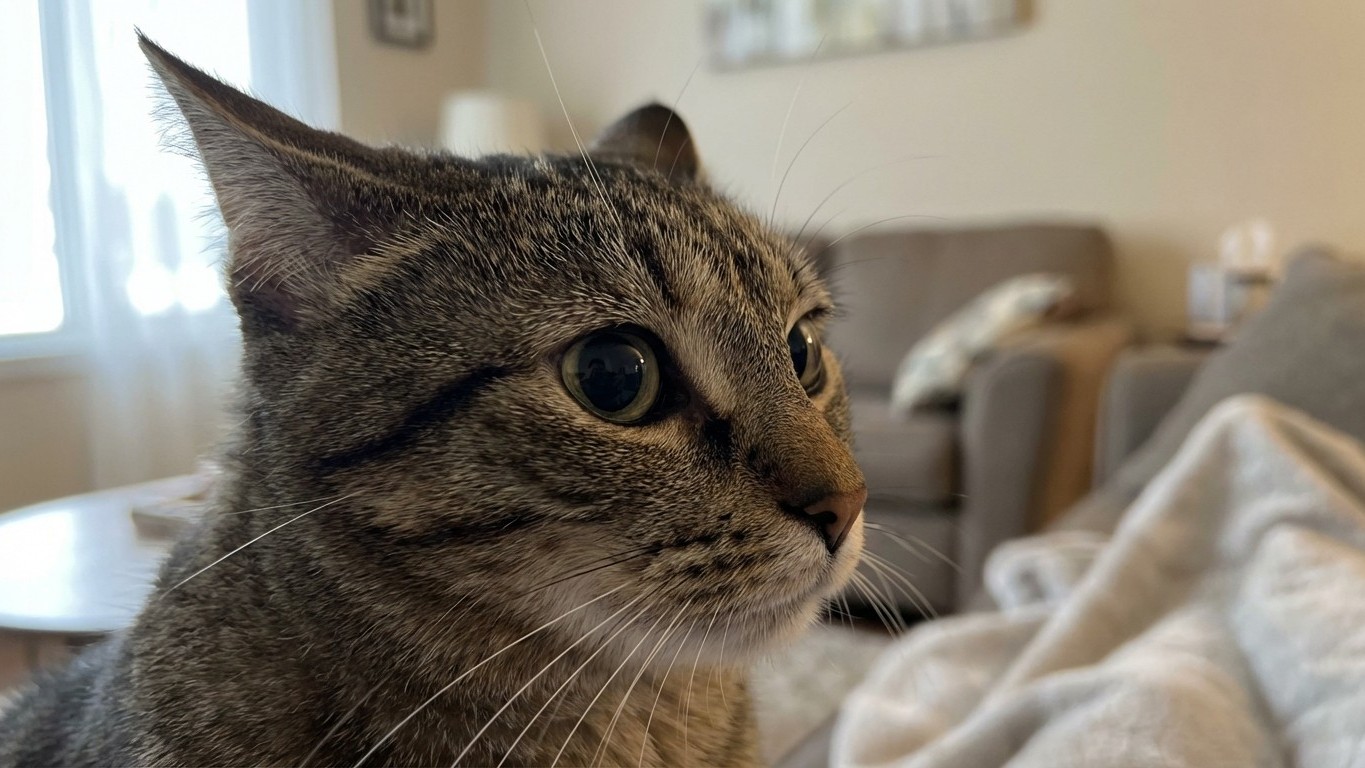
Watch for the early warnings: a twitching or flicking tail, skin rippling along the back, ears rotating backwards or flattening slightly, pupils dilating. These happen before the bite. Most people don’t register them because they’re small, fast, and easy to dismiss when you’re focused on offering comfort. By the time the teeth come out, the cat has already been shouting at you for thirty seconds.
When Comfort Feels Like a Threat
Here’s something that took animal behaviourists years to properly articulate: a cat experiencing fear or pain often perceives reach and approach as predatory behaviour. Their instinct doesn’t distinguish between your caring hand and a threat closing in. The amygdala, that Ancient-instinct/”>Ancient part of the brain responsible for fight-or-flight responses, fires before the rational (if we can call it that) part of their brain catches up.
Rescued cats, strays, or any cat with a difficult early history may have an even lower threshold for this response. Touch during vulnerability is associated, in their experience, with danger. So when you lean in during a thunderstorm or after a trip to the vet, the gesture you intend as soothing arrives in their nervous system as alarm. You’re not a bad owner. You’re just using the wrong language.
Pain is another layer to take seriously. A cat who snaps when touched in a specific area, rather than during general stroking, may be telling you something medical. Arthritis, an abscess, an internal injury, dental pain: all of these can make a normally affectionate cat suddenly, sharply reactive. If the aggression is new, sudden, or consistently triggered by touch in a particular spot, a vet visit is the right next step, not a behavioural intervention. Always rule out physical causes first.
What Actually Helps Instead
The most counterintuitive advice for comforting a distressed cat? Don’t touch them. At least not immediately, and not without invitation.
Sit near them rather than over them. Lower yourself to their level if you can, which signals non-threat in cat body language. Keep your voice low and even, not high-pitched and cooing (that particular frequency can Actually increase arousal in some cats). Let them approach you. A cat who chooses to come closer is a cat exercising agency, and that agency is, genuinely, what calms them.
Slow blinking is well-documented as a calming signal between cats and their owners. Research published in the journal Scientific Reports found that cats were more likely to slow-blink back at humans who slow-blinked at them, and more likely to approach strangers who used this signal. It costs you nothing, requires no physical contact, and speaks a language your cat actually recognises.
If your cat does allow touch during distress, keep it minimal and choose the right spots: the base of the ears, the top of the head, the cheek area near the whiskers. These are zones cats groom each other, and they carry different social meaning than running your hand down the length of the spine, which is a gesture cats don’t replicate with each other and sometimes find genuinely uncomfortable.
Rethinking What Affection Looks Like
The hardest shift for many cat owners is accepting that comfort, for a cat, often looks like presence without pressure. Sitting in the same room. Not reacting dramatically to a hiss. Giving them a route to escape and never blocking it. These feel passive, almost cold, when your instinct is to scoop and soothe. But respecting a cat’s autonomy during distress builds more trust than any number of well-meant but unwanted hugs.
Some cats, over time and with patient handling, do become more tolerant of contact during stressful moments. Kittens socialised with lots of gentle handling during the critical window (roughly two to seven weeks of age) tend to have higher thresholds throughout their lives. But even the most social adult cat has limits that deserve respect.
There’s something worth sitting with in all of this: the cats who seem least in need of comfort, the ones who walk away and find a quiet corner, are often doing the most sophisticated emotional self-regulation. Maybe, occasionally, we could take the hint.