
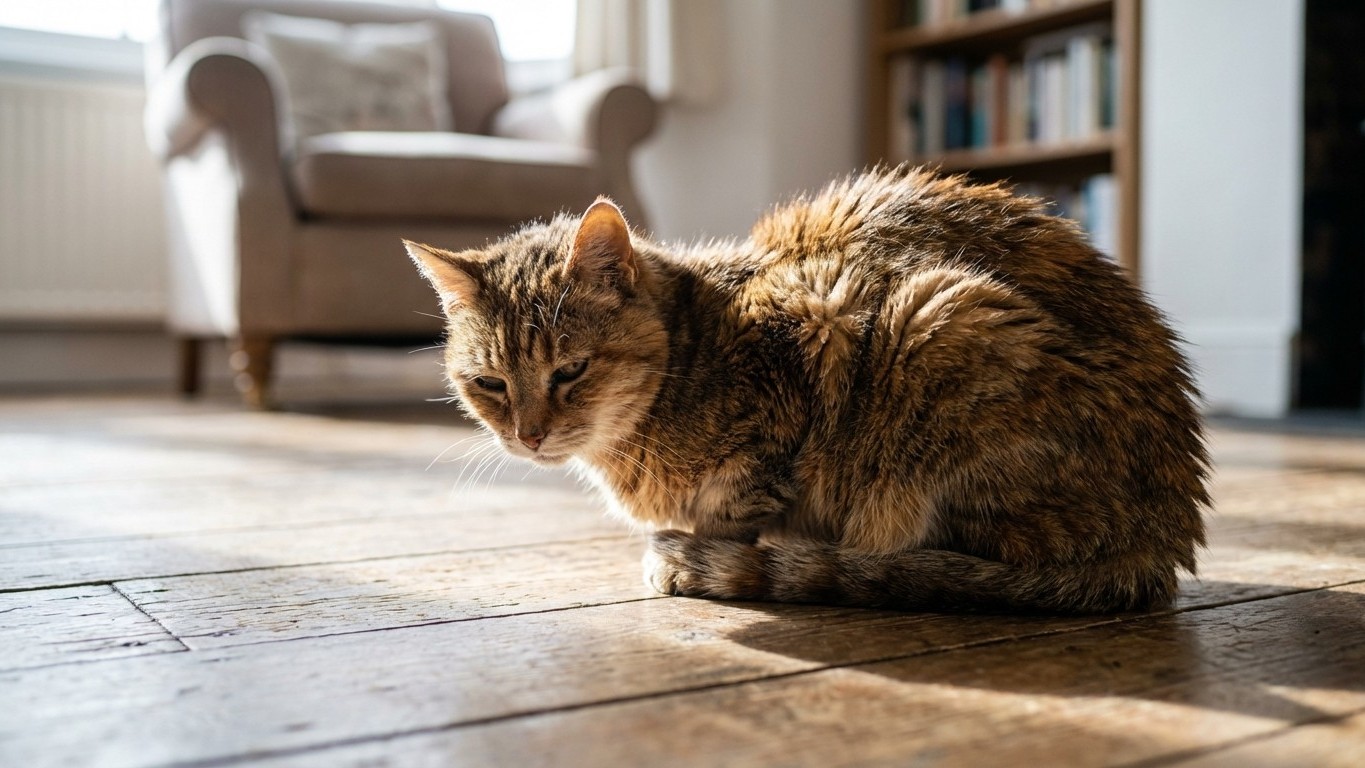
She Stopped jumping onto the sofa. She started sleeping in different spots. She seemed quieter at mealtimes. For many cat owners, these small shifts get filed away under “she’s just getting older”, and that quiet assumption can cost a cat months of treatable illness. The one routine change vets consistently flag as the most overlooked warning sign is not a dramatic symptom at all. It’s a pattern: a gradual, subtle shift in your cat’s daily Behaviour that owners dismiss as ageing, when it may Actually be illness speaking in the only language cats know.
Key takeaways
- Cats are masters of hiding illness until conditions become advanced—but behavioral patterns reveal what they won’t
- The changes that matter most are rarely dramatic; they creep in over weeks and owners mistake them for age
- Common treatable conditions disguise themselves as ‘getting older’—and the cost of waiting could be years of your cat’s life
The Hiding-in-Plain-Sight Problem
Cats are creatures of habit. They eat, play, and nap on a schedule that rarely changes, so when their behaviour suddenly shifts, it often means something is going on beneath the surface. The trouble is that cats are spectacularly good at disguising exactly that. Instinctively, cats conceal signs of pain or illness to avoid appearing vulnerable. By the time obvious symptoms show up, a condition may already be advanced.
Cats are masters at hiding illness, which is why many health problems go unnoticed until they become serious. This is especially true of the gradual kind, the slow erosion of a routine that owners attribute to personality or age. A cat who used to greet you at the door but now stays curled in the back bedroom. A cat who loved her biscuits but lately picks at them. Your cat might spend more time in hiding spots, show less interest in favourite activities, or display altered responses to familiar stimuli. These early behaviour Changes that indicate sickness often precede more obvious symptoms by days or weeks.
Older cats tend to be less active and playful, they may sleep more, gain or lose weight, and have trouble reaching their favourite places. Don’t chalk up health or behaviour changes, often gradual, to old age, however. Such changes can be signs of common diseases or dental problems that should be addressed by your veterinarian. That advice, from Cornell University College of Veterinary Medicine, could not be clearer. And yet the assumption that change equals ageing remains one of the most common and costly Mistakes cat owners make.
What “Routine Change” Actually Looks Like
The changes worth catching are rarely the ones you’d notice straight away. They’re the ones that creep in over weeks. Cat behaviour changes that indicate sickness often manifest as sudden shifts in your feline’s personality or routine. If your normally social cat suddenly hides for extended periods, or your typically aloof cat becomes clingy and vocal, these behavioural shifts signal potential health problems that veterinary professionals should evaluate.
Drinking habits are particularly telling. Just like increases in urination can indicate kidney disease, hyperthyroidism, or diabetes, the same is true of increases in drinking. Increased thirst might not just mean that you are filling the water bowl more often. Some cats start spending more time sleeping near the water bowl, seeking out other water sources, like drinking from the toilet or dishes in the sink. That’s a pattern, not a quirk. Appetite changes carry the same weight: increases in your cat’s appetite, an increase in begging behaviour, or starting to steal food from other cats can be a sign of hyperthyroidism, diabetes, or inflammatory bowel disease.
Grooming is another silent signal. Older cats can benefit from more frequent hands-on help if their self-grooming begins to wane. A sudden lack of grooming may signal a health problem. Similarly, if your cat seems less playful, or has started having difficulty with stairs or jumping, it could be arthritis pain. Arthritis is an inflammation of the joints and a condition that is extremely common in cats. It often goes unnoticed because owners think the cat is just slowing down with age. But arthritis is an extremely painful condition, so it’s worth getting your cat checked regularly in case they need to be treated.
Vocalisation is worth a mention, too. Two-thirds of cats aged 12 and over become more vocal, with a third crying for attention at night. It’s easy to smile at a chatty elderly cat. Harder to know that nighttime vocalizations may be caused by hyperthyroidism or hypertension (high blood pressure).
Why “Old Age” Is Not a Diagnosis
This is the phrase that vets hear most and fear most: “I thought she was just getting older.” Never assume that changes you see in your older cat are simply due to old age, and are therefore untreatable. Owners of older cats often notice changes in their cat’s behaviour, but consider these changes an inevitable and untreatable result of ageing. However, any alteration in your cat’s behaviour or physical condition should alert you to contact your veterinarian.
The conditions hiding behind these “ageing” changes are often very treatable when caught early. Kidney disease is common in older cats and can progress slowly over time. Routine bloodwork can detect early kidney function changes before obvious symptoms appear, allowing for earlier intervention. Once treated for hyperthyroidism, cats usually return to normal fairly quickly. If the disease is detected and treated early on, the cat often lives for several more years. Untreated, it can damage other organs. The difference between “getting older” and “getting ill” can, quite literally, add years to a cat’s life.
There is also cognitive dysfunction to consider. Cognitive dysfunction syndrome is less commonly reported in cats than in dogs, yet in one study approximately 35% of cats over 11 years old displayed at least one sign, and 50% of cats over 15 years old showed two or more signs. This condition is similar to the early stages of Alzheimer’s disease in humans, both in clinical signs and in brain changes. A cat who seems confused, wanders at night, or forgets her litter box may not be “a bit doddery”, she may need support and management.
What You Can Do Right Now
When you notice changes in your cat’s normal routines, even small changes, write it down. Then call your veterinarian, share your observations, and discuss the changes you’ve noticed. That simple act of keeping notes transforms vague worry into genuinely useful clinical information. Vets rely on owners for exactly this.
On the practical side, vets often recommend that cats have an annual check-up, and more often if they are elderly or suffer from a long-term health condition. Kittens are usually checked every two months, adult cats once yearly, and senior cats benefit from being seen twice yearly. Annual or biannual bloodwork allows your veterinarian to detect changes early, sometimes before your cat shows any outward signs of disease. Early detection often means simpler, more effective treatment and a better long-term prognosis.
While it can be easy to dismiss changes in your cat’s behaviour as a normal part of getting old, many conditions are treatable, and getting help from your vet could improve the quality and extend your cat’s life. That’s the perspective shift every cat owner needs. Your instinct that something feels “off” — that she’s quieter, that something has changed in the way she moves through her days, is worth far more than you might think. You know your cat best, so pay attention to any changes in behaviour, such as being less active or more active than usual. The question worth sitting with is this: how long have you been noticing something and calling it nothing?