
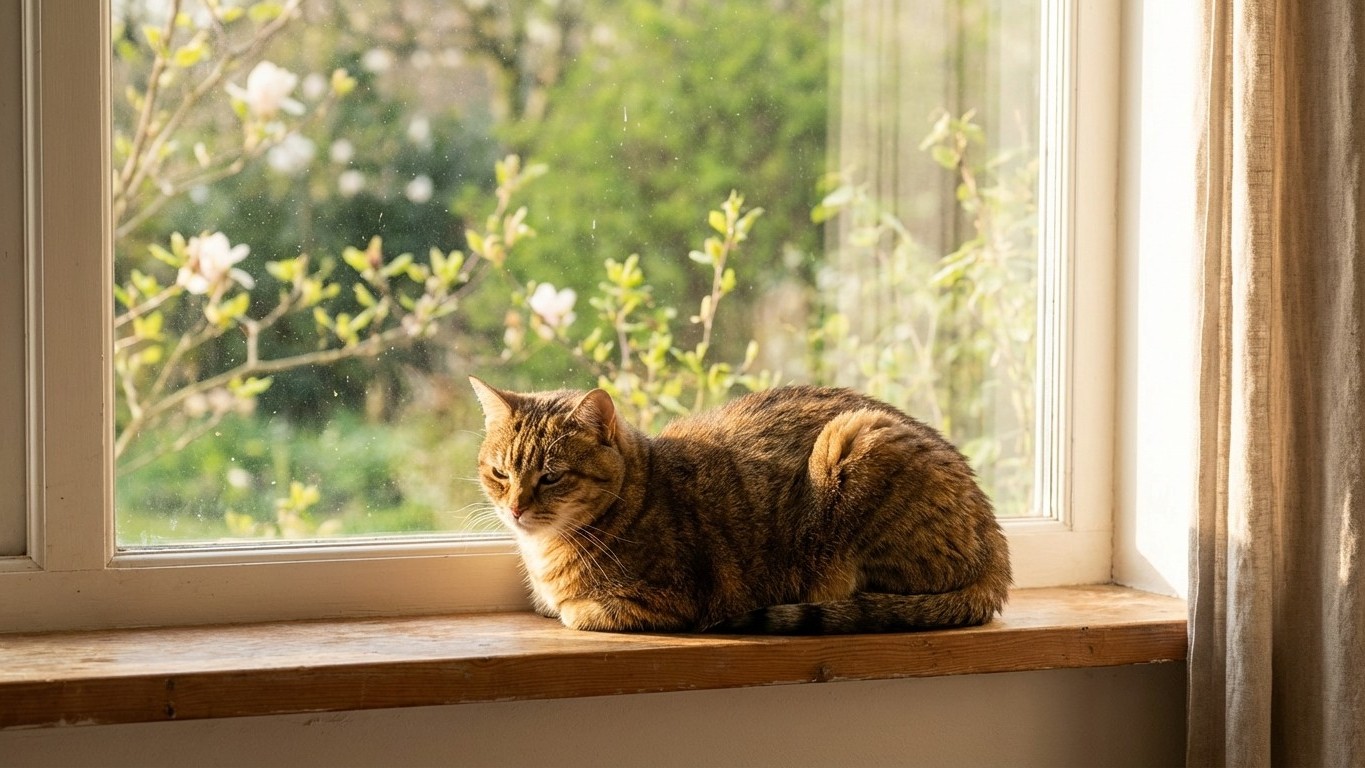
March arrives with longer days, muddy gardens, and the first real warmth of the year, and if you share your home with a cat, that seasonal shift carries a very specific warning. Fleas, ticks, and other parasites don’t wait politely for summer. They start stirring as soon as temperatures nudge above freezing, and every year, cats whose owners assumed it was “too early” end up dealing with infestations that could have been prevented with a little forward planning.
Key takeaways
- Parasites don’t wait for summer—they activate as soon as temperatures rise above freezing
- One common mistake could be toxic to your cat: some dog flea treatments are deadly for felines
- Your home environment is hiding thousands of invisible flea eggs right now in carpets and bedding
Why Spring Catches Cat Owners Off Guard
There’s a persistent myth that parasites are a summer problem. In reality, the flea lifecycle accelerates rapidly once indoor and outdoor temperatures begin to rise, and fleas can survive quite comfortably in centrally heated homes throughout the winter. By the time you spot a flea on your cat in April or May, the infestation in your carpets and soft furnishings could already be several weeks old. Flea eggs account for the vast majority of an infestation by weight and number, and they’re invisible to the naked eye, tucked into the fibres of your sofa, your cat’s bedding, even your own jumper.
Ticks present a different kind of urgency. The UK’s most common species, Ixodes ricinus (the sheep tick), becomes active when ground temperatures reach around 4°C. That’s not summer. In much of England, Wales, and Scotland, that threshold can be reached in February or early March. Cats who roam, particularly those near woodland, moorland, or long grass, are genuinely at risk from late winter onwards. Ticks can transmit diseases including Lyme disease, and while cats appear less susceptible to Lyme than dogs, other tick-borne pathogens can still affect them.
The March Checklist That Actually Works
Before reaching for any product off the shelf, a conversation with your vet is the single most important step you can take. This isn’t a throwaway caution, the parasite prevention market has become genuinely complex. Some over-the-counter spot-on treatments contain permethrin, which is safe for dogs but acutely toxic to cats. Owners sharing a multi-pet household sometimes apply a dog product and accidentally expose their cat to a substance that can cause tremors, seizures, and worse. Your vet will help you choose something appropriate, effective, and properly dosed for your cat’s weight.
Once you’ve got the right treatment sorted, think about timing. A flea and tick preventative applied in early March gives you protection through the most active early spring period, which is exactly when many owners let their guard slip after stopping treatments in autumn. Year-round treatment is what most veterinary professionals recommend for any cat with outdoor access, but if you do treat seasonally, March is the month to restart without delay.
Grooming is your second line of defence, and it’s often underestimated. A fine-toothed flea comb run through your cat’s coat (paying close attention to the base of the tail, the belly, and around the neck) won’t replace medication, but it gives you real-time intelligence about what’s happening on your cat’s skin. “Flea dirt”, those tiny black specks that turn reddish-brown on a damp piece of tissue paper — tells you fleas are present even if you never spot the insects themselves. Catching this early matters enormously.
Your home environment deserves attention too. Washing your cat’s bedding at 60°C kills flea eggs and larvae effectively. Vacuuming thoroughly and regularly (including under furniture and along skirting boards) disrupts the lifecycle of any fleas already present. Some people find it useful to vacuum immediately before treating the house with a household flea spray, since the vibration encourages pupae to hatch and makes the treatment more effective against them. These aren’t dramatic interventions, just habits that make a real difference over weeks.
Worms, Lungworm, and the Garden Factor
Spring also means cats spending more time outdoors, hunting prey, and encountering all the things that live in the soil, grass, and the slugs they may well eat with alarming enthusiasm. Roundworms and tapeworms are the most familiar culprits, but lungworm (Aelurostrongylus abstrusus) is worth understanding too. Cats can pick it up from infected slugs and snails, and while many cats clear the infection without symptoms, others develop coughing, laboured breathing, or lethargy. It’s not the most common cat parasite in the UK, but it is underdiagnosed, partly because owners don’t always connect respiratory symptoms to a worm picked up in the garden.
A good spring parasite plan addresses internal parasites alongside external ones. Regular worming (your vet can advise on appropriate frequency for your cat’s lifestyle and hunting behaviour) is a sensible baseline. Cats who hunt frequently may need more regular treatment than purely indoor cats. The key is tailoring the approach to your actual animal, rather than following generic advice that may not apply to a serial vole-catcher who considers the local woodland their personal hunting ground.
Keeping an Eye on What’s Changing
One thing worth watching in the coming months: the distribution of ticks in the UK is changing, with species expanding their range as average temperatures shift. The exotic longhorned tick (Haemaphysalis longicornis) has been detected in parts of Europe and its eventual spread into the UK is something vets are monitoring. This doesn’t require panic, but it’s a reminder that parasite risk isn’t static from year to year.
March is, in many ways, the month that sets the tone for the rest of the year for your cat’s health. Get the protection in place now, and spring becomes something you can both enjoy, your cat sprawled in a patch of sunlight, you reasonably confident that you’ve done your part. What’s less visible is often what matters most with parasites, and staying ahead of the problem is always easier than chasing it once it’s taken hold.