
The washing came out smelling worse than it went in. That’s the moment most people realise something has gone very wrong inside their machine, not in the clothes, not in the detergent, but in the drum itself. Leaving the door open between washes is one of the most consistently recommended pieces of appliance care advice out there, and yet the moment you forget, or stop, the consequences can arrive shockingly fast. Here’s what’s actually happening inside that sealed drum, why a May load makes the timing particularly telling, and how to properly fix it.
Key takeaways
- That musty smell from your washing machine reveals something growing inside that can trigger asthma and allergies in your family
- Cold-wash cycles, while saving energy, create the perfect breeding ground for bacteria and mold that hot water would flush away
- One simple post-wash routine practiced by few could eliminate the problem entirely—and it costs nothing
What Happens When You Close That Door
Washing machines smell due to trapped moisture combined with residue buildup from fabric softeners and detergents. Over time, this buildup promotes mould, mildew, and bacterial growth, all of which contribute to that distinctive musty smell. The machine doesn’t need to be old or poorly maintained for this to happen. Even a relatively new appliance will start to develop problems if the door is kept shut after a cycle.
Front-loading washers are especially susceptible to mould growth due to their airtight design, which doesn’t allow air to circulate properly after the washing cycle is complete. Leaving the door closed after washing means the door trap can hold moisture, causing mould and mildew to grow. The geometry of a front-loader essentially turns the drum into a sealed, damp cave. If you’ve switched from a top-loading machine to a front-loading machine, you may have noticed your washer smells more often. That’s because front-load washers are more prone to odours: they use less water and have a tighter door seal that traps moisture inside.
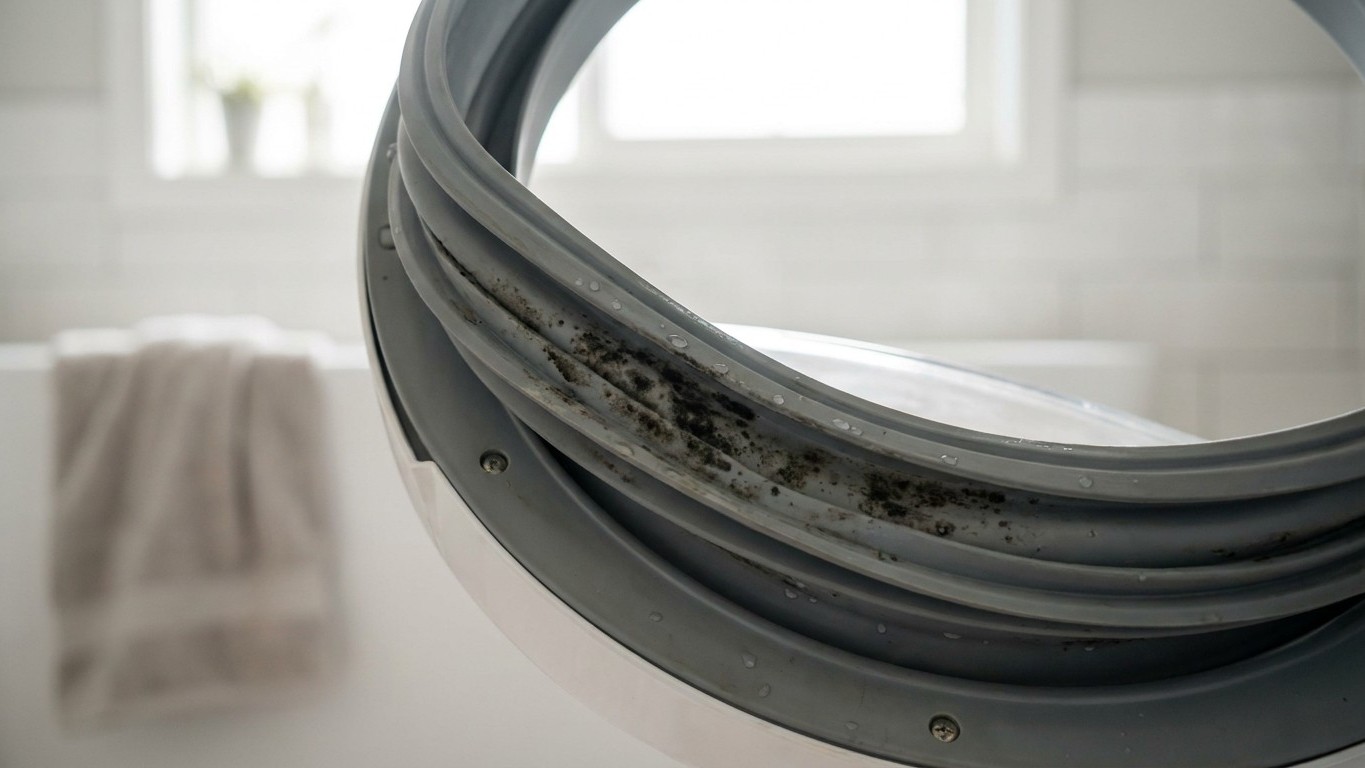
The rubber door gasket is the real villain of the piece. Black mould, particularly Cladosporium and Aspergillus species, thrives in the constant warm-damp environment, especially under the rubber door seal where water pools. Once detergent residue, limescale, and mould combine, you get the unmistakable musty smell, the grey ring around the seal, and clothes that don’t quite smell fresh after washing. May is a particularly cruel month for this: the air is warming up but many households are still running eco-mode 30°C washes to keep energy bills in check. That lukewarm water never gets hot enough to flush the system properly.
The Cold Wash Problem Nobody Talks About
Consistently washing at low temperatures causes a progressive build-up of grease, bacteria, soap residue, and black mould inside the machine, in the drum, door seal, sump hose, and internal components. At higher temperatures, grease and soap residue are dissolved and flushed away. At 30°C, they accumulate. This is the trade-off that rarely makes it into energy-saving promotions.
Modern UK households are particularly prone because cold-wash cycles, 30°C and below, used for energy-saving, don’t run hot enough to kill the bacteria. To ensure bacteria is properly dealt with, you need to be washing at 60°C or higher with a good detergent. The clever compromise? Run the bulk of your laundry at whatever temperature the garment labels require, but schedule a monthly maintenance wash, an empty drum, hottest setting, to flush everything out. 60°C is widely considered the effective temperature for killing bacteria and viruses.
Conventional detergents deposit residue in your washer, and fabric softeners leave behind waxy residue, all of which feed bacteria and cause unnecessary buildup. Using excessive detergent can cause soap scum and promote mildew growth. Less, in laundry at least, really is more.
The Health Angle That Changes Everything
This isn’t just about smelly laundry. Black mould in washing machines is more common than you might think, particularly in the UK’s humid climate, and it can pose genuine health risks while potentially leading to costly repairs if left untreated. According to the NHS, mould exposure can worsen allergies, trigger asthma, and cause respiratory irritation. This is particularly concerning for children, older adults, or anyone with existing breathing conditions.
Allergic reactions are common when exposed to washing machine mould, expect sneezing, runny nose, and itchy eyes. Children, elderly family members, and anyone with compromised immune systems are particularly vulnerable to these effects. When you wear clothes washed in a mould-infested machine, your skin may also react, such as breaking out in rashes. What looks like an appliance maintenance issue turns out to have a direct line to your family’s health.
Black mould doesn’t just pose health risks and damage clothing, it can also reduce the overall efficiency of your washing machine. Mould buildup in the drum, pipes, or filter can obstruct water flow, making the machine less effective at cleaning clothes. A mouldy washing machine may take longer to complete cycles, using more electricity and water, which increases utility bills over time. The domino effect is real.
How to Fix It, and Keep It Fixed
First, the recovery. If you notice mould in a washing machine, tackling it quickly is the best approach. Mix equal parts white vinegar and water, use a cloth or old toothbrush to scrub the mould from the seal, wipe thoroughly, and leave the door open to dry. For the drum itself, add two cups of bicarbonate of soda to the empty drum, pour two cups of clear vinegar into the detergent drawer, and run the machine on its hottest cycle. One important caution: never mix bleach and vinegar, it creates toxic fumes, and avoid undiluted bleach on rubber seals, as it can degrade them over time.
Leaving the washing machine door slightly ajar when not in use allows air to circulate and helps prevent the growth of mould and mildew. This simple routine significantly reduces the chances of mould developing on the rubber seal. Pull out the detergent drawer too, not just the door, leaving both the door and the detergent drawer open between washes improves air circulation considerably.
A quick wipe after every wash makes a surprisingly large difference. Leaving the washer door open after every load gives the drum a chance to dry out and prevents moisture from sitting inside. Wiping the gasket and drum dry once finished only takes a few seconds and helps stop mildew from forming in hard-to-reach areas. And the monthly deep clean? For best results, deep clean your washing machine once a month or every 30 to 40 loads.
One thing worth knowing that rarely appears in care guides: citric acid powder is actually a gentler alternative to vinegar for regular maintenance washes, it produces a cleaner result with no smell during the cycle and is kinder on rubber seals. Two hundred grams in the drum on a 90°C empty cycle, once a month, does the job without the sharp vinegar fumes drifting through the kitchen. Not glamorous, but the laundry will smell genuinely clean again — and so will the room it lives in.
Sources : indoordoctor.com | smol.com