
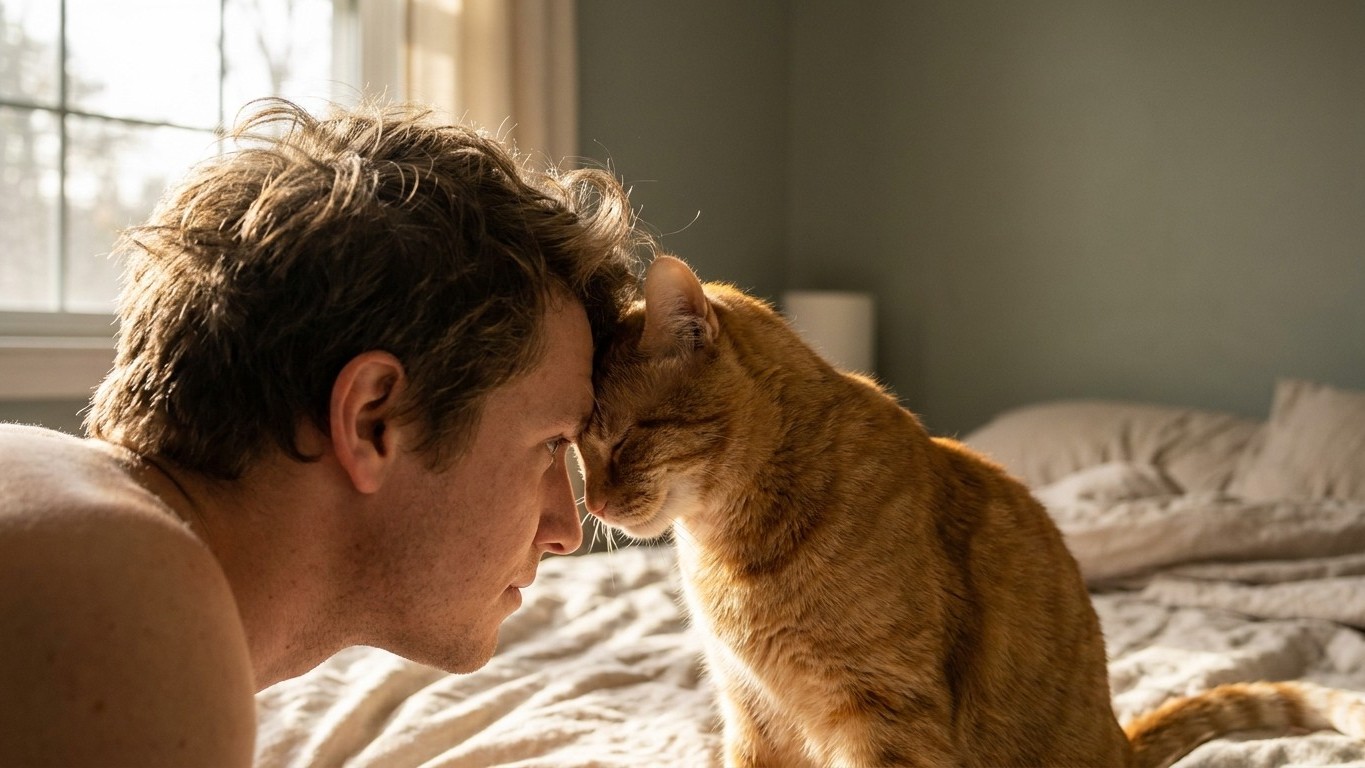
Every morning, the same ritual: your cat plants their forehead squarely against yours, purrs, and you melt a little. Head-butting, properly called bunting in feline behaviour circles, is one of the most endearing things a cat does. But vets and animal behaviourists read the same gesture with a slightly more complicated eye, and understanding what they see will make you a sharper, more attentive cat owner.
Key takeaways
- What looks like pure affection is actually your cat marking you as theirs using invisible pheromones—and claiming dominance
- A sudden change in bunting habits could be your cat’s quiet way of signaling illness or neurological distress
- There’s a dangerous behavior that mimics bunting but requires immediate emergency vet care—and most owners don’t know the difference
What your cat is actually doing (and it’s not quite what you think)
Bunting is when a cat places or butts their head on a human, object, or other animal, often finishing the behaviour by rubbing their forehead and cheeks on whatever they’ve just bumped. It feels like a kiss. The biology behind it is a touch more calculating.
Cats have scent glands on various parts of their body, including the top of the head, cheeks, lips, and tail. These glands secrete pheromones, which are natural chemical messengers to other cats and animals, capable of creating a calming sensation, conveying identification information, and claiming territory or individuals. When your cat bonks you at 7am, they are essentially signing their name across your forehead, invisible to you, but perfectly legible to every other cat in the postcode.
Bunting is a way cats mark their feline friends and family, a stronger marker than leaving urine on objects to claim them, but instead of territory, they are claiming familial relationships. So yes, it is love. It’s also ownership. There is a common misconception that head bunting is a submissive behaviour. The reality is often the opposite: research into cat social structures suggests that bunting is frequently initiated by the more dominant or confident cat in the household, who takes on the role of scent manager, spreading the family scent to maintain group unity. your cat isn’t being sweet — they’re being the boss.
The social hierarchy hidden in a forehead nudge
Bringing their head so close to another cat’s teeth and claws makes a bunter extremely vulnerable, so cats will typically only engage in this behaviour when they feel safe and trust the recipient. Researchers studying feral cat colonies determined that mutual head bunting occurs primarily between closely bonded individuals, such as littermates or mothers and their offspring.
Cats also use bunting as a way to familiarise themselves with their environment, and the pheromones released through this work to ease the cat’s anxieties about an unfamiliar area. This explains why a newly adopted cat might bunt you within days, they’re not simply smitten, they’re also managing their own stress. Cats who bunt their owners may also be asking for something specific, and the physical act can help them self-soothe and regulate their emotional states, often accompanied by purring and relaxed body language.
On people, as well as familiar dogs and cats, a cat might rub its face to deposit scent, identifying those marked as belonging to a specific group, which is why, when a housemate leaves for a veterinary appointment and comes back smelling of the hospital and not the “group,” conflicts can occur. A cat returning from the vet smelling of clinical disinfectant is suddenly, to their housemates, a stranger. A good reminder that your cat’s nose runs their social world far more than their eyes do.
What vets watch for, and when bunting stops being cute
Here’s the part most cat owners don’t know. If your cat used to be keen on headbutting but doesn’t seem to be anymore, this change in behaviour could mean that your cat isn’t feeling well, especially if accompanied by other symptoms like lethargy or grumpiness, and that warrants a conversation with your vet. A sudden drop in bunting is a quiet but meaningful signal.
While bunting is usually normal, there are times when it might signal an underlying issue. Excessive bunting, particularly if your cat seems restless or anxious, may suggest they are trying to communicate discomfort or stress, and bunting accompanied by symptoms like lethargy, loss of appetite, or changes in grooming habits could indicate a medical problem.
There is also a behaviour that looks superficially similar to bunting but is an outright emergency. Head pressing is a compulsive, static action where a cat firmly presses their head against a wall, corner, or floor for long periods without moving, and they often appear “stuck,” disoriented, or unresponsive to their surroundings. If your cat is pressing their head against a wall or hard surface, do not wait, this is a primary sign of neurological distress, often caused by brain tumours, liver failure, toxins, or head trauma, and requires immediate veterinary attention.
Bunting is typically a press-and-release behaviour. It is only cause for concern if your cat continually puts their head against an inanimate object and keeps it there. Other concerning signs include seizures, changes in vision, compulsive behaviours, or disorientation. If you see those alongside head-pressing, call your vet immediately. The difference between the two behaviours is usually obvious once you know what to look for: bunting is fluid, brief, and social, while head pressing has a rigid, almost trance-like quality that is deeply unsettling to witness.
It’s also worth being aware that a cat may rub their head against an object to try and relieve the discomfort caused by dental issues or an ear infection, which could be mistaken for bunting. If the rubbing is one-sided, focused, or accompanied by pawing at the face or ear, that’s a reason to get your cat checked over, not just to reassure yourself, but because dental pain and ear infections are notoriously underdiagnosed in cats.
How to respond, and what morning bunting really tells you
Observe your cat’s body language: bunting is usually an intimate gesture of familiarity, love, and trust, so if they are calm and relaxed, reciprocate by offering them a stroke or gentle scratch. It’s generally not a good idea to literally headbutt your cat back, most cats would not want you to return their gesture with something unexpected. Chin scratches, head rubs, and gentle strokes along the back are better options.
The morning head-butt ritual, viewed through a veterinary lens, is also a health check in disguise. A cat who bunts you enthusiastically is telling you they’re comfortable, socially bonded, and neurologically sound. Behavioural changes are one of the most common early signs veterinarians look for when assessing feline health. So when that morning ritual suddenly shifts, less frequent, more frantic, or replaced by pressing against the wall — pay attention. Your cat cannot book their own vet appointment. That moment of contact, brief as it is, carries more information than most people realise.
One last thing worth knowing: cats intermittently re-mark their territory because pheromones do not last forever and need to be “reapplied.” Once you come home from being out in the world, your cat’s personal scent has faded, so they may want to mark you again by rubbing, headbutting, licking, or even gently biting you, behaviours thought to release endorphins, giving your cat a sense of calm, happiness, and safety. Every time you leave the house, you return as a blank canvas. The morning head-butt is your cat’s way of making sure you still smell like home.
Sources : ladynpet.com | catster.com